From Southern India to Canada's Far North: A New Archbishop's Mission
As a teenager in the southern Indian state of Tamil Nadu, Susai Jesu would rise before dawn to lead 4:30 a.m. prayer services in his small Catholic village, a ritual that preceded the farmers heading into the fields. He directed the choir, assisted at Mass, and soon embarked on training for the priesthood, little imagining where his dedication would ultimately lead.
A Vast Cross-Cultural Journey
That early commitment has taken him on an extraordinary journey halfway across the globe, culminating in his ministry among Canada's Indigenous Catholics. Archbishop Jesu has immersed himself in learning their languages, understanding their cultures, and confronting the historical traumas that have shaped their communities. His path intersected with papal history when he hosted Pope Francis at his Edmonton parish in 2022, during the late pontiff's visit to apologise for the Catholic Church's role in the devastating Indigenous residential school system.
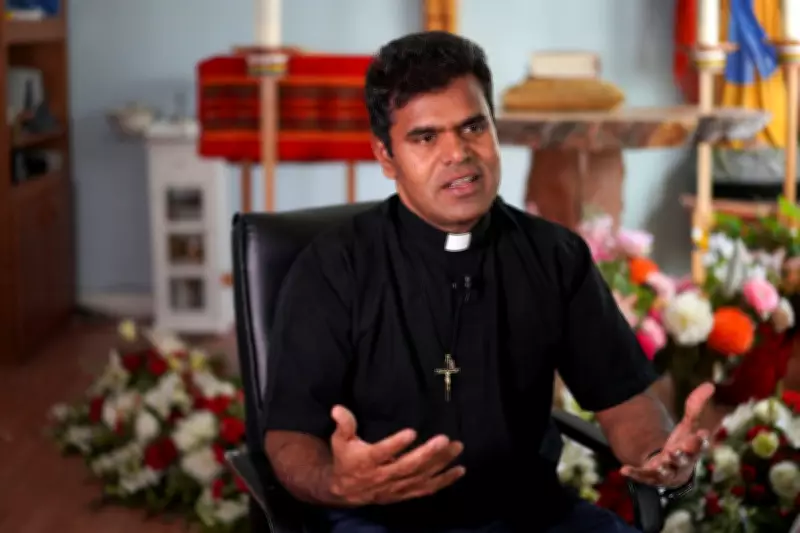
On January 26, Susai Jesu was consecrated as the Archbishop of Keewatin-Le Pas, overseeing northern Manitoba and Saskatchewan. His new responsibility involves ministering to approximately 49,000 Catholics, predominantly Indigenous people, scattered across a territory larger than the state of Texas.

A Consecration Steeped in Tradition and Diversity
The consecration ceremony itself was a powerful symbol of his unique mission, punctuated by traditional drumming and featuring songs and prayers in a remarkable blend of languages: Cree, Dene, English, French, Oji-Cree, and his native Tamil. This multilingual celebration underscored the archbishop's commitment to bridging cultural divides within his vast new diocese.
Archbishop Jesu, aged 54 and appointed by Pope Leo XIV in November, has outlined a simple yet profound initial strategy. "For the first year, let us build a relationship," he stated in an interview. His primary objective is to spend genuine, quality time with the people in each far-flung parish he visits, aiming not just to preside at worship but to be "physically present with them." He seeks to foster trust over time within a community that includes many devout Catholics alongside those who remain deeply wounded and alienated from the institutional church.
Foundations of a Pastoral Philosophy
The archbishop's emphasis on relationship-building is rooted in his early experiences in India. He witnessed the disappointment of villagers when priests visited their remote community only to depart immediately after Mass. "I told myself, if I ever become a priest, I will always be available to the people," Jesu recalled. "Not only during the Mass, but after the Mass, greeting them before they go home, (asking) do they need anything, any special prayers?"
This philosophy has defined his ministry. Fernie Marty, an elder at Sacred Heart Church of the First Peoples in Edmonton, attested to Jesu's extraordinary efforts. The priest enthusiastically learned the Cree language and participated in cultural practices, joining Marty to gather traditional medicinal plants like sage and sweetgrass. "He went above and beyond what I thought any normal priest would do," Marty noted.
Overcoming Adversity in a New Land
Archbishop Jesu's journey in Canada has not been without peril. After his transfer in 2007 and assignment to remote Saskatchewan parishes, a lack of experience with winter driving led to a harrowing accident where his car rolled over three times and sank into a river. "By God's grace, I pressed the button. I came out of the car," he recounted. "I was experiencing my own death." He managed to escape and flag down help, viewing his survival as a divine mandate to continue his ministry.
Undeterred, he embraced extensive travel across the vast archdiocese, often by small plane, which serendipitously prepared him for his future leadership role. His ministry, however, was frequently sombre, responding to pervasive challenges of drug and alcohol abuse, violence, and suicide within the communities. "I really enjoyed my ministry of being there, but the amount of alcohol, drugs, and all these things, it's pretty sad," he reflected.

A Path Forged in Healing and Service
Moved by the suffering he witnessed, particularly among "the children who are walking on the street aimlessly, not knowing who they are," Jesu pursued a master's degree in counselling and spirituality in Ottawa. He collaborated with local elders on healing workshops, driven by a desire to "tell them how good they are before the eyes of God." His subsequent role as pastor of Sacred Heart Church in Edmonton involved ministering to the urban Indigenous population and often those experiencing homelessness.
Archbishop Jesu represents a historic appointment as the first Indian-born bishop to lead a North American diocese not primarily serving the Indian diaspora. He acknowledges the complex legacy he now embodies. Often choosing not to wear his clerical collar in informal settings, he remains sensitive to potential triggers within the community. "The trigger is still there," he acknowledges.
For those still estranged from the church, his hope is clear: "to be with them and to help them see how can we work together on this... How much can I accompany in your suffering?" His mission, forged in the villages of Tamil Nadu and tested in the vastness of Canada's north, continues as a profound journey of faith, service, and reconciliation.