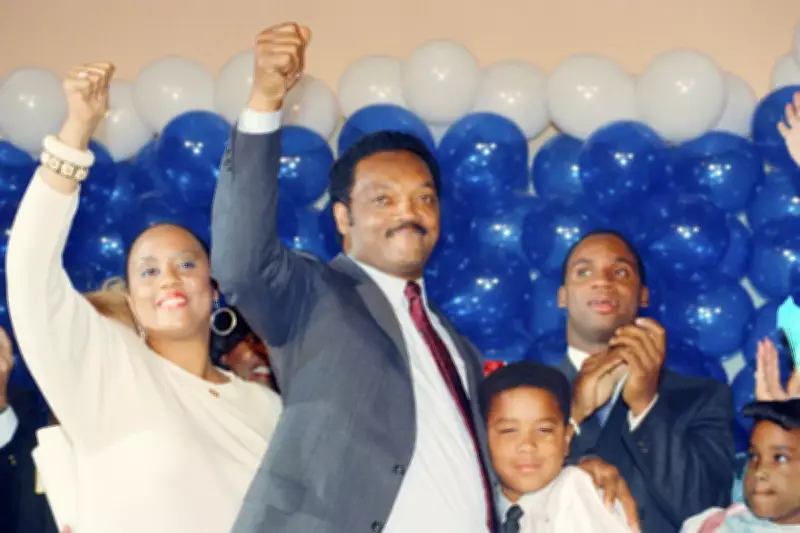
Rev. Jesse Jackson Sr., the towering figure of the American civil rights movement, has returned to his home state of South Carolina for a final public farewell. His body will lie in state at the South Carolina capitol on Monday, marking a poignant homecoming for the activist who dedicated his life to fighting for equality.
A Journey from Segregation to Honor
The full state honors bestowed upon Jackson stand in stark contrast to his childhood in segregated Greenville. In 1960, as a young man, he was barred from entering the better-funded whites-only branch of the local library to borrow a book he needed. In a defiant act that would foreshadow his lifelong crusade, Jackson led seven Black high school students into that segregated branch, where they sat down and read books and magazines until authorities arrested them. The branches subsequently closed, only to reopen quietly for all residents, marking an early victory in the struggle for integration.
Launching a Historic Career
This bold action launched Jackson's remarkable career. It caught the attention of Rev. Martin Luther King Jr., leading Jackson to join the historic voting rights march from Selma to Montgomery, Alabama. Jackson passed away on February 17 at the age of 84, after battling a rare neurological disorder that impacted his mobility and speech in his later years.

Weeks of Memorial Events
The South Carolina services are part of two weeks of memorial events honoring Jackson's legacy. It began with his body lying in repose at the Rainbow PUSH Coalition's Chicago headquarters last week, where the public was invited to pay their respects. Following the South Carolina ceremony, Jackson will be returned to Chicago for a large celebration of life gathering at a megachurch and final homegoing services at the Rainbow PUSH headquarters. Plans for a service in Washington, D.C., have been postponed to a later date.
A Legacy of Advocacy and Diplomacy
Nationally, Jackson was a relentless advocate for the poor and underrepresented, championing causes such as voting rights, job opportunities, education, and healthcare. He also achieved significant diplomatic victories with world leaders, leveraging his influence on the global stage. Through his Rainbow PUSH Coalition, he channeled calls for Black pride and self-determination into corporate boardrooms, pressuring executives to foster a more open and equitable society in America.
After King's assassination, Jackson stepped forward as a torchbearer for the Civil Rights Movement. He ran for the Democratic presidential nomination in both 1984 and 1988, bringing issues of racial and economic justice to the forefront of national politics. His activism extended to his home state, where in 2003 he pushed for Greenville County to honor King with a matching federal holiday, and in 2015 he advocated for removing the Confederate flag from the South Carolina Statehouse grounds following the racist shooting that killed nine Black worshipers at a Charleston church.
A Rare Honor
Jackson is only the second Black man to lie in state at the South Carolina capitol. The first was State Sen. Clementa Pinckney, who was honored in 2015 after being killed in the same Charleston church shooting. This distinction underscores the profound impact of Jackson's work and the respect he commands in the state of his birth.
Associated Press writer Sophia Tareen in Chicago contributed to this report.