Jesse Jackson's Unapologetic Progressivism: A Rebellion That Redefined Black Political Power
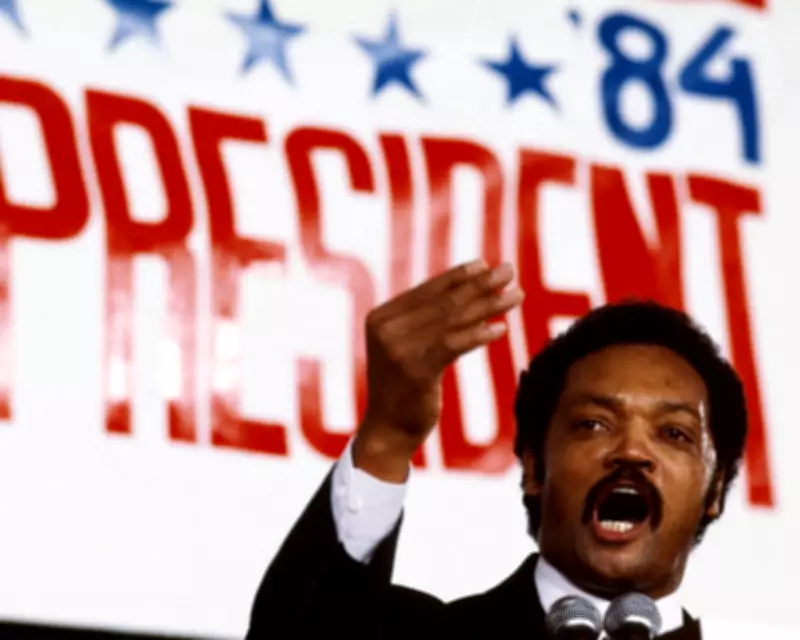
Civil rights leader Jesse Jackson, who passed away on Tuesday, left an indelible mark on American politics through his groundbreaking 1984 presidential campaign. His unapologetic progressivism represented a core rebellion against the Democratic party's rightward shift during the Reagan era, fundamentally altering the landscape of Black political influence and leftist coalition-building.
The Reagan Revolution and Democratic Crossroads
By the early 1980s, the Democratic party found itself at a critical juncture. Ronald Reagan's landslide victory in 1980, securing 489 electoral college votes against incumbent Jimmy Carter, propelled what became known as the "Reagan Revolution." This political and cultural wave dragged the Democratic establishment toward conservative policies, leaving many constituents behind—particularly in US industrial cities devastated by Reagan's "trickle-down" economics.
Record tax cuts for the wealthy came at the expense of a shrinking social safety net, worsening inequality and pushing much of the working class into poverty. In response, grassroots resistance campaigns emerged nationwide, addressing an urban crisis that disproportionately affected African Americans. Between 1982 and 1984, these efforts registered 2 million new Black voters—the largest increase since the 1965 Voting Rights Act.

Jackson's Strategic Organizing and Operation Push
Rev Jesse Jackson, a charismatic lieutenant of Martin Luther King Jr. in the Southern Christian Leadership Conference (SCLC), played a pivotal role in these voter registration drives. Following King's assassination, Jackson channeled the movement's organizing expertise into founding Operation Push. This populist leftist offshoot of the SCLC united progressive whites, LGBTQ+ communities, environmentalists, Asian Americans, Indigenous Nations, Latinos, anti-war activists, and labor unions.
Jackson felt betrayed by the Democratic party's abandonment of socially progressive issues and democratic socialist economics, as well as its capitulation to Reagan's far-right policies that aimed to undo Civil Rights Movement gains. With 2 million new voters, Jackson recognized that Black communities held the margin of victory in Democratic primaries—a power he refused to cede to white candidates who often pivoted to center-right politics in general elections.
The People's Platform and Leverage Strategies
Jackson assembled a team of Black political strategists, including DC congressman Walter Fauntroy, civil rights leader Rev Joseph Lowery, and political scientist Ron Walters, to create the "People's Platform." This mandate called for increased corporate taxes, reduced military spending, single-payer universal healthcare, and fair wage policies.
Walters, who served as Jackson's chief campaign adviser, described the platform as a tool for "dependent leverage"—forcing white liberals to adopt Black-backed policies rather than merely hoping for concessions. However, Jackson soon realized that "independent leverage" was more effective: withholding Black support by running Black candidates to challenge white Democrats in primaries, rather than waiting for compromises.
The Historic 1984 Presidential Bid
On 3 November 1983, Jackson announced his presidential run in Washington DC, becoming the first major Black candidate and only the second since Congresswoman Shirley Chisholm's 1972 campaign. His bid rode a wave of Black political momentum, coinciding with the election of Black mayors in major cities like Chicago, Philadelphia, Birmingham, and Charlotte—many of whom were alumni of the Freedom movement.
Jackson's campaign, fueled by the slogan "Run Jesse Run!", aimed to "confront liberals with liberators" and steer politics toward racial justice, gender equality, and peace. He shifted Black politics from the sidecar to the driver's seat of the Democratic party, using electoral politics to spotlight issues affecting Black families, inequality, and economics. His progressivism was driven by Black dissatisfaction with both Reagan and mainstream Democrats who dismissed low-income urbanites and communities of color as "special interests."

Confronting Party Suppression and Building Coalitions
Jackson exposed Democratic practices that suppressed Black votes and diluted the Black voting bloc. Despite white candidates downplaying their reliance on Black support, post-election analyses showed that many, especially in the south, depended on up to 90% of the Black vote for victory. Critics labeled Jackson an extremist, but he defiantly proclaimed: "We [Black voters] can win without the Democratic party, but the Democratic party cannot win without us."
His campaign was more a moral crusade than a bid for office, aiming to hold the party accountable to "the desperate, the damned, the disinherited, the disrespected, and the despised." Jackson leveraged massive Black voter turnout to boost down-ballot races for Black and leftist candidates, exposing primary suppression and enhancing Black voting power in key states.
Legacy and Lasting Impact
Jackson's 1988 campaign, endorsed by Bernie Sanders, continued this momentum, contributing to David Dinkins' election as New York's first Black mayor and Douglas Wilder's gubernatorial victory in Virginia. Meanwhile, Walter Mondale's failure to address Black voters' concerns led to a landslide loss to Reagan, highlighting the dangers of taking Black communities for granted.
At the 1984 Democratic National Convention, Jackson delivered a rousing hour-long speech addressing gay rights, islamophobia, and Native sovereignty, while emphasizing the importance of Black voting power. His ethos of coalition-building resonates today, as leftists grapple with a Democratic party pulled center by hard-right administrations and seek accountability for abandoned social services and corporate favoritism.
Jackson's strategic legacy teaches that no vote is captive to a party that hasn't earned it, and marginalized voters are best heard when coalitions challenge electoral vulnerabilities. As Harvard political theorist Brandon Terry noted, Jackson's campaigns merged symbolic and structural politics, refounding a Democratic party targeted by civil rights activism. Forty-one years later, "Run Jesse Run" remains relevant for those historically deprived of power, offering a blueprint to reclaim it through audacious, principled rebellion.