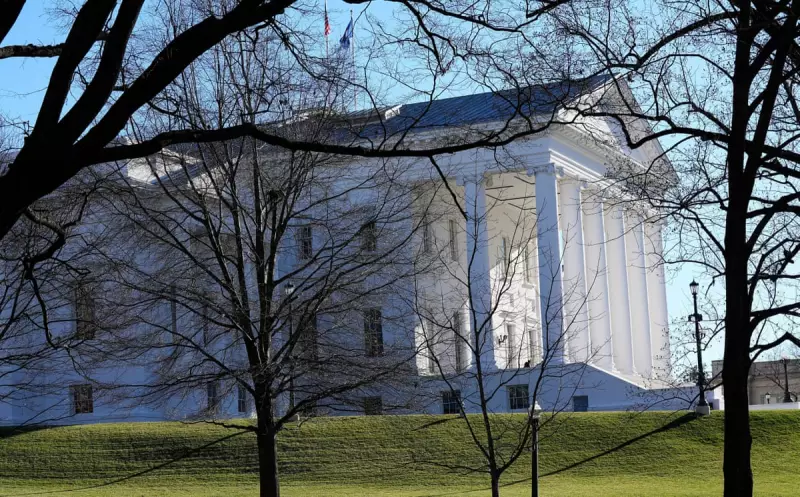
Virginia Judge Strikes Down Democrats' Congressional Redistricting Plan
A Virginia circuit court judge has delivered a significant legal blow to Democratic efforts to redraw the state's congressional map ahead of the crucial November midterm elections. Judge Jack Hurley Jr of the Tazewell circuit court ruled on Tuesday that a proposed constitutional amendment allowing Democrats to reshape district boundaries was illegal and invalid.
Legal Grounds for the Ruling
Judge Hurley struck down the legislature's actions on three primary grounds. Firstly, he found that lawmakers failed to follow their own procedural rules for adding the redistricting amendment to a special session agenda. Secondly, his order stated that Democrats did not approve the amendment before the public began voting in last year's general election. Thirdly, the judge determined that the amendment was not published three months before the election as required by Virginia law.
"As a result," Hurley declared in his ruling, "the amendment was invalid and void."

Democratic Response and Appeal Plans
Virginia House Speaker Don Scott, who was named in the Republican lawsuit challenging the resolution, immediately announced that Democrats would appeal the decision. In a joint statement with other state Democratic leaders, Scott asserted: "Nothing that happened today will dissuade us from continuing to move forward and put this matter directly to the voters."
The advocacy group Virginians for Fair Elections, which supports the redistricting resolution, accused conservatives of strategic forum shopping, claiming Republicans filed their lawsuit in a jurisdiction known to be favorable to GOP interests. The group stated: "Republicans court-shopped for a ruling because litigation and misinformation are the only tools they have left."
National Redistricting Context
This Virginia ruling occurs within a broader national battle over congressional redistricting that has intensified in recent months. Former President Donald Trump initiated an unusual mid-decade redistricting push last summer, urging Republican officials in Texas to redraw districts to help the GOP secure more House seats.
So far, this nationwide redistricting struggle has resulted in:
- Nine additional seats Republicans believe they can win in Texas, Missouri, North Carolina, and Ohio
- Six seats Democrats think they can capture in California and Utah
Democrats had hoped to fully or partially offset the three-seat margin through their Virginia redistricting efforts. Similar to Virginia, redistricting remains actively litigated in several states, with no guarantee that either party will secure the seats they have attempted to redraw.
Potential Additional State Actions
Other states may yet enter the redistricting fray. Democratic Maryland Governor Wes Moore is advocating for revised districts that could potentially help Democrats win all eight of the state's House seats, an increase from the seven they currently hold. Meanwhile, Republican Florida Governor Ron DeSantis plans to convene a special legislative session on redistricting in April.
Virginia's Current Congressional Representation
Virginia is currently represented in the House of Representatives by six Democrats and five Republicans. These districts operate under boundaries imposed by a court after a bipartisan redistricting commission failed to reach agreement on a map following the 2020 census.
Because this commission was established through a voter-approved constitutional amendment, state lawmakers must revise the constitution to enable map redrawing this year. This process requires them to pass a resolution in two separate legislative sessions with a state election occurring between them. Ultimately, Virginians would need to approve any changes through a public referendum.
Judge Hurley's ruling comes just as lawmakers had planned to unveil their proposed new House districts to voters by the end of this week, adding immediate practical consequences to the legal decision.