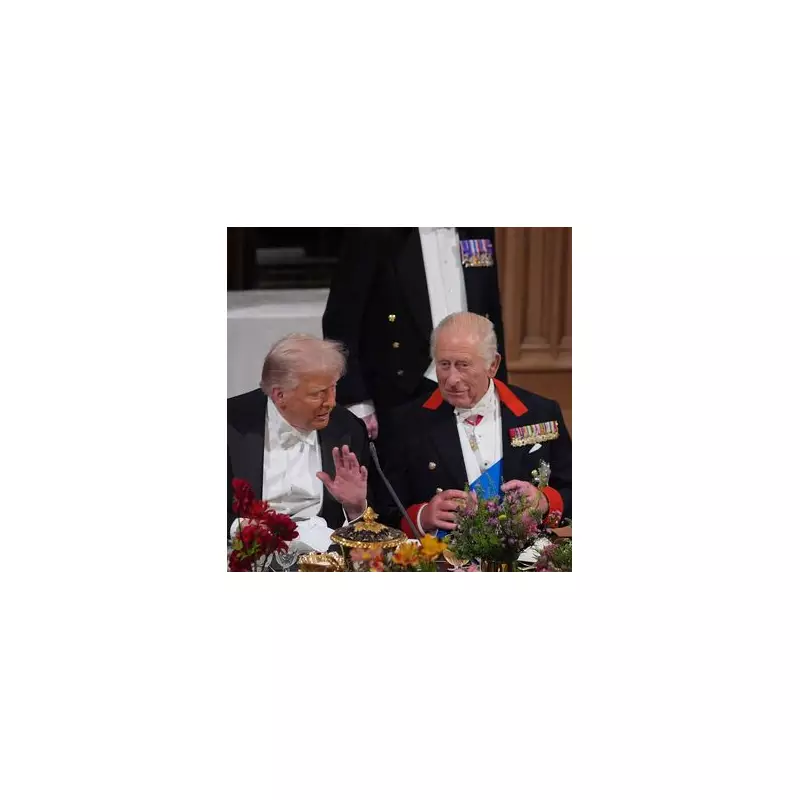
King Charles's decisive intervention following Donald Trump's controversial remarks about British military service in Afghanistan demonstrates a monarch prepared to break with tradition to defend historical truth and national honour. The King's willingness to engage directly with the American president's false assertions marks a significant departure from the typically apolitical stance expected of Britain's sovereign.
A Monarch Breaking Protocol
The royal response to Trump's disgraceful suggestion that British heroes avoided frontline combat during the bloody Afghanistan conflict reveals a monarch who recognises when silence is not an option. While Charles has previously acknowledged the constitutional limitations of his role compared to his position as Prince of Wales, this episode proves he remains willing to use his influence when fundamental truths about British sacrifice are challenged.
Historical Context of Royal Engagement
This is not the first instance of Charles engaging with matters of national importance beyond ceremonial duties. Previously disclosed correspondence reveals that, as Prince of Wales, he wrote extensively to then Prime Minister Tony Blair and Labour government figures in 2004, advocating for improved military equipment for troops in Iraq and broader policy considerations.

Through twenty-seven memos revealed after a prolonged Freedom of Information battle, Charles demonstrated concern for diverse issues including supermarket treatment of farmers and architectural guidance for new hospital designs. These interventions, communicated through aides to Downing Street, established a pattern of engagement that has now evolved into his current role as monarch.
The Trump Controversy Unfolds
The immediate catalyst for the King's intervention occurred during Donald Trump's appearance at the World Economic Forum in Davos, Switzerland. The former US president made inflammatory remarks about NATO allies, specifically stating: "We've never needed them. We've never really asked anything of them. You know, they'll say they sent some troops to Afghanistan, or this or that. And they did, they stayed a little back, a little off the front lines."
These comments sparked immediate outrage across Britain and among military families worldwide. The suggestion fundamentally contradicted the documented sacrifice of 457 British service personnel who lost their lives in Afghanistan between 2001 and 2021. Furthermore, it ignored that the United States itself invoked NATO's Article 5 collective defence clause following the September 11 attacks, leading directly to the Afghanistan campaign where British forces fought alongside American troops.
Diplomatic Pressure and Royal Response
Following concerted diplomatic pressure that included the King's intervention, Trump dramatically reversed his position, suddenly praising British troops as "among the greatest of all warriors" and acknowledging the UK's "tremendous heart and soul" during the twenty-year conflict. This represented a significant climbdown from a political figure not known for admitting error.
The King's approach mirrors his longstanding commitment to speaking truth to power on other critical issues. Throughout his public life, Charles has championed environmental causes, climate action, and military welfare, often facing initial scepticism or ridicule for positions that later gained mainstream acceptance. His willingness to challenge Trump's false narrative continues this pattern of principled engagement.
The Broader Royal Diplomatic Role
This incident highlights the evolving diplomatic function of the modern monarchy. Last year, the King welcomed Trump to Windsor Castle for a state visit at the government's request, demonstrating the royal family's role in maintaining international relationships even with administrations whose approaches may challenge traditional alliances.
Similarly, Prince William's upcoming visit to Saudi Arabia, undertaken at government behest, illustrates how royal diplomacy complements official foreign policy. Both the King and his heir have increasingly used their platforms to address international injustices, whether concerning European conflicts, Middle Eastern tensions, or, as in this case, defending factual accuracy against unfounded accusations.

A Principled Stand for Historical Truth
In an increasingly complex global landscape where historical facts face constant challenge, the King's intervention establishes an important precedent. His defence of British military sacrifice against presidential falsehoods demonstrates that constitutional monarchy can adapt to contemporary challenges while maintaining core principles.
The episode confirms that King Charles, despite controversies throughout his public life, remains committed to using his position to stand on what he perceives as the right side of history. Whether addressing environmental degradation decades before it became mainstream concern or defending military honour against presidential misrepresentation, the King continues to demonstrate that some principles transcend traditional boundaries of royal conduct.