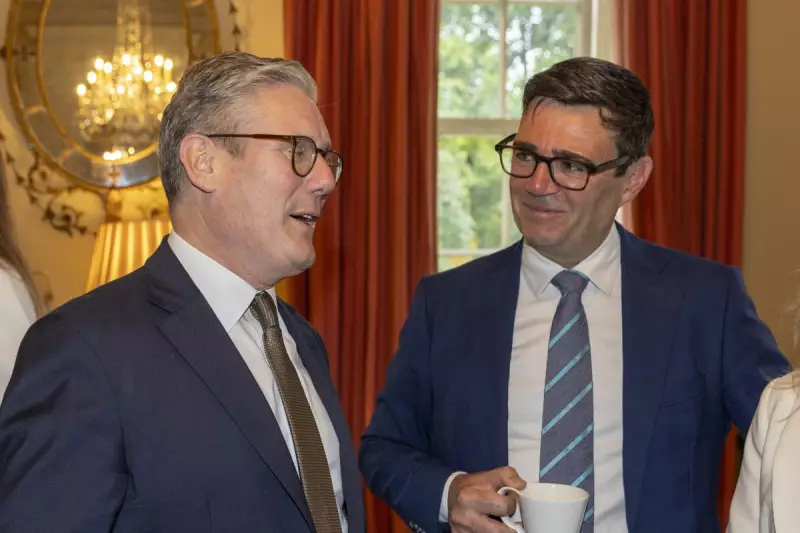
Labour's National Executive Committee has ignited a significant internal party row after decisively blocking Greater Manchester Mayor Andy Burnham from standing as a parliamentary candidate in the upcoming Gorton and Denton by-election. The controversial decision, reached through an 8-1 vote against Mr Burnham, has been met with immediate and fierce criticism from Labour rebels who are branding it a deliberate 'stitch-up' orchestrated from the top of the party.
Burnham Expresses Disappointment and Criticises Party Direction
Following the NEC's ruling, Andy Burnham did not hold back in expressing his profound disappointment. The high-profile mayor, who previously served as an MP, openly criticised 'the way the Labour Party is being run these days,' suggesting a growing disconnect between the party's leadership and its broader membership. His comments have resonated with a faction of backbenchers who are now mobilising against the decision.
Backbench Rebellion and Electoral Warnings
A group of Labour backbenchers, alarmed by the NEC's move, have begun circulating a letter urging the committee to urgently reconsider its position. Their primary concern is a stark electoral warning: that blocking a popular figure like Burnham could lead to the 'unimaginable' loss of the Gorton and Denton seat to a resurgent Reform UK. This fear underscores the high-stakes nature of the by-election and the perceived electoral value Burnham brings to the Labour ticket in Greater Manchester.

Leadership Fears and Westminster Dynamics
Reports from within Labour circles suggest that allies of Sir Keir Starmer were instrumental in advocating for the block. Their apparent fear was that allowing Andy Burnham, a charismatic and independently-minded figure with a strong regional power base, to return to the Westminster arena could pose a genuine threat to Sir Keir's leadership stability. This political calculus, viewing Burnham as a potential rival, appears to have been a key factor in the NEC's overwhelming vote, transforming an internal selection process into a broader debate about party control and future direction.
The fallout from this decision is likely to continue, as it touches on deep issues of party democracy, leadership authority, and electoral strategy. The accusation of a 'stitch-up' reflects wider tensions within Labour about how candidates are selected and who holds sway over the party's future in Parliament.