Labour's Leadership Clash: Burnham Barred from Byelection Bid
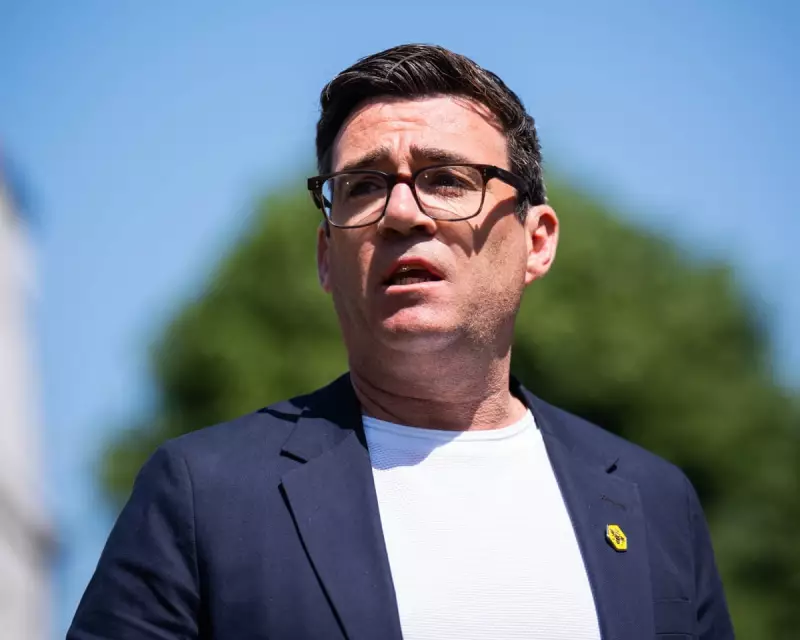
The political ambitions of Andy Burnham, the Mayor of Greater Manchester often dubbed the "King of the North," have been decisively halted by his own party. In a move that has ignited fresh internal strife, Labour's national executive committee has overwhelmingly voted to block Burnham from standing as an MP in the forthcoming Gorton and Denton byelection. This controversial decision, supported by a ten-strong officers' group including the prime minister, effectively staves off a potential leadership challenge to Sir Keir Starmer, at least for the immediate future.
The Procedural Justification and Political Fallout
Labour's leadership has framed the rejection as a matter of procedural necessity, arguing that allowing Burnham to stand would trigger a costly mayoral byelection in Greater Manchester and create an unwelcome political distraction. However, the move has been met with fierce criticism from within party ranks. Several Labour MPs and union backers have condemned it as "petty factionalism," a "huge mistake," and an act of cowardice. They accuse the party leadership of failing to embrace the country's most popular Labour politician, thereby missing an opportunity to reinvigorate the party's appeal.
Number Ten will undoubtedly hope that this wave of anger subsides quickly, allowing the party to move past what one senior cabinet member described as yet another episode of Labour's "psychodrama." Yet, by attempting to extinguish one fire, the leadership may have inadvertently sparked several others. The decision has laid bare the deepening divisions and strategic anxieties plaguing the party as it faces significant electoral challenges on multiple fronts.

Burnham's Dual Role and Political Evolution
Andy Burnham has long occupied a unique and somewhat contradictory position within Labour. Publicly, he maintains a stance of loyalty, yet he consistently advocates for alternative policies and directions, implicitly positioning himself as a potential superior leader to Keir Starmer. His political journey has been marked by significant evolution. Once viewed as a reliable centrist "Mr Cabinet Minister," his perspectives were profoundly shaped by two key experiences.
The first was the Hillsborough disaster, during which, as culture secretary, he faced public booing for the government's initial resistance to a formal inquiry. He subsequently became a central figure in campaigning for and achieving the Hillsborough law. The second transformative experience was his election as Mayor of Greater Manchester in 2017. In this role, he has developed "Manchesterism" – a governing philosophy described as soft left, pro-growth, and interventionist, championing devolution and public ownership of utilities like the successful Bee Network transport system.
The Stakes of the Byelection and Broader Threats
With Burnham out of the race, the Gorton and Denton contest becomes a precarious three-way battle. Labour's previous majority of around 13,400 is now under serious threat from a resurgent Reform UK and a strong local Green Party candidate. Burnham himself has warned that Labour is likely to lose the seat without him, a outcome that would be deeply damaging to Starmer's authority, painting the blocking decision as a factional manoeuvre that cost the party a safe seat.
The broader context heightens the tension. Labour faces dire national polling, with growing fears among MPs about the rising threat from Reform UK. Some believe Burnham's charismatic, vision-driven approach is precisely what the party needs to turn the tide. Meanwhile, Starmer's challenges are mounting: managing international relations with China and the US, sustaining support for Ukraine, and focusing domestic attention on the cost-of-living crisis, all while preparing for difficult local elections where Labour is forecast to perform poorly in Wales and lose longstanding councils in England.

What Next for the King of the North?
For now, Andy Burnham returns to his day job in Manchester, continuing to govern and, as observers note, likely to remain a persistent internal critic of Starmer's leadership. However, his Westminster ambitions are merely on hold, not abandoned. Pressure will intensify for Labour to find him a seat if the party loses Denton and Gorton. As former deputy leader Tom Watson has predicted, Andy Burnham will become an MP "sooner rather than later." The critical question is when and where, as a failed byelection bid could end his career, whereas a strategic entry at the right moment could reignite the leadership debate. The political drama within Labour is far from over; it has simply entered a new, uncertain act.