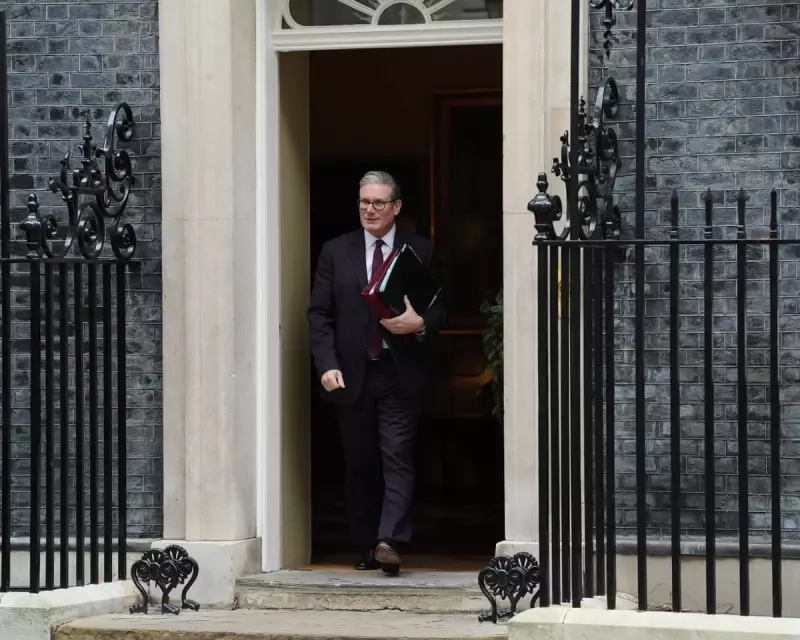
A stark warning has been issued that the Labour Party faces a failure of historic proportions if it does not remove Sir Keir Starmer from its leadership. The caution comes amid a deepening crisis of confidence in British parliamentary democracy, with calls for electoral reform and widespread disillusionment over issues from Gaza to the cost of living.
A Crisis of Democracy and Leadership
The new year has ignited fierce debates about the future of UK democracy and the Labour Party's direction. In a series of letters to the Guardian, readers and party members have articulated a profound sense of crisis. One correspondent, Michael Chandler from Shoreham-by-Sea, stated bluntly that leaving Keir Starmer where he is would represent a catastrophic failure for the entire party. He argued the parliamentary Labour party must either change leader and reset, or allow the democratic crisis to worsen.
This internal criticism is set against a backdrop of broader systemic challenges. Andy Beckett's recent article questioned whether 2025 marked the end of British parliamentary democracy as we know it. While hopeful this is not the case, the argument for moving to a proportional representation system is seen as increasingly clear by many. Notably, it was pointed out that Nigel Farage's Reform UK initially championed PR as a key policy, though the party has grown quiet on the issue.

Disillusionment from Gaza to the Streets
The disillusionment with Westminster is not merely about voting systems. As Keith Flett from Tottenham highlights, it stems from a growing chasm between the politics of the House of Commons and the extra-parliamentary politics in workplaces, communities, and on the streets. Hundreds of thousands continued to march for Palestine in 2025, and while the government made some concessions like recognising a Palestinian state, arms sales to Israel and official relations with Tel Aviv persist.
Simultaneously, the government has introduced a steady stream of measures to restrict protest rights. For many, Labour's perceived inaction on Gaza and its punitive approach to those protesting on climate and Palestine have led to a permanent betrayal of trust, as noted by Daniel Scharf from Abingdon. This, he argues, is a more profound reason for Labour's plummeting popularity than economic factors like the cost of housing or eggs.
The Battle for 2026 and Beyond
Looking ahead, observers warn that defending democracy will require a battle both from above, within institutions, and crucially from below, through public pressure and activism. The political landscape is further clouded by the blizzard of online disinformation. Tom Quinn from Farnham noted that analyses of Starmer's unpopularity often omit the 1.2 billion views garnered by fake, anti-Labour YouTube videos in 2025, a factor he deems significant.
Amid this bleak midwinter assessment, some see potential for change. Chris Bratcher from Richmond, North Yorkshire, suggests that while the current vision is downbeat, come spring, it could look very different. The future, however, rests heavily on Labour's next moves. The party is now at a crossroads: confront its leadership crisis and reconnect with a disillusioned base, or risk a historic failure that could reshape British politics for a generation.