Labour's Strategic Conundrum Over Reform UK
Prime Minister Keir Starmer has issued a stark warning to his party, declaring that the battle against Nigel Farage's Reform UK represents "the fight of our lives". This dramatic framing positions the insurgent party as an existential threat to British democracy, with Starmer suggesting its "racist" policies could "tear the country apart". The Prime Minister has reiterated this grave assessment on multiple occasions, most notably in a pre-Christmas interview where he confessed he could sleep at night under a Conservative government, but not with Reform in power.
Internal Contradictions and Mixed Messaging
Remarkably, this dire warning stands in direct contradiction to the official messaging emanating from Labour's own communications apparatus. The party's social media channels routinely proclaim that the Conservatives and Reform are "basically the same", while a planned advertising campaign reportedly bears the dismissive title "Tories: the sequel". This creates a fundamental strategic incoherence: Reform cannot simultaneously be portrayed as an unprecedented peril and as merely offering more of the same political product.
The confusion extends to Labour's internal polling efforts, which are now belatedly testing which attack lines resonate most effectively with voters. These include highlighting Farage's hostility to workers' rights, the conviction of former lieutenant Nathan Gill for taking bribes from an alleged asset of Vladimir Putin's Russia, and Reform's financial backing from mega-rich "Maga-ish" types. Those overseeing this research emphasise a data-driven approach, yet the exercise inevitably touches upon deeper divisions within the party about its core electoral strategy.
Strategic Crossroads: Which Electorate to Target?
Labour faces a genuine dilemma in determining which sections of the electorate to prioritise. For the past five years, the party has focused on what it termed "hero voters" – typically older, working-class Brexit supporters who now lean toward Reform because they perceive Britain as fundamentally broken. Portraying Farage as offering something "new" and "different" risks ceding the territory of radical change to him entirely.
Conversely, many Labour MPs and ministers worry that this older strategy has opened the party's left flank, where younger, pro-European graduate voters – implicitly deemed "less heroic" – are increasingly supporting the Greens, Liberal Democrats, SNP, and Plaid Cymru. Positioning Labour as a bulwark against Reform's threat to progressive values makes strategic sense for rebuilding support within this left-of-centre bloc, particularly with crucial byelections looming in constituencies like Gorton and Denton.
Historical Parallels and Present Uncertainties
The current situation evokes memories of the mid-1990s, when the Conservatives struggled to counter Tony Blair's "New Labour" project. Their eventual "New Labour, New Danger" campaign, infamously illustrated with demon eyes, proved ineffective. Some Labour strategists now argue the Tories erred by accepting Blair's party was genuinely "new", while others attribute the failure to Labour not being particularly "dangerous" in reality.
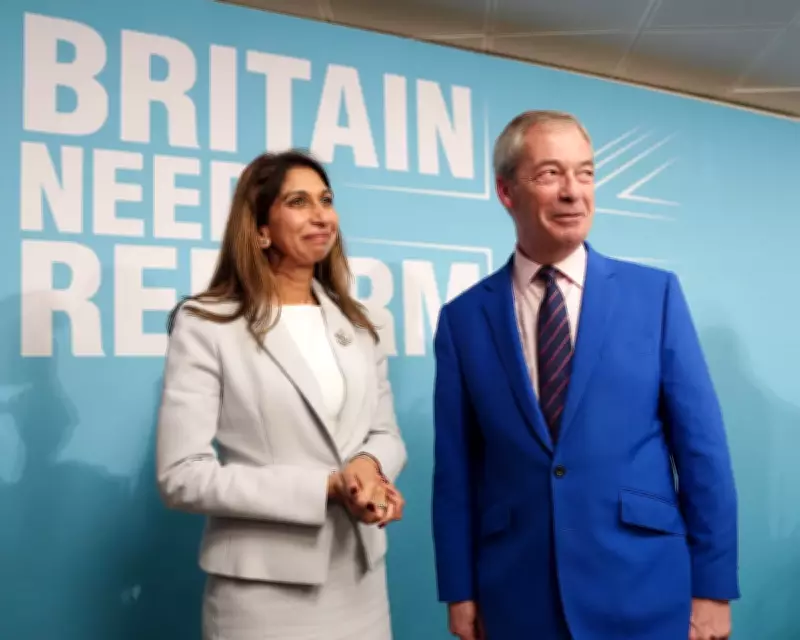
Further complicating Labour's strategic calculus is the ambiguous nature of Reform UK itself. Does the party's recruitment of experienced former ministers – including Nadhim Zahawi, Robert Jenrick, and most recently Suella Braverman – signal an attempt to reassure voters worried about Farage's potential destructiveness? Or does it genuinely represent an insurgent force for change? This ambiguity has led some senior Labour figures to propose a fudged attack line: that Reform is dangerous precisely because it contains the "maddest and baddest" elements of the old Tory party.
The Need for Authentic Leadership
Keir Starmer, known for engaging fairly with internal debates, recognises the genuine dilemmas in approaching Labour's new rival. However, the biggest error would be to treat these questions as merely technical exercises conducted in the rarefied atmosphere of focus groups. Starmer's conference speech four months ago carried weight precisely because it felt authentic – "That was me, that was me!" he reportedly told friends afterwards.
As the Prime Minister frames the coming contest as a battle for the "heart and soul" of the nation, his party urgently needs an infusion of similarly authentic passion and clarity. The time for hesitancy and second-guessing on how to tackle Reform UK, alongside other pressing challenges, must now decisively end. Labour requires a coherent, consistent strategy that matches the gravity Starmer himself has ascribed to this political moment.