

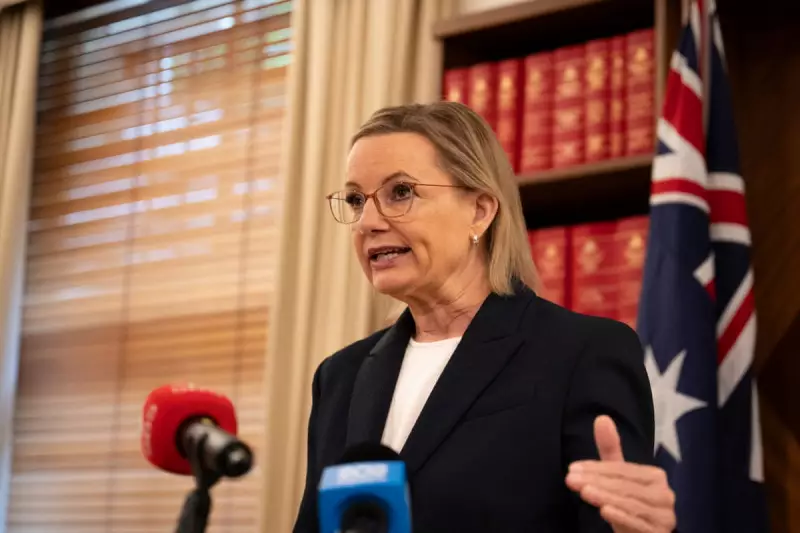
Liberal Leadership Crisis Deepens as Ley Fights for Survival
The political landscape within the Liberal Party has been thrown into turmoil following the dramatic rupture of the Coalition, with widespread speculation mounting that Sussan Ley's tenure as leader is hanging by a thread. In the immediate aftermath of Nationals leader David Littleproud's decision to blow up the longstanding partnership, many Liberal MPs privately concluded that Ley's position had become, in the words of one colleague, "unsalvageable." This sentiment was not confined to her usual conservative critics; even some of her supporters acknowledged that the clock was ticking on her leadership.
Two Key Factors Prolonging Ley's Tenure
Despite the pervasive belief that a leadership spill is imminent, with Angus Taylor and Andrew Hastie emerging as the most likely challengers, two significant factors are currently working in Ley's favour. These elements could potentially buy her crucial time, even if they do not ultimately prevent what many still view as an inevitable outcome.
The first factor centres on the widespread agreement within the Liberal Party room regarding Ley's decision to accept the resignations of the three Nationals senators who crossed the floor on Labor's hate speech legislation. This move effectively stared down Littleproud's threat that it would end the Coalition. Ley's action was endorsed by the Liberal leadership team, including Taylor and other top conservatives such as Michaelia Cash, James Paterson, and Jonno Duniam.

While some Liberals expressed unease about the rushed process leading to the support of Labor's laws, the majority believed it was justified to outlaw extremist organisations like neo-Nazi groups and Hizb ut-Tahrir. Crucially, most of Ley's colleagues blame Littleproud for the ensuing crisis and are adamantly opposed to rewarding his behaviour by ceding to his not-so-subtle ultimatum that the Liberals must replace their leader to reunite the Coalition. To Ley's supporters, these events do not constitute a sackable offence.
The Real Motives Behind the Leadership Challenge
Ley and her allies are acutely aware that the campaign to overthrow the party's first female leader is not fundamentally about the split over hate speech or even the management of the relationship with the Nationals. These issues have merely served as a pretext to launch a coup that has been months in the planning, born out of hostilities that have lingered since Ley narrowly defeated Taylor in the post-election leadership ballot.
Conservative MPs were already discussing plans to move against Ley late last year, prior to the Bondi terror attack, agreeing that if the Coalition's dire polling did not improve around the time of the federal budget in May—roughly twelve months into her tenure—a formal challenge would be launched. However, before any such move could proceed, MPs agreed that Taylor and Hastie first needed to resolve which of them would run as the right faction's candidate against the moderate-aligned Ley.
Internal Factional Rifts Complicate Coup Plans
The second factor buying Ley time is the unresolved question of who will lead the conservative challenge. The shadow leadership campaign playing out in the media has exposed a deep split within the conservative faction, including along generational lines, which now threatens to derail the coup entirely.
Hastie's backers are adamant that the former soldier has the faction's support and want the older Taylor to step aside. However, Liberal sources indicate that Taylor, the right's most senior member, is unwilling to relinquish his chance to run and has reportedly offered Hastie the deputy position as a compromise—an offer that was refused. This impasse has created a genuine stalemate, with Ley's supporters growing increasingly confident that the challenge may not materialise as a result.
As one Liberal powerbroker succinctly summarised the situation: "Angus has the better claim (to be the right's contender). Hastie has the numbers. And Sussan has the support of the party room. It is a genuine stalemate." This complex interplay of internal divisions and strategic calculations means that, for now, Sussan Ley remains in place, albeit under intense pressure and with her political future hanging in the balance.






