France Mourns Former Prime Minister Lionel Jospin
France is in mourning following the death of Lionel Jospin, the former prime minister who famously introduced the nation's 35-hour working week. Mr Jospin passed away on Sunday at the age of 88, as confirmed by his family to Agence France-Presse. His tenure from 1997 to 2002 left a lasting impact on French social policy and political history.
Tributes from Political Leaders
Current Prime Minister Sebastien Lecornu paid tribute on social media platform X, praising Mr Jospin for serving France with "constancy, rigour and a sense of responsibility." Lecornu added that his actions were "guided by a certain vision of social progress and republican values," leaving a model of commitment for future generations.
Political Career and Achievements
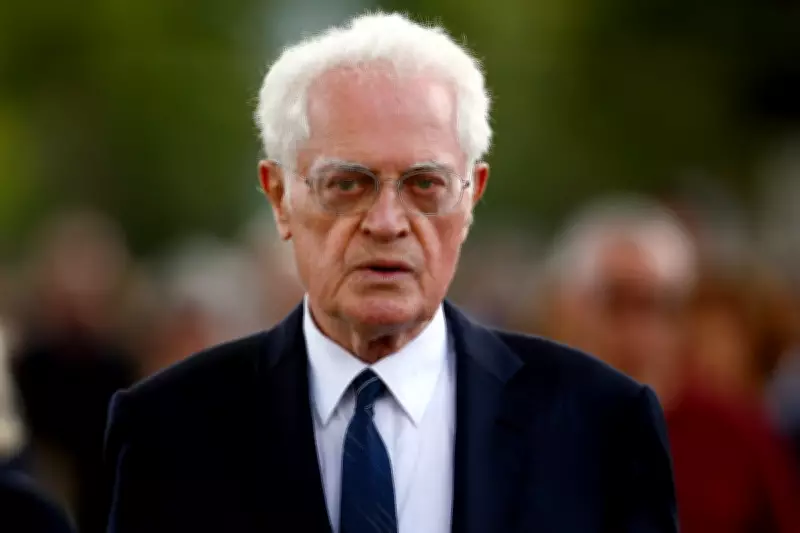
Before his unexpected rise to lead the Socialist Party in 1981, appointed by newly elected President Francois Mitterrand, Jospin was an economics professor. His academic background was often reflected in his distinctive appearance, marked by a tousle of white curls and thick-rimmed glasses.

Untarnished by corruption allegations, Jospin helped re-establish credibility for the Socialists after bribery and fraud scandals led to their downfall in the 1993 parliamentary elections. He became prime minister in 1997, holding the post until 2002, leading a broad left-wing government under conservative President Jacques Chirac in a power-sharing arrangement known as "cohabitation."
Key Policy Initiatives
As prime minister, Jospin resisted shifting the French left toward free-market reforms embraced in Britain at the time. His government enacted several landmark policies:
- The parity law requiring political parties to field equal numbers of male and female candidates in national elections
- Civil unions for LGBTQ+ and straight couples
- Reduction of the work week from 39 hours to 35 hours
The 35-hour week was hailed as a social breakthrough by supporters but criticised by opponents as an economic shackle. Despite these achievements, Jospin never embraced his public role, hampered by a restrained personality that grew stiffer in front of cameras.
Political Exit and Legacy
Jospin abandoned politics after his shocking loss to far-right leader Jean-Marie Le Pen in the first round of the 2002 presidential election. Both candidates received over 16% of the vote, but Le Pen's nearly 200,000-vote advantage saw him advance to the second round against incumbent Jacques Chirac.
Determined to keep Le Pen out of the Elysee Palace, voters rallied around Chirac, who won a second term by a landslide. Jospin's political philosophy remained consistent throughout his career, encapsulated in his trademark phrase: "Yes to the market economy, no to a market society."
Early Life and Personal Background
Born July 12, 1937, Jospin was the son of a midwife who, according to family lore, used the works of Voltaire to raise her pelvis during labour. "She believed I would have the spirit of Voltaire," he once recalled.
His childhood memories of Nazi-occupied Paris profoundly influenced his outlook. "I have the memory of the importance of silence. If you weren't quiet, you ran the risk of putting people in danger. Certainly in political life I've retained a certain horror of talkativeness," he said.
Growing up in a Protestant family, Jospin attended the prestigious Ecole d'Administration Nationale, alma mater to many French leaders and intellectuals. Like many in Paris, he participated in the left-wing protests of 1968 and was close to Trotskyists before joining the Socialist Party.
Despite mellowing over time, Jospin maintained his wariness of unfettered capitalism, leaving behind a complex legacy that continues to shape French political discourse today.