Mandelson's Shadow Looms Over Starmer's Troubled Leadership
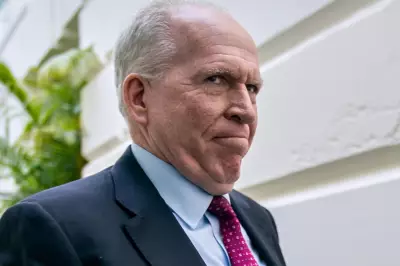
The political atmosphere in Westminster has turned toxic, with Labour's Prime Minister Keir Starmer facing an existential threat from the escalating scandal surrounding his party's veteran fixer, Peter Mandelson. A recent welcome reception at the British ambassador's residence in Washington DC on 26 February 2025, where Starmer and Mandelson were photographed together, now serves as a stark symbol of the contamination spreading through Labour's ranks.
A Decent Leader Undone by Venal Associations
Keir Starmer's personal integrity and moral compass stand in stark contrast to the world of corrupted power that Mandelson inhabits, where vast wealth purchases influence without conscience. Starmer's life purpose, values, and egalitarian instincts have nothing in common with Mandelson's transactional approach to politics, where Labour served merely as a vehicle for advancement rather than a movement of principle.
Despite their lack of personal closeness, Mandelson has successfully cast his long shadow over Starmer's inner circle. Morgan McSweeney, Starmer's key strategist, emerged as a protege of the Mandelsonian school of political cynicism. Other cabinet members have reportedly been seduced by what they perceive as Mandelson's "grownup" approach to realpolitik, blind to the ethical compromises it entails.

The Washington Appointment That Backfired Spectacularly
McSweeney was instrumental in pushing for Mandelson's controversial appointment to Washington, calculating that a man without scruples would be ideally positioned to schmooze a president perceived as having even fewer. This clever maneuvering ignored the minor inconvenience of Mandelson's intimate friendship with Jeffrey Epstein, the convicted sex offender who trafficked young girls to curry favor with the powerful.
The political establishment's collective shrug at these revelations has been telling. While grooming gangs in Rotherham provoke visceral public outrage, the exploitation of equally vulnerable victims procured for wealthy predators somehow generates less moral indignation among the elite.
Labour's Internal Revolt Reaches Critical Mass
The endgame for Starmer's leadership may be approaching rapidly, signaled by the unprecedented outrage erupting from within his own party. This isn't mere political point-scoring but genuine shock and disgust spreading across Labour's ideological spectrum. Starmer's fatal misjudgment came during a Commons appearance where he attempted to withhold vital documents concerning Mandelson's vetting and appointment, citing security concerns about potential abuse of the US president.
This disastrous move failed to anticipate the ferocity of the backlash from his own benches, forcing yet another humiliating U-turn. The vetting process itself now appears suspect, potentially reduced to a "good chaps" conversation where the ambassador's notoriously unreliable word was accepted without proper scrutiny.
Treachery That Defies Comprehension
Mandelson's betrayal operates on a scale that Starmer and his MPs struggle to comprehend. During the height of the 2008 banking crisis, as Labour business secretary, Mandelson passed extremely sensitive market information to foreign financiers. Even more damningly, at a time when public anger demanded punishment for bankers, he allegedly used Epstein as an intermediary to ask JP Morgan's CEO Jamie Dimon to "mildly threaten" his own chancellor, Alistair Darling, to prevent taxation of bankers' bonuses.
While the legality of these actions remains uncertain, their stench of old-fashioned treachery is unmistakable. Darling's memoir records Dimon's "very, very angry" call questioning whether JP Morgan should continue buying UK debt, a not-so-subtle threat that the chancellor courageously resisted by imposing a 50% supertax on bonuses over £25,000.
Public Disgust Reaches Unprecedented Levels
The political fallout has been catastrophic for Starmer's standing. YouGov polling reveals an astonishing 95% of British adults are aware of the Mandelson-Epstein scandal, representing phenomenal cut-through in a population not typically obsessed with political news. This overwhelming public disgust leaves no escape route for the embattled prime minister.

MPs across Labour's factions increasingly doubt Starmer's ability to revive either his personal fortunes or the party's electoral prospects. The upcoming Gorton and Denton byelection on 26 February could provide the triggering event for his downfall, or Labour might wait for expected wipeouts in May's Scottish, Welsh, and English council elections to avoid saddling a new leader with immediate blame.
A Systemic Crisis Exposed
This local scandal has lifted the edge of the global carpet to reveal the cockroaches of power scurrying beneath. The hollow promise to "take back control" has never sounded more empty. The Mandelson affair exposes how easily, under his guidance, controversial companies like Palantir have secured deep access to Britain's defense and NHS systems, with those responsible for these contracts showing alarming complacency.
An impending elections bill risks highlighting the government's inadequate response to these systemic failures. While positive measures like votes at 16 and easier ID requirements at polling stations are welcome, the legislation lacks the fundamental electoral reform needed to prevent a repeat of the last election's democratic distortion, where 34% of votes delivered 63% of parliamentary seats.
The Path Forward Demands Humility and Real Change
With three years remaining and a massive, if unearned, parliamentary majority, Labour faces a critical choice. The party must begin anew with greater humility and recognition that the public is revolted by transactional politics conducted in opaque ways they cannot comprehend. This requires transforming into an enterprise competent enough to deliver genuine change rather than continuing business as usual.
The question is no longer if Starmer will fall, but when. A spontaneous uprising of MPs, driven by sheer indignation rather than organized plotting, could force a resignation without the need for formal challenges. However, Labour's historical tendency to dither and prioritize factional interests over party survival could prolong the agony, choosing inevitable failure over allowing victory for opposing wings.
This scandal has provided a glimpse into the real workings of power that should spur efforts to shore up Britain's fragile democracy. As Adam Smith warned in 1776, people of the same trade naturally conspire against the public interest—a truth magnified today as a tiny cabal of billionaires controls global resources from their flying palaces, indifferent to those below.