Government Yields to Pressure Over Mandelson Appointment Papers
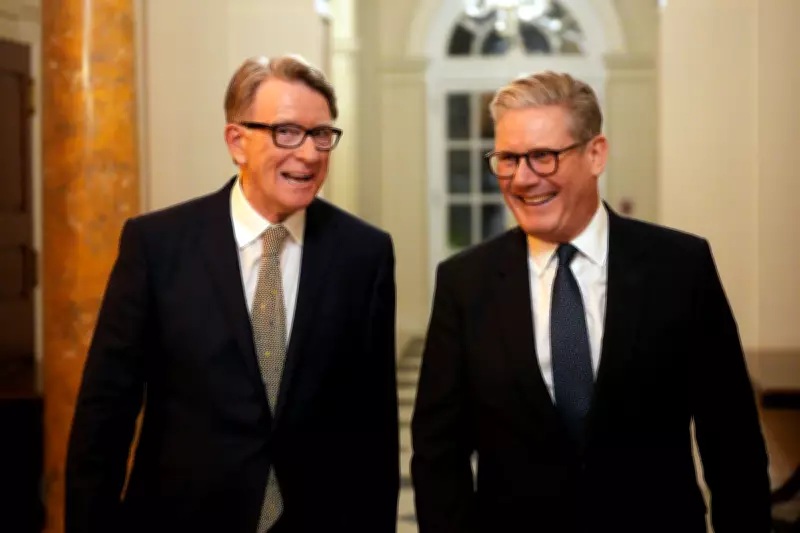
Under sustained pressure from the Conservative opposition, the Government has agreed to release papers detailing Lord Peter Mandelson's controversial appointment as ambassador to the United States. This decision comes amid the ongoing fallout from Mandelson's connections to the convicted paedophile financier Jeffrey Epstein, which have now triggered a criminal investigation by the Metropolitan Police.
Parliamentary Motion Forces Transparency
Tory leader Kemi Badenoch has tabled a humble address motion in the Commons, employing this arcane parliamentary mechanism to compel the Government to disclose all relevant documents. The requested materials include due diligence work conducted by the Cabinet Office, email exchanges between Lord Mandelson and key figures in Sir Keir Starmer's inner circle—notably chief of staff Morgan McSweeney—and details of the severance payment made to the peer following his dismissal from the Washington role.
The Government has tabled an amendment agreeing to release the papers, with the sole exception being any information that would be "prejudicial to UK national security or international relations." This concession appears to acknowledge the significant anger on the Labour benches regarding the Mandelson affair, which threatened to provoke a backbench revolt had MPs been whipped to oppose the document release.

Epstein Links Trigger Police Probe and Political Fallout
Lord Mandelson, a political appointee rather than a career diplomat, was sacked from his ambassadorial post in September last year over his links with Epstein. He has since resigned from the Labour Party and the House of Lords, stating he does not wish to 'cause further embarrassment.' The Metropolitan Police confirmed on Tuesday evening that it has launched an investigation into the former minister for alleged misconduct in public office—an offence carrying a maximum sentence of life imprisonment.
The investigation follows the release of files by the US Department of Justice as part of the Epstein case. These documents appear to show that internal government information concerning the response to the 2009 global financial crisis was sent to Epstein. The Cabinet Office, after an initial review, passed material to the police, having found it contained "likely market-sensitive information" and that official handling safeguards had been "compromised."
Senior Figures Express Outrage and Betrayal
Cabinet minister Wes Streeting articulated a profound sense of betrayal felt across the political spectrum. In an interview with Times Radio, he stated: "You can see the outrage across the political spectrum and from people up and down our country. I cannot state strongly enough how bitterly that betrayal feels for those of us in the Labour Party who feel very personally let down." He added that Mandelson had betrayed two prime ministers, the country, Epstein's victims, and the fundamental values of public service.
Former Prime Minister Gordon Brown, who appointed Mandelson as his Business Secretary, confirmed he had provided the Met with "relevant" information regarding what he termed Mandelson's "inexcusable and unpatriotic act."
Appointment Process and Severance Payment Under Scrutiny
Lord Mandelson was brought back to the political frontline by Sir Keir Starmer, who appointed him to the high-profile Washington role to deal with Donald Trump's White House. This appointment proceeded despite knowledge of Mandelson's friendship with Epstein, though the full extent of their contact has only recently been revealed through US disclosures.
Mr Streeting acknowledged there are "clearly lessons to be learned, to put it mildly" about the vetting process. He insisted the Government was demonstrating "transparency" by agreeing to release the documents and suggested Mandelson should return the severance payment he received after being fired.
Kemi Badenoch has demanded Downing Street explain the appointment vetting, claiming concerns were "waved away" to facilitate "a political appointment of a man who is a close friend of a convicted paedophile."

Mandelson's Defence and Ongoing Developments
While approached for comment, Lord Mandelson has yet to speak publicly. However, the BBC reports it understands he maintains he did not act criminally and that his actions were not for personal gain. He reportedly argues he sought Epstein's financial expertise in the national interest ahead of the 2008-09 crisis.
The released emails from 2009 appear to show Mandelson shared sensitive information on at least four occasions, including an assessment by Gordon Brown's adviser of potential policy measures such as an "asset sales plan."
In a separate but related development, the Press Association understands that Andrew Mountbatten-Windsor has moved from Royal Lodge in Windsor to a property on the King's Sandringham estate. This comes as police said they were assessing allegations that a woman was sent to the UK by Epstein for a sexual encounter with Andrew.