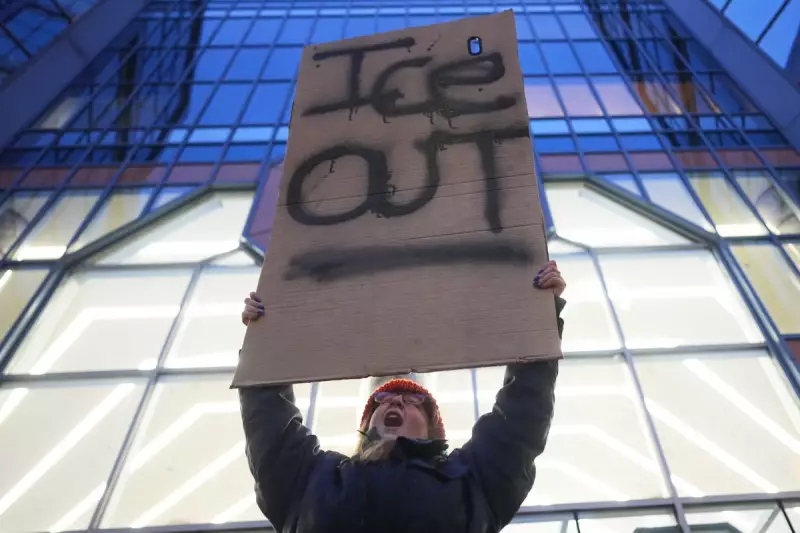
Minnesota's Unprecedented Stand Against Federal Immigration Authorities
Legal experts are describing the escalating conflict between Minnesota state authorities and federal immigration officials as unprecedented in modern American governance. The rift has deepened following the fatal shooting of two Minnesota residents by Immigration and Customs Enforcement officers during the Trump administration's immigration enforcement actions.
Website Launched to Counter Federal Claims
The Minnesota Department of Corrections has taken the extraordinary step of creating a dedicated website to challenge what state officials characterize as Department of Homeland Security misinformation. This digital platform presents evidence contradicting federal assertions about immigration enforcement in the state.
The website includes:

- Documentation showing Minnesota's compliance with federal requests to detain individuals under deportation orders
- Video evidence demonstrating peaceful transfers of custody from state prisons to federal authorities
- Official refutations of federal claims about criminal histories of individuals targeted by immigration agents
In one particularly contentious case, Minnesota officials released a statement clarifying that they never had custody of an individual federal authorities described as having a significant criminal history, finding only decade-old misdemeanor traffic violations in their records.
Legal Battle Over Evidence Preservation
The conflict escalated dramatically when Minnesota authorities filed a federal lawsuit seeking to preserve evidence from the Saturday shooting of Alex Pretti. This legal action came after state investigators were blocked from accessing the crime scene by federal officials.
A federal judge granted Minnesota's motion to prevent the Trump administration from destroying or altering evidence, though federal officials dismissed the lawsuit and its underlying concerns as "ridiculous."
Jimmy Gurulé, a Notre Dame law professor and former federal prosecutor, described the situation as shocking: "The implication was they are not just keeping evidence from them but possibly destroying it. Clearly the state attorney general and the Minneapolis police have grave distrust with ICE and DHS."
Breakdown in Established Investigative Protocols
Experts note that the current situation represents a dramatic departure from decades of established practice. Traditionally, the Department of Justice's Civil Rights Division would investigate the constitutionality of fatal officer-involved shootings. However, DHS officials have announced their own department will investigate the Minneapolis shootings instead.
Chris Mattei, a former federal prosecutor who served under both Presidents Bush and Obama, observed: "They have been the independent body that would investigate it. But it would seem that this Justice Department and this Civil Rights division have zero interest in enforcing constitutional rights for citizens in the immigration context."
Attempts at Reconciliation and Ongoing Tensions
Despite the deepening rift, there are signs that reconciliation might be possible. A Monday phone call between Minnesota Governor Tim Walz and President Donald Trump reportedly yielded progress, with both leaders agreeing to discuss ensuring state investigators could conduct independent investigations.
The White House also moved to distance President Trump from inflammatory statements made by staff characterizing Pretti as an assassin, with press secretary Karoline Leavitt noting the president had never used those words.
Professor Gurulé emphasized the damage such statements cause: "You don't express your conclusion before an investigation and make it public. That is unheard of and upside down. Statements like that erode the public's confidence that investigations are impartial."
Broader Implications for Federal-State Cooperation
Legal experts with experience across multiple presidential administrations expressed deep concern about the breakdown in federal-state cooperation. While acknowledging that turf battles and disagreements have occurred historically, they emphasized that such conflicts were traditionally handled discreetly behind closed doors.

"The disagreements were always handled behind the scenes," Gurulé recalled from his experience. "There were never any public statements criticizing other agencies. It's not even a question of collaboration at this point. It's such a broken relationship."
Despite the tensions, Minnesota officials reiterated their commitment to continue honoring federal requests to hold incarcerated non-citizens until immigration authorities can assume custody, suggesting that some operational cooperation continues even as the broader relationship faces unprecedented strain.