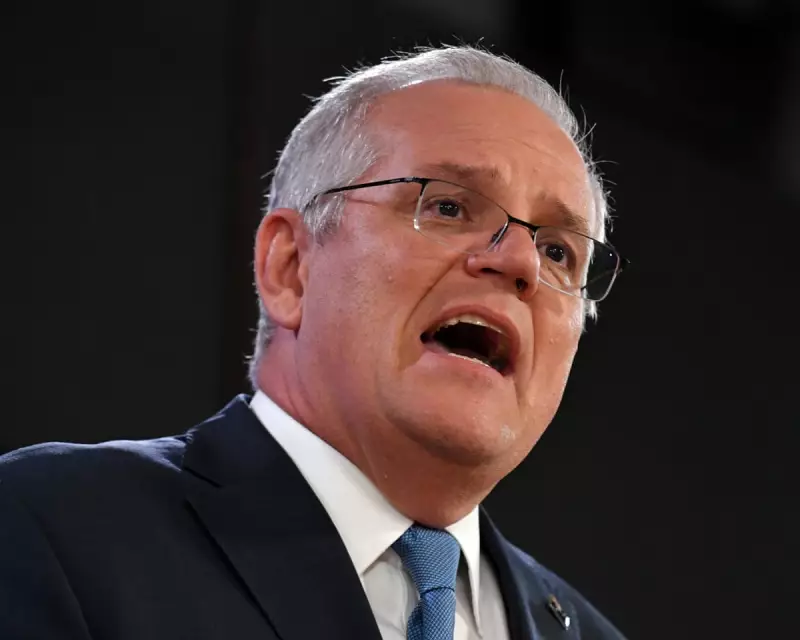
Former Australian prime minister Scott Morrison has ignited a fierce controversy over religious freedom and community relations following his call for a national register and mandatory accreditation for Islamic religious leaders.
Controversial Proposals at Jerusalem Conference
Speaking at an antisemitism conference in Jerusalem on Tuesday, the former Liberal leader demanded what he described as "nationally consistent, self-regulated standards" for imams in Australia. Morrison specifically called for recognised accreditation, a national register for public-facing religious roles, clear training and conduct requirements, and enforceable disciplinary authority.
The former prime minister linked his proposals to the recent Bondi terror shooting at a Hanukah event, which left fifteen people dead, describing the alleged perpetrators as "Australian-made" and calling for greater focus on what he termed "radicalised extremist Islam."

Islamic Community's Fierce Rejection
The Australian Federation of Islamic Councils (AFIC), the nation's peak Muslim body, has delivered a scathing response to Morrison's remarks, labelling them "reckless, deeply offensive and profoundly dangerous." AFIC president Dr Rateb Jneid declared the proposals represented a "fundamental attack on religious freedom and equality before the law."
"Rhetoric like this inevitably creates a divide between so-called 'acceptable' and 'unacceptable' Muslims, with politicians positioning themselves as arbiters of our faith," Dr Jneid stated. "That is not leadership. It is dangerous, and history shows us exactly where it leads."
Government and Opposition Responses
Defence Industry Minister Pat Conroy described Morrison's ideas as "really problematic and troubling" during an ABC radio interview, praising Australia's Muslim community as "incredibly valued Australians" who were among the earliest to condemn the Bondi attacks.
However, current Liberal senator and shadow minister Andrew Bragg endorsed Morrison's comments on the same network, calling on Muslims to "take some responsibility" for acts of terrorism. "The West has probably been too nice for its own good, and a lot of Western countries probably feel that they can't be honest and open about some of the issues," Bragg told the ABC.
Historical Context and Double Standards
The Australian National Imams Council (ANIC), representing more than three hundred Muslim leaders nationwide, issued a statement condemning Morrison's claims as "deeply ill-informed." The council drew attention to what they described as a troubling double standard in political rhetoric.
"When Australian man Brenton Tarrant killed fifty-one worshippers at a Christchurch mosque in 2019 – during Morrison's time as prime minister – no collective blame was placed on a race, religion, or community, nor should it have been," ANIC stated. "That same standard must apply consistently."
Morrison's Defence and Comparisons
Morrison, who has frequently spoken about his Pentecostal faith, defended his proposals by drawing comparisons with other religious traditions and international examples. He noted that Anglican ministers require accreditation and training, and pointed to Arab countries like Saudi Arabia, Jordan and Bahrain that exercise authority over religious teaching and imam licensing.
"If you want to be an Anglican minister, you've got to have the right accreditation, do the interviews, have training in all the things you have to have training in, to make sure you're compliant with Australian laws," Morrison told radio station 2GB. "If you don't do that, you don't get a ticket."
The former prime minister insisted he was not proposing that government "run religion" and denied his ideas were about policing faith, instead framing them as matters of "responsibility and accountability."
Broader Context of Extremism
Gamel Kheir, secretary at the Lebanese Muslim Association, argued that discussions about Islamic extremism needed to be examined within the broader context of rising extremism in Australia, including the growth of neo-Nazi movements.
"To somehow say that the Muslim community is responsible for the ills of the world is living in a cocoon and putting your head in the sand," Kheir stated, highlighting what he sees as selective focus on one form of extremism while ignoring others.

Accountability Questions
The controversy comes as Morrison continues to face criticism over his secret appointment to multiple ministry portfolios during the Covid pandemic, with questions raised about his commitment to transparency and accountability in governance.
ANIC special adviser Bilal Rauf criticised what he called Morrison's "fundamental ignorance" about existing English translations of Islamic teachings, noting these resources are "readily utilised" within the community. Rauf emphasised that law enforcement authorities have been "unequivocal" that recent attacks were not directed, organised, or endorsed by any religious community.
As the debate continues to unfold, Islamic community leaders have expressed profound disappointment at what they describe as divisive language from political figures at a time when unity and social cohesion are most needed.