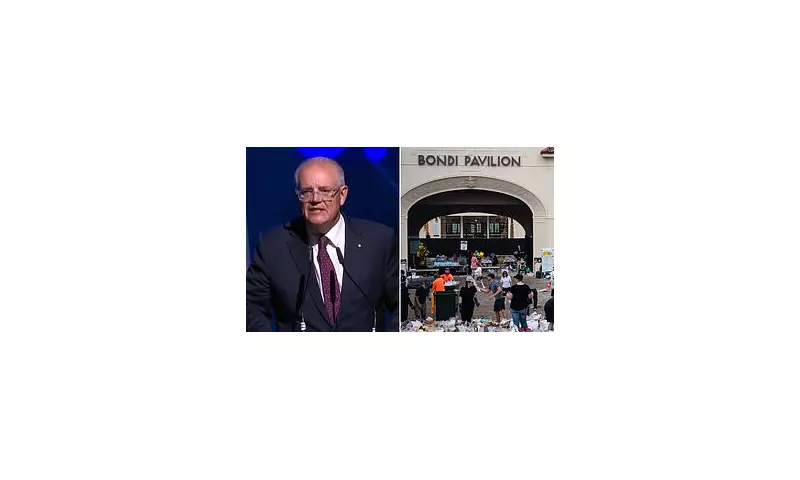
Former Prime Minister Scott Morrison has ignited a fierce political and social firestorm after proposing that Islamic religious leaders should be required to obtain a licence to preach in Australia. The controversial remarks were delivered during an address at an antisemitism conference in Israel on Tuesday night, in the wake of the Bondi Beach terror attack that occurred on December 14 last year.
Morrison's Proposals for Islamic Institutions
During his speech, Morrison outlined a series of specific reforms he believes are necessary for Australian Islamic institutions. He suggested that sermons should be translated into English to ensure transparency and that a dedicated board should be established to monitor radical elements within the community. The former Liberal leader anticipated criticism, stating that some would label his suggestions as hostile to Islam or multiculturalism, but he insisted his intent was protective.
'To the contrary, I am advocating reforms I believe will help religious leaders in our Islamic community keep the wolves from their flock,' Morrison asserted, according to reports from The Australian. He argued that treating such issues as taboo only benefits those who wish to keep radical influences 'opaque and in the dark', referencing the radicalisation of two homegrown extremists.

Furious Backlash from Muslim Community
The Australian Federation of Islamic Councils (AFIC) responded with immediate and forceful condemnation, describing Morrison's rhetoric as reckless, deeply offensive, and profoundly dangerous. In a strongly worded statement, the organisation accused the former PM of reviving a discredited narrative that seeks to divide Muslims into 'good' and 'bad' categories.
'They portray Imam itself as a threat, and to frame Muslim communities as objects of suspicion rather than equal citizens,' the AFIC statement declared. Dr Rateb Jneid, President of AFIC, added a pointed critique, warning that such proposals would allow politicians to position themselves as arbiters of the Islamic faith.
'That is not leadership. It is dangerous, and history shows us exactly where it leads,' Dr Jneid stated. He further lamented that the Muslim faith is constantly scrutinised and politicised yet rarely defended by law, arguing that when senior figures single out Islam, they inadvertently legitimise the very hatred they claim to oppose.
Morrison Doubles Down on Radio
Undeterred by the criticism, Morrison reinforced his position during an interview with 2GB radio on Wednesday morning. He emphasised the need for accountability within faith communities, drawing a direct comparison to other regulated professions.
'You need to be accountable to leaders in your own faith community. You have to have training to make sure you're compliant with Australian laws, and if you don't do that, you don't get a ticket,' Morrison explained, using the metaphor of a licence or permit for preachers.
Political Division and Support
The former prime minister's comments have exposed clear divisions within the political landscape. Liberal frontbencher Senator Andrew Bragg offered measured support, suggesting that the idea of a register for Islamic preachers is 'worth looking at' during an appearance on ABC News. Bragg argued that the Australian Muslim community must take some responsibility for behaviours exhibited over recent decades.
When challenged on whether Christian communities should similarly be held accountable for instances of hate speech, such as Nazi rhetoric, Senator Bragg acknowledged the point but insisted on honesty about the source of problems. 'I mean, it is a mutation of Islam which is leading to terrorism. And so I'm not going to pretend that's not the case,' he stated.
In contrast, Labor minister Pat Conroy expressed deep concern, particularly regarding Senator Bragg's endorsement of Morrison's remarks. Conroy highlighted that while Morrison is now a private citizen, Bragg's comments as a serving senator are troubling and demonstrate significant internal division within the Liberal Party on this sensitive issue.

The debate continues to rage, underscoring profound tensions around security, religious freedom, and community cohesion in contemporary Australia. Morrison's proposals have placed a stark spotlight on the complex interplay between counter-terrorism measures and the rights of religious minorities, with no immediate resolution in sight.