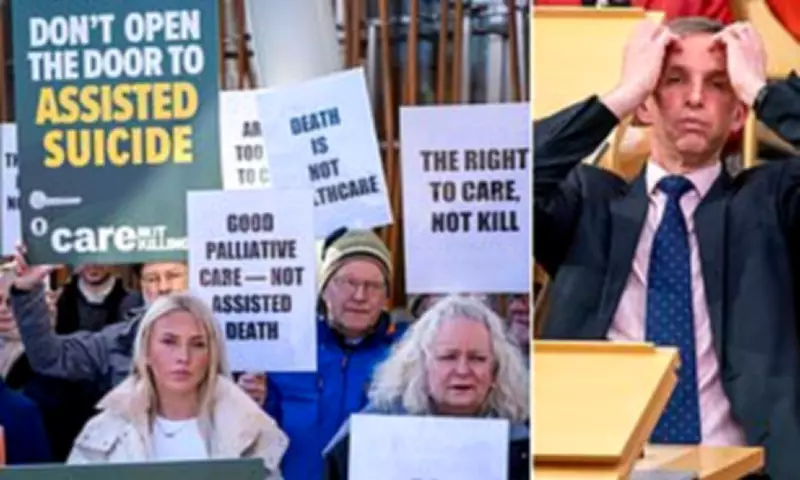
MSPs Unite for Palliative Care Reform After Assisted Dying Bill Defeated
Politicians across the Scottish Parliament have issued a united call for significant improvements to end-of-life care following the decisive rejection of legislation to legalise assisted dying. The proposed bill, which would have permitted terminally ill adults to request assistance in ending their lives, was defeated by a vote of 69 to 57 at Holyrood, marking the third time such measures have been voted down.
Cross-Party Consensus Emerges on Care Priorities
In the aftermath of the vote, MSPs from all political backgrounds emphasised the pressing need to enhance palliative care services throughout Scotland. Many legislators who opposed the assisted dying bill cited concerns about potential coercion of vulnerable individuals and the ethical burdens placed on healthcare professionals. These same voices are now demanding substantial reforms to ensure compassionate and effective treatment for those nearing the end of their lives.
Conservative MSP Edward Mountain, who actively campaigned against the legislation, stated: 'This bill had too many holes and posed too many difficulties. We must use this moment to improve palliative care, to improve the lives of disabled people, and to ensure we have a system of care that delivers for everyone.'

Political Leaders Advocate for Immediate Action
Labour MSP Michael Marra echoed this sentiment, reflecting on the emotional parliamentary debate: 'Parliament heard the stories of painful, traumatic deaths tonight in an impassioned debate. I believe, now more than ever, that there is a shared resolve to act for palliative care reform.'
Deputy First Minister Kate Forbes, speaking in a personal capacity, called for a broad consensus within the Scottish Parliament to deliver high-quality palliative care. During finance questions, Liberal Democrat MSP Willie Rennie highlighted the unity on this issue, stating: 'As the chamber yesterday was divided on Liam McArthur's bill on assisted dying, it was absolutely united on palliative care, and we need to have a step change.'
Government Response and Funding Commitments
Finance Secretary Shona Robison acknowledged the parliamentary consensus, indicating that funding for palliative care would be reviewed. 'I do think that there is a need for us to look clearly, as parliament was of one voice last night, around the funding for palliative care,' she said. Robison noted that First Minister John Swinney had already signalled this would be examined, and the issue is expected to feature prominently in upcoming election manifestos as a key priority for the next parliamentary term.
National and UK-Wide Calls for Reform
Former Prime Minister Gordon Brown added his voice to the campaign, describing a 'moral obligation' to make 'urgently needed improvements' to end-of-life care across the United Kingdom. Brown urged cooperation among the four UK governments to eliminate regional disparities in care quality. 'We now have a moral obligation to move quickly to make the urgently needed improvements in end-of-life care and to end the UK-wide postcode lottery,' he asserted.
First Minister John Swinney agreed with Brown, emphasising the vital importance of palliative care. 'There are good, good services in place already within Scotland, and I think we need to build on those services and make sure that they meet the needs of all of our population who require end-of-life care,' Swinney commented.
Addressing Personal Tragedies and Systemic Failures
Scottish Labour leader Anas Sarwar highlighted the human cost of inadequate end-of-life support, stating: 'The tragedy is to hear all the individual stories and case studies of people who have the most horrific circumstances in their final days, weeks and months of their life, and also the ongoing trauma that causes their loved ones for the rest of their lives, is not something that any of us should find acceptable or tolerable.'

The assisted dying bill, proposed by Liberal Democrat MSP Liam McArthur, aimed to provide a legal framework for assisted dying but faced strong opposition over ethical and practical concerns. The debate has now shifted focus towards strengthening existing palliative care systems, with MSPs pledging to transform end-of-life services to better support terminally ill patients and their families across Scotland.