New York Times Faces Intense Backlash Over 'Soft-Touch' Khamenei Death Headline
The New York Times has come under fierce criticism for what many are calling a "soft-touch" headline announcing the death of Iranian Supreme Leader Ayatollah Ali Khamenei. The liberal publication released an article on Saturday following President Donald Trump's confirmation that Khamenei, described by the president as "one of the most evil people in history," had been killed in a US airstrike.
Social Media Erupts Over Perceived Whitewashing
Despite widespread celebrations across the globe marking the demise of what many considered a brutal dictator, The New York Times opted for a notably restrained approach. Their article carried the headline: 'Ayatollah Ali Khamenei, Hard-Line Cleric Who Made Iran a Regional Power, Is Dead at 86.'
Social media platforms swiftly became arenas of condemnation. Users accused the publication of failing to accurately characterize Khamenei's legacy. "They are sick," one individual posted on X, echoing sentiments shared by the far-right account Libs of TikTok. Another user expressed such disbelief at the headline's tone that they questioned its authenticity, wondering if it had been generated by artificial intelligence.

"Omfg. This makes my blood boil," declared a third critic, while a fourth added, "You can't despise them enough." The consensus among detractors was that the headline amounted to a failure to call out what they viewed as a terrorist and dictator.
Controversial Legacy and Immediate Aftermath
Khamenei's 36-year rule was marked by the intensification of radical governance within Iran and the fueling of extremism across the Middle East. His policies were responsible for the deaths of thousands of Iranians and forced numerous others into exile, cementing his reputation as a dictator among critics worldwide.
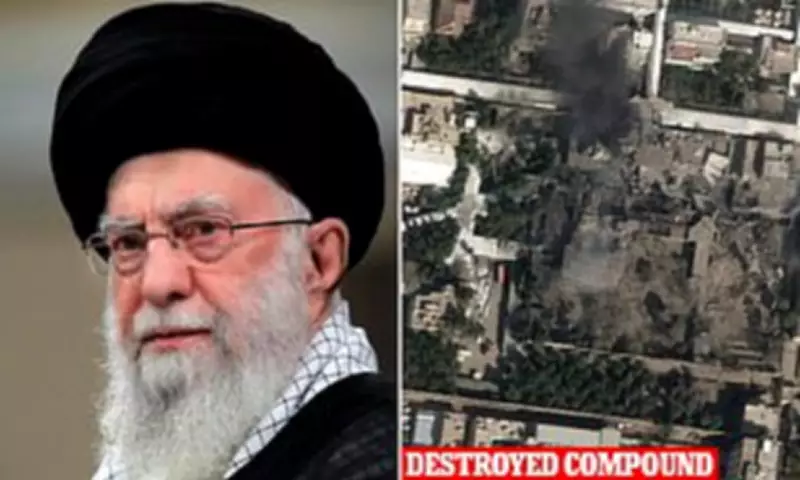
The US airstrike that claimed his life on Saturday also resulted in the deaths of multiple family members, including his daughter, son-in-law, and grandchild. His compound was left completely destroyed. In the immediate aftermath, President Trump celebrated the event as justice for Iranians, Americans, and others harmed by Khamenei's regime, while simultaneously urging Iranian citizens to seize the moment to challenge the Islamic regime.
Comparison to Previous NYT Coverage Sparks Further Outrage
The controversy deepened as many observers drew comparisons between The New York Times' handling of Khamenei's death and its coverage of other figures. Notably, users contrasted the soft headline for Khamenei with the paper's January headline about the death of Dilbert comic strip writer Scott Adams, which highlighted "racist comments" he had made prior to his passing from prostate cancer.
"A cartoonist was the true threat to peace, obviously," one user sarcastically remarked, while another pointedly stated, "NYT called Scott racist but failed to call out [a] terrorist." This perceived inconsistency in editorial judgment fueled additional criticism of the publication's priorities and framing.
Geopolitical Fallout and Escalating Conflict
The assassination has triggered significant geopolitical repercussions. Iranian state media confirmed the leader's death at his compound, and the country has raised its symbolic "Red Flag of Revenge," vowing unprecedented retaliation against the US and Israel. Iranian President Masoud Pezeshkian condemned the killing as a "declaration of war against Muslims."
In response, Iran has launched a series of retaliatory strikes across neighboring Gulf states, with explosions reported in:
- Qatar
- Israel
- Bahrain
- Kuwait
- Iraq
- Oman
- Saudi Arabia
The Islamic Revolutionary Guard Corps (IRGC) claimed attacks on nearly 30 US military bases and even targeted the aircraft carrier USS Abraham Lincoln. The conflict has expanded to include drone strikes in Dubai, impacting the airport and luxury hotels, signaling a dangerous escalation across the region.

International Calls for De-escalation
Amid the rising violence, Pope Leo XIV, speaking from the Vatican, issued a strong appeal for restraint. The first American-born pontiff expressed deep concern over the Middle East situation, warning that stability cannot be achieved through threats or weapons but only through sincere dialogue.
"Faced with the possibility of a tragedy of enormous proportions," the Pope urged, "I address to the parties involved a heartfelt appeal to assume the moral responsibility to stop the spiral of violence before it becomes an irreparable abyss!" He prayed for a return to diplomacy to secure a just and peaceful coexistence.
The Daily Mail has reached out to The New York Times for comment regarding the headline controversy, but no response has been publicly disclosed at this time.