First Minister Condemns 'Preferential Treatment' for Veterans in Troubles Legacy Approach
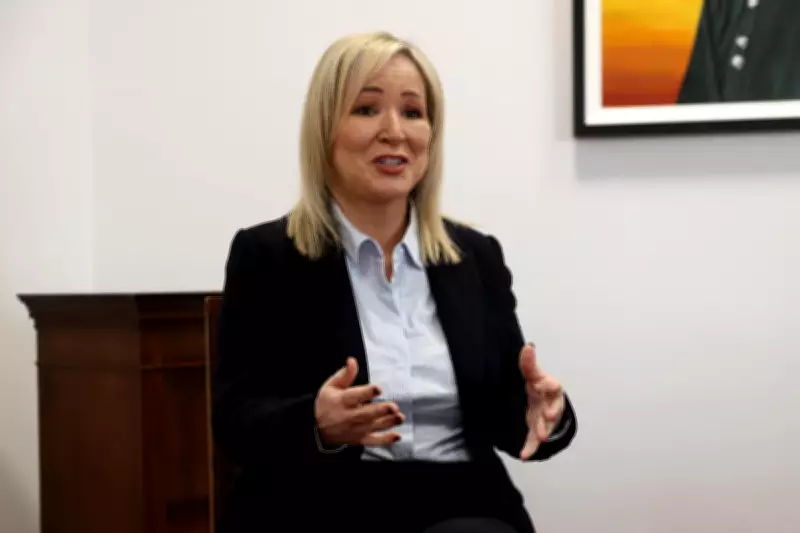
First Minister Michelle O'Neill has launched a strong critique of the UK Government's legislative approach to dealing with the legacy of the Northern Ireland Troubles, accusing Westminster of providing "preferential treatment for British state forces" while limiting avenues for families seeking truth and justice.
Call for 'Fairness Across the Board' in Westminster Legislation
Speaking to Sky News, Ms O'Neill emphasised that "all families want access to truth and justice" but argued the current legislation progressing through Parliament creates an uneven playing field. "What we're seeing play out in Westminster is preferential treatment for British state forces, and avenues being closed down for families who want access to truth and justice or access to the courts," she stated.
The Sinn Féin leader added that this approach "will never wash" and would prevent Northern Ireland from moving forward. "My job as political leader is trying to help to heal the wounds and to move this forward. We're only going to do that if there's fairness across the board," she asserted.

DUP Challenges Government to Protect Veterans
Meanwhile, Deputy First Minister Emma Little-Pengelly of the Democratic Unionist Party presented a contrasting perspective, stating her party was challenging the Government to "stand up for and protect" veterans deployed to Northern Ireland during the conflict.
Ms Little-Pengelly reminded that "90% of the atrocities of the murders carried out were carried out by terrorist organisations" and expressed concern about attempts to "rewrite history" by focusing disproportionately on state forces. While opposing amnesty, she emphasised the need to protect those "sent to Northern Ireland in very difficult circumstances."
Legislative Context and Recent Developments
The controversy centres on Labour's Northern Ireland Troubles Bill currently progressing through Westminster, which replaces the controversial Legacy Act introduced by the previous Conservative government. Recent parliamentary developments include:
- MPs backing a remedial order removing conditional immunity provisions from the previous Act
- The scrapping of a bar on future legacy compensation cases
- Prime Minister Sir Keir Starmer indicating new protections for military veterans will be added to the bill
These veteran protections reportedly include:
- Protection from repeated investigations
- A right to give evidence remotely
- Protections for health in old age
- A right to seek anonymity
- Protection from cold calling
Broader Framework and Ongoing Challenges
Last year, the UK and Irish Governments announced a new framework to address Troubles legacy issues, but implementation remains contentious. Ms Little-Pengelly described legacy as continuing to be an "outstanding issue" in Northern Ireland, while criticising the current Government's legislative approach as "not the correct way to go about this."
The immunity provision in the previous Legacy Act had been found unlawful in the courts, adding legal complexity to the Government's attempts to balance competing demands for justice, truth recovery, and protection for aging veterans.
As the legislation progresses, the fundamental disagreement between political leaders highlights the enduring challenges of addressing Northern Ireland's troubled past while attempting to build a shared future.