Northern Ireland's First Minister Michelle O'Neill has issued a stark warning to the UK government, stating she is "deeply concerned" about the direction of proposed new laws dealing with the legacy of the Troubles.
Framework Agreement Under Threat
O'Neill's comments come after Prime Minister Sir Keir Starmer indicated last week that new protections for military veterans would be added to the Northern Ireland Troubles Bill currently progressing through Parliament. This move is seen by many as a potential deviation from a joint framework on legacy announced by London and Dublin in September 2025.
That framework outlined a range of measures for dealing with historical cases and committed to reforming the structures of the previous Conservative government's contentious Legacy Act. A key element was the removal of a conditional immunity provision for perpetrators of Troubles-era crimes.

"Preferential Treatment Will Not Wash"
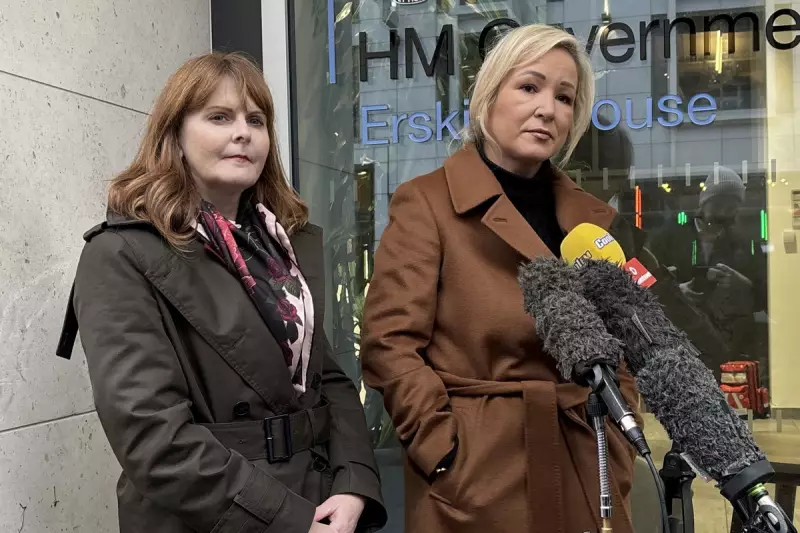
Speaking ahead of a meeting with Northern Ireland Secretary Hilary Benn on Wednesday 14 January 2026, Michelle O'Neill made her position unequivocally clear. She stated she would not support any legislation that offers preferential treatment to British state forces or veterans.
"I will be very clear to Hilary Benn today that I will not be supporting any legislation that gives preferential treatment to British state forces," O'Neill said. "What we need to see is legislation that actually commands the support of victims and survivors, and is human rights compliant."
She emphasised that any attempt to create a two-tier system "will not wash" and vowed she would not back such a bill.
Call for Victim-Centred Approach
The First Minister argued that the government's apparent trajectory risks undermining the previously agreed principles. She stressed that the only acceptable path forward is one centred on the needs of victims and full compliance with human rights standards.
"There cannot be any scenario where there is preferential treatment," O'Neill concluded, framing the issue as a fundamental matter of justice for all those affected by the decades of conflict.