Parliament's Return Overshadowed by Coalition Turmoil and Historic Opposition Weakness
The resumption of Australia's parliamentary schedule this week was meant to focus on the government's legislative agenda for 2026. Instead, political attention has been almost entirely consumed by the deepening crisis within the opposition Coalition, with splits, leadership spills, and historic numerical weakness dominating proceedings.
A Coalition in Disarray as Nationals Depart
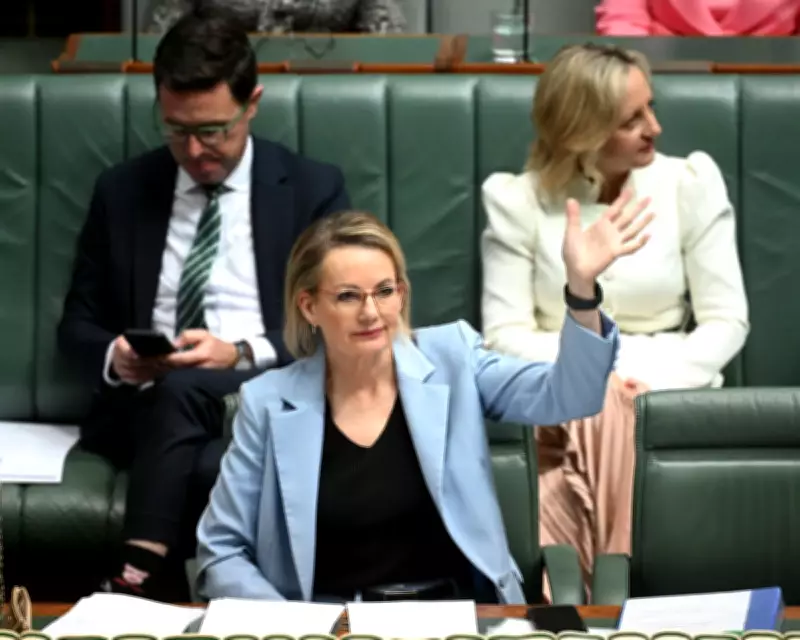
The formal separation of the Liberal and National parties has left the Liberal opposition in an unprecedentedly weak position. With the departure of the 14 Nationals members, Liberal leader Sussan Ley now presides over a mere 28 votes on her side of the chamber, including her own seat. This represents the smallest official opposition since the 1943 election, when the combined United Australia and Country parties held just 23 seats in a much smaller parliamentary chamber.
The current House of Representatives, which opened in 1988, has never witnessed an official opposition as numerically diminished as the Liberal-only contingent expected to take their seats. The opposition benches will appear strikingly bare, with Ley barely able to fill the seats behind her unless members practice social distancing-style spacing.

Leadership Challenges Loom Over Both Parties
Angus Taylor casts a long shadow over the Liberal party room, with even Ley's supporters privately anticipating a leadership challenge before the current sitting fortnight concludes. Political observers suggest that delaying such a move risks allowing the current Coalition chaos to dissipate, potentially solidifying Ley's interim arrangements and reducing opportunities for challengers to mount successful coups.
Meanwhile, Nationals leader David Littleproud faces his own leadership challenge on Monday afternoon, though he is expected to survive the spill. There remains a possibility that Littleproud and Ley might meet before Tuesday's parliamentary session to attempt to stitch the Coalition back together. Should this reconciliation fail to materialize, the Liberals will enter Tuesday's proceedings with their historically diminished numbers intact.
Mathematical Curiosities and Political Ridicule
The numerical parity between the 28 Liberals and 28 crossbenchers creates intriguing mathematical possibilities, however improbable. In theory, a loose alliance comprising Nationals, teal independents, Greens, One Nation, Bob Katter, and other independents could mathematically challenge for recognition as the official opposition, though such a scenario remains firmly in the realm of political fantasy.
Labor ministers and backbenchers are expected to relentlessly ridicule the opposition's predicament during question time. Health Minister Mark Butler has already characterized the situation as a "shambles," while government members are anticipated to deliver pointed questions about governmental "stability" and curious inquiries about "any other approaches" to opposition politics.
Legislative Agenda Takes Backseat to Political Drama
While January's emergency sitting week addressed substantive issues including responses to antisemitism and the Bondi terror attack, this week's legislative program appears comparatively muted. Scheduled debates include technical bills concerning copyright legislation, excises on draught beer, and fees within the Corporations Act. More consequential legislation addressing migrant exploitation, the Commonwealth Parole Board, and veterans affairs is also slated for discussion.
Potentially controversial freedom of information reforms may return to the parliamentary agenda in coming weeks. The proposed changes, which include higher charges for documents and significantly curtailed access to government data, have drawn criticism from transparency advocates. The government has justified these measures by citing concerns about artificial intelligence systems flooding FOI requests, though these claims have been questioned by experts.

Internal Reorganization Creates Administrative Absurdities
The Liberal party's reduced numbers have created peculiar administrative situations within the opposition's shadow ministry. Ted O'Brien finds himself occupying both the shadow treasurer position and the assistant shadow treasurer role simultaneously. This arrangement creates the unusual scenario of O'Brien effectively reporting to himself, though it may paradoxically streamline economic team meetings by eliminating coordination challenges between separate officeholders.
The opposition's senior team will at least benefit from ample space on the frontbench, with sufficient room to spread out briefing notes detailing their expanded acting responsibilities across multiple portfolio areas.
Long-Term Implications for Australian Politics
This week's parliamentary sitting represents more than temporary political theater. The Coalition's fragmentation raises fundamental questions about the future of conservative politics in Australia, particularly regarding whether the Liberal-National partnership can be restored or whether their separation represents a more permanent realignment.
Beyond the immediate leadership contests and numerical weakness, the situation highlights broader concerns about political accountability and transparency. The potential passage of restrictive freedom of information legislation, combined with an opposition distracted by internal crises, could significantly diminish mechanisms for governmental scrutiny and public accountability.
As politicians engage in doorstop interviews, leadership negotiations, and parliamentary maneuvering, the fundamental question remains whether Australia's conservative parties can transition from what critics describe as a "never-ending soap opera" back to substantive opposition politics focused on policy scrutiny and political accountability.