New Poll Shows Widespread Disapproval of US Military Action Against Iran
A recent Reuters/Ipsos survey has revealed a stark lack of public support for the United States' military strikes in Iran, known as Operation Epic Fury. The poll, published on Sunday, indicates that only 27 percent of American adults approve of the actions that resulted in the death of Iran's supreme leader. In contrast, 43 percent of respondents expressed disapproval, while 29 percent remained undecided on the matter.
Concerns Over Presidential Use of Military Force
The survey further uncovered that approximately half of Americans believe the president is excessively willing to deploy military power to advance U.S. interests. Overall, 56 percent of those surveyed stated that Trump's readiness to use military force is excessive, highlighting significant public unease with the administration's approach.
Views on this issue broke sharply along partisan lines, according to the poll. A vast majority of Democrats, 83 percent, asserted that the president is too quick to resort to military action. Among Republicans, only 23 percent shared this concern, while 60 percent of independents aligned with the critical view.

Survey Methodology and Public Awareness
The poll was conducted online with 1,282 U.S. adults nationwide and carries a margin of error of plus or minus three percentage points. About nine in ten respondents reported having heard at least a little about the strikes, which commenced early Saturday morning and have led to at least three American casualties.
In a Sunday interview with the Daily Mail, President Trump projected that the conflict would last approximately four weeks. Despite initial praise from Capitol Hill Republicans, the Trump administration now faces increased scrutiny following reports of U.S. troop casualties and injuries.
Political Backlash and Historical Context
Longtime Trump supporters have begun criticizing him for deviating from his campaign promise to end military conflicts in the Middle East. Conversely, some historically anti-war voices, including Trump's past self, are now supporting the actions.
Former U.S. Representative Marjorie Taylor Greene, who resigned last month, voiced strong opposition on social media, stating, 'This was absolutely unnecessary and is unacceptable.' She added, 'Trump, Vance, Tulsi, and all of us campaigned on no more foreign wars and regime change. Now, American soldiers are dead.'
Representative Thomas Massie, a libertarian Republican known for challenging the administration, commented, 'PSA: Bombing a country on the other side of the globe won't make the Epstein files go away, any more than the Dow going above 50,000 will.'
Key Figures and Past Positions
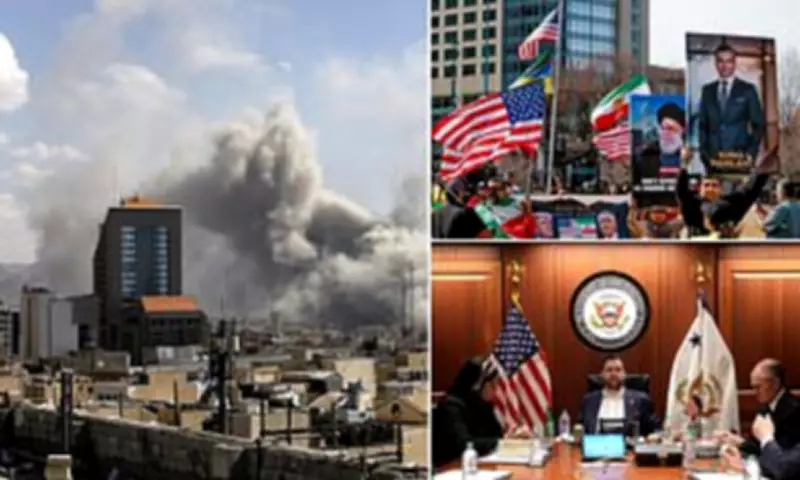
Tulsi Gabbard, the Director of National Intelligence who previously ran a presidential campaign focused on avoiding war with Iran, oversaw Operation Epic Fury from the White House Situation Room. She was joined by Vice President JD Vance, Energy Secretary Chris Wright, and Treasury Secretary Scott Bessent.
In 2019, Gabbard released a fundraising video titled 'Trump's Path To War With Iran,' urging voters to 'stop Donald Trump from starting a war with Iran.' Similarly, Vance, as recently as October 2024, opposed U.S. military involvement in Iran, stating on a podcast that American interests 'are not going to war in Iran' and suggesting that regional allies should police their own areas.
Throughout Barack Obama's presidency and his campaign against Vice President Kamala Harris, Trump frequently attributed the possibility of war with Iran to his political opponents. Harris has since rebuked the attacks, noting in a statement that she opposes 'a regime-change war in Iran' and that troops are being endangered 'for the sake of Trump's war of choice.'