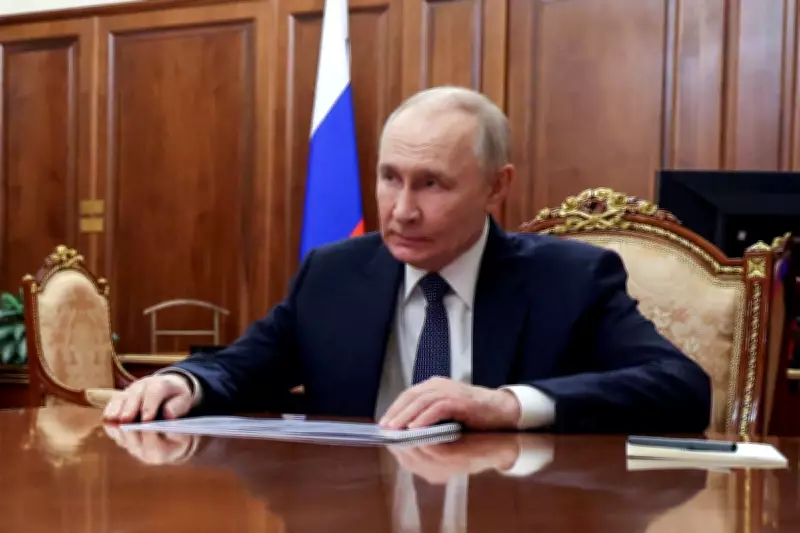
A brief video clip showing Russian President Vladimir Putin experiencing a coughing fit while recording an International Women's Day message has reignited widespread speculation about his health and potential political vulnerability. The footage, which remained publicly accessible on social media for approximately four minutes before being removed, has been described by Kremlin sources as an unfortunate mistake. However, the very existence of this recording suggests deliberate political motives behind its release, whether from a dissenting insider or an external actor seeking to undermine Putin's carefully cultivated image of invincibility.
The Significance of Putin's Health Speculation
Throughout his twenty-five-year tenure at the apex of Russian power, Vladimir Putin has consistently promoted an image of robust health and physical fitness. The seventy-three-year-old leader is known for his dedication to martial arts, regular swimming sessions, and skiing expeditions. This longstanding portrayal makes any perceived deviation from perfect health particularly noteworthy. Previous indicators have included extended absences from public view during the COVID-19 pandemic, his reputed paranoia about infection risks, and the elaborate quarantine protocols implemented for those in his inner circle, famously symbolized by the exceptionally long table used during his meeting with French President Emmanuel Macron in early 2022.
Historical Context and Political Vulnerability
This incident represents another rare instance where hints of political weakness have penetrated Putin's typically impenetrable projection of strength. The most prominent previous example occurred during the second summer of the Ukraine war when Yevgeny Prigozhin and his Wagner mercenaries staged their dramatic march toward Moscow. The timing of the coughing clip's release coincided with internet outages in Moscow and unsubstantiated rumours about a potential coup attempt by allies of recently dismissed deputy defence minister Ruslan Tsalikov, further fueling Western speculation about growing internal opposition to Putin's leadership.
While some analysts suggest the possibility of "black" propaganda orchestrated by Putin's enemies, particularly those abroad, the simple fact that this private moment became public suggests it may signify more than just an ordinary cough. The exposure of potential ill-health as evidence of political weakness remains striking, regardless of the actual medical truth behind the rumours.
The Complex Reality of Leadership Transitions
For all the speculation surrounding Putin's health and potential departure, history offers cautionary lessons about leadership transitions in authoritarian systems. Autocratic leaders, not merely Russian ones, typically remain in power until their sudden and definitive removal. The final decade of the Soviet Union, when Kremlinologists maintained a constant vigil as power passed between aging leaders before the emergence of the relatively youthful Mikhail Gorbachev in 1985, does not provide an accurate template for contemporary Russia.
Equally important is the recognition that even when strong sole leaders depart, their exit may not immediately deliver the transformative change their opponents anticipate. Gorbachev required more than two years to implement his signature policies of glasnost and perestroika in his ultimately unsuccessful attempts to reverse Soviet stagnation. Similarly, three years elapsed between Joseph Stalin's death and Nikita Khrushchev's revolutionary, initially secret speech denouncing Stalin's legacy.
The Potential Backlash of External Pressure
The death or removal of a leader, particularly if perceived as untimely or forced by external forces, can sometimes produce the opposite effect of what opponents intend. Such events may rally the population behind the established order, a phenomenon currently observable in Iran following the U.S. assassination of a Supreme Leader. The West's efforts to isolate Russia after its 2022 invasion of Ukraine have similarly bolstered Putin's domestic support among many Russians rather than increasing opposition to his leadership.
This complex dynamic explains why those openly hoping for an end to Putin's power should heed the age-old warning about being careful what they wish for. This includes Ukrainian President Volodymyr Zelensky, who stated in his New Year's message that all Ukrainians shared the wish for Putin to "perish," as well as numerous Western observers who view Putin's demise as the optimal, or perhaps only, pathway to ending the Ukraine war and establishing improved relations with Russia.
The Reality of Internal Russian Opposition
The prevailing assumption that Putin's departure would automatically lead to a more compliant Russia represents a fundamental misunderstanding of current political dynamics within the country. The most vocal internal opposition to Putin currently originates from factions advocating for a more aggressive approach in the war against Ukraine, not from those calling for ceasefire negotiations or opposing the conflict entirely. This reality must be carefully considered by those interpreting Putin's coughing fit as potentially heralding not only the end of his leadership but also the promise of a more accommodating Russian government.
While the coughing incident has undoubtedly revived speculation about Putin's health and political future, the ultimate significance of such speculation will likely only become clear in retrospect. For now, observers should recognize that authoritarian systems often maintain continuity despite leadership changes, and the departure of a single figure rarely produces immediate, transformative political shifts.