The sculptor of the Elizabeth II memorial statues has defended his design after critics complained that it did not look like her and the late Queen was not on horseback.
Design unveiled to royal family
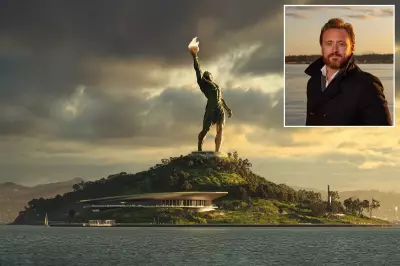
Martin Jennings, 68, revealed scale models of Queen Elizabeth and Prince Philip to the royal family on Tuesday at the British Museum. The statues will be erected in a prominent position on The Mall near Buckingham Palace outside St James's Park in central London in 2028.
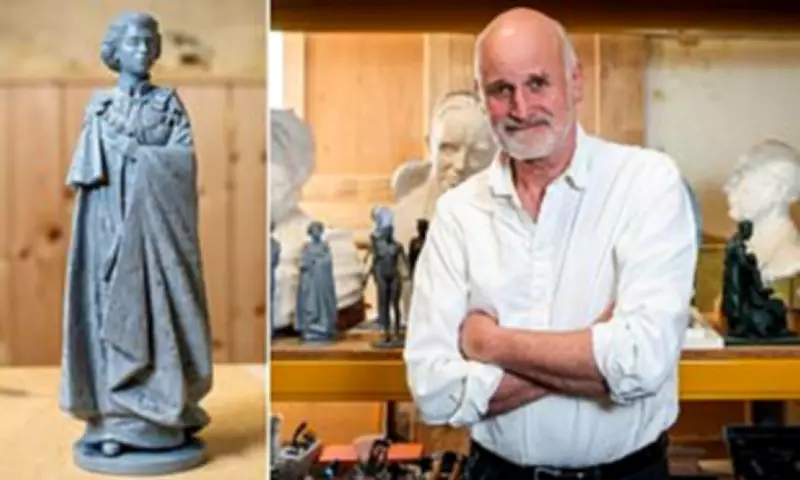
But critics said the models looked 'nothing like' the Queen. Mr Jennings hit back, saying that they had mistaken his preparatory scale models – called maquettes – for the final statue, which he assured 'everybody will recognise as the late Queen and nobody else'.

The King and Queen 'were very happy to see the models', Mr Jennings said, and were 'particularly pleased with the idea of representing the Queen and Prince Philip at this early stage of her reign, which symbolised so much optimism and hope'.
But while the royals seemed 'affable' and 'interested' in the initial design, the high-profile monument attracted high-profile critics. Iconic British actress Dame Joanna Lumley, 79, joined critics in saying she was 'sorry' the Queen was 'not on a horse'.
Critics wanted equestrian statue
She told The Daily Mail on Thursday: 'We all wanted her to be on a horse. We wanted her on Burmese. An equestrian statue, that's what we wanted. We really wanted her on a horse because we know she loved horses above everything.'
But Mr Jennings defended the decision for her to stand alone, without her famous mount Burmese. He told the Daily Mail: 'When I was appointed, we came to the conclusion that it needed to be a single standing figure, not an equestrian one. Primarily because this represents the Queen as the sovereign, as the head of state. Had we put her on a horse, she'd have needed to be in military uniform, and that would have reflected only one part of what she stood for.'
The King was kept informed and 'approved' the designs put forward, Mr Jennings added. He pointed out that there is already an equestrian statue of Queen Elizabeth II in Windsor Great Park and that he 'didn't want to replicate that idea'. He added: 'This is what we'll have, the Queen herself, rather than the Queen and an awful lot of horse.'
The original mock-up of the statue by the architects showed Elizabeth on horseback but this was meant to be 'a placeholder', Mr Jennings explained, 'rather than a statement about exactly how she would be represented'.
Statue details and symbolism
Elizabeth's statue will feature the monarch in her majestic garter robes, hand on her heart, looking into the distance, 'making a promise to her people', Mr Jennings said. Her pose and outfit are based on a 1954 portrait of Elizabeth by Pietro Annigoni when the Queen was 28.
Philip's statue is 'related' and depicts him at a similar age in his Admiral-of-the-Fleet uniform. It shows the duke standing as he often did with both arms behind his back. His statue will be looking up to Elizabeth's larger and taller figure. Mr Jennings said this would represent the playful and 'teasing relationship' the couple appeared to have in footage together.
Responding to those questioning the Queen's likeness, Mr Jennings said that the model should be seen like a painter's sketches so he is 'not concerned yet' about it not looking 'exactly like the Queen'. He assured the final statue would resemble her. He said: 'It's as if he's looking up at her, saying, "What are you doing up there?"'
But critics online also took aim at Mr Jennings' scale model of Elizabeth for not looking enough like her. The sculptor said he 'fully accepts' the model does not currently look like the late Queen. But he explained that maquettes are like a painter's sketches, so a rough outline rather than a finished product. He said: 'All I was trying to do was to suggest an idea – the costume, the pose, the turn of the head – really simple things. You don't really worry too much about likeness at this stage. The head on the models that I was showing is no bigger than the end of your thumb, so I'm not concerned yet about making it look facially exactly like the Queen.'

Significance and future work
He spoke of the gravity of this project: 'It's extremely demanding to make this piece of work. But to put a large monument onto the Mall – what I think of as being within the Golden Mile of great British monuments – is an extraordinary honour and a great responsibility.' 'In a way, this is the final marker for the Queen's reign', he said, recognising this will be an internationally important monument to a figure with a strong global memory.
The decision to have her standing alone was made to depict her in 'as simple a way as possible' to guard against excessive regalia 'that can detract from the sculpture' but 'nonetheless referred to her as the head of state'. When asked if the weight of the memorial's significance scared him, he said 'it's certainly intimidating, but there's time to do it well.' It is due to be finished in 2028 and Mr Jennings said he would be working on the statues full-time until then.
Mr Jennings has been in the figure sculpting world for 45 years. He started his artistic career studying calligraphy, lettering and stone carving at the City and Guilds of London Art School following his graduation from Oxford University, studying English Language and Literature in 1979. From carving gravestone inscriptions and architectural tablets, Mr Jennings slowly chiselled his way into figure sculpture and has made his name painstakingly recreating legendary celebrities put up in public across the country.
Notable works of his are the statue of George Orwell at BBC Broadcasting House, Mary Seacole at St Thomas' Hospital in London, Charles Dickens at Guildhall Square in Portsmouth, Philip Larkin at Hull Paragon Station and John Betjeman at St Pancras station in London. He has done extensive work with the royal family before with his bust of the Queen Mother which sits in St Paul's Cathedral and is also behind the coinage portrait of King Charles, as well as a crowned edition for the coronation.
To be awarded the commission, Mr Jennings won a competition last summer and said after interviews and the consideration of his previous works he was appointed in part because he wanted 'to design the monument on which she stood' as well as the sculptures.
The project has £46 million set aside for it and will include a glass unity bridge, inspired by the late Queen's wedding tiara nearby the statues in St James's Park. The glass structure will replace the Blue Bridge across the lake in the park and be designed by architects Foster and Partners. Commenting on the project, Charles said at the British Museum on Tuesday: 'Fantastic. It's a wonderful idea for the bridge to be based on the Russian Fringe tiara, the one my Mama wore at her wedding.'
Commenting on the large budget, Mr Jennings said the money is 'not going on me. There's a very expensive bridge and a lot of landscaping.' The Grade II-listed Marlborough Gate will be dismantled and re-erected in 'modified form' to make way for the statues. Mr Jennings said that all parts of the project are designed in close conjunction with the others working on it.