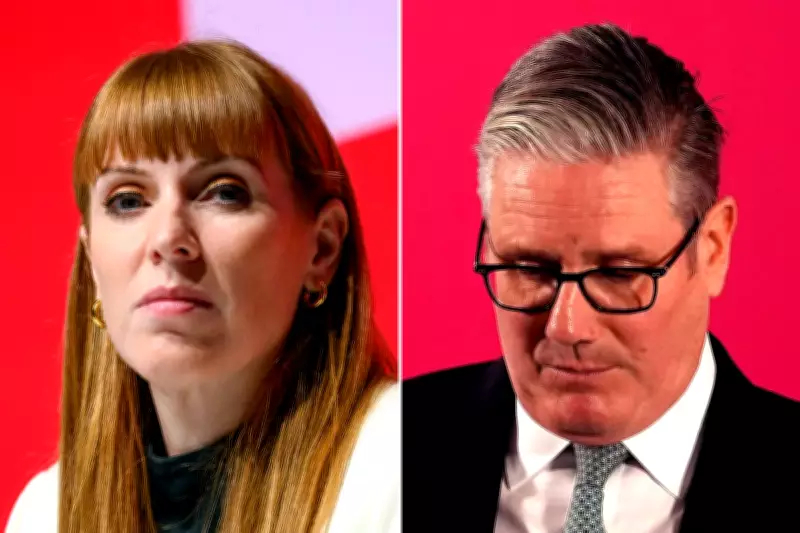
Labour Leadership Crisis Deepens as Rayner Positions Herself for Power
The political landscape at Westminster has been thrown into turmoil following revelations about Peter Mandelson's connections with convicted paedophile Jeffrey Epstein. Prime Minister Keir Starmer's decision to appoint Mandelson as US ambassador despite this known friendship has ignited fury within Labour ranks, with many MPs questioning Starmer's judgment and leadership capabilities.
Mandelson Scandal Exposes Starmer's Vulnerabilities
Recent disclosures have revealed that Peter Mandelson shared market-sensitive information with Jeffrey Epstein during the financial crisis, casting Starmer's appointment decision in an even more troubling light. Labour parliamentarians, already dissatisfied with Starmer's leadership, are incensed not only by the appointment itself but by Number Ten's handling of the subsequent fallout.
This controversy has highlighted significant weaknesses in Starmer's leadership approach. His background as former Director of Public Prosecutions creates particular dissonance, given his apparent disregard for the professional associations between his appointees and convicted child sex offenders. Women within the Parliamentary Labour Party have expressed particular anger, viewing this as another example of the Labour establishment protecting its own.

Rayner's Strategic Moves Signal Leadership Ambitions
Angela Rayner has emerged as a central figure in this unfolding drama, successfully extracting concessions from the government to avoid defeat on a Conservative motion demanding disclosure of documents related to Mandelson's appointment. Her intervention ensured that Parliament's Intelligence and National Security Committee, rather than the Cabinet Office, will determine which documents can be withheld on national security grounds.
This represents a significant expansion of potential disclosure requirements, with broad implications for Labour ministers and advisers. Rayner's actions have not gone unnoticed within party circles, where she has long been considered a frontrunner to succeed Starmer. Her background as a former child carer and single teenage mother who rose to become Deputy Prime Minister has made her an exceptionally popular figure within the party.
Obstacles and Opportunities in Leadership Succession
Despite her popularity, Rayner faces significant hurdles. She was forced to resign last September following revelations about an £800,000 flat in Hove, where she had failed to pay sufficient tax. The Prime Minister's ethics adviser found she had unintentionally breached the ministerial code, and she currently awaits the outcome of an HMRC investigation into stamp duty underpayment.
Nevertheless, Rayner's allies point to the ethics adviser's finding that she "had acted with integrity" as evidence that she could stage a political comeback and potentially win a leadership contest. Her recent public pressure on Starmer suggests she believes the timing for such a move may be approaching.
Complex Calculations Around Leadership Transition
Labour MPs face difficult decisions about leadership succession. While many believe Starmer cannot lead the party into the next election, they also fear the electoral consequences of a protracted, divisive leadership contest while the party governs the country. Some prefer a coronation-style transition among MPs rather than a membership ballot.
For such a scenario to unfold, the Parliamentary Labour Party would need to unite behind a single candidate through complex backroom negotiations between different factions. Rayner's position in these negotiations would be significantly strengthened if the HMRC investigation concludes with any potential fine settled.
Strategic Reasons for Delaying Leadership Change
There are compelling political reasons to postpone any leadership transition. The upcoming May elections are widely expected to be disastrous for Labour, and many believe it preferable for Starmer to absorb this damage rather than passing a poisoned chalice to a new leader.

More fundamentally, Labour faces substantive challenges beyond leadership questions. The party was elected without a clear governing agenda, having run a cautious election campaign designed to capitalise on Conservative unpopularity without committing to substantial policies. Any new leader would need to develop a coherent vision for government, addressing key issues like economic policy, housing, and public services.
The Future of Labour Leadership
Potential successors to Starmer include not only Angela Rayner but also Greater Manchester Mayor Andy Burnham, Health Secretary Wes Streeting, and Home Secretary Shabana Mahmood. While all are considered stronger communicators than Starmer, Labour needs more than presentational skills to counter Reform UK and prevent voter defection to other left-leaning parties.
The greatest risk in an immediate leadership change is that a "not-Starmer" honeymoon period might dissipate well before the next election. With only one realistic opportunity for leadership transition before facing voters again, timing becomes crucial. Leadership contenders are likely building support behind the scenes while carefully considering when to make their moves public.
Despite intense speculation, an imminent leadership contest appears unlikely unless Starmer voluntarily steps down. Contenders understand that a divisive internal battle could prove disastrous for the party's electoral prospects, potentially undermining any future premiership before it begins. The current political phoney war may therefore continue for some time as Labour grapples with its leadership crisis and strategic direction.