Reform UK Pledges Unwavering Commitment to Mass Deportations Amid Criticism
Reform UK has declared it will confront any "progressive outrage" from protesters opposing its controversial plans for mass deportations, with the party's home affairs spokesman insisting the government "will never flinch" in enforcing its draconian immigration policies.
Dover Press Conference Unveils Operation Restoring Justice
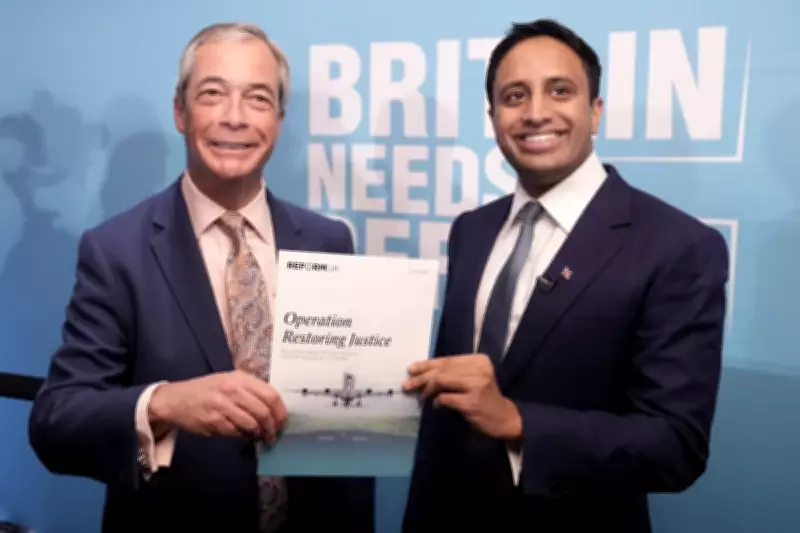
Speaking at a press conference in Dover alongside party leader Nigel Farage, Zia Yusuf launched what he described as the biggest deportation programme in UK history. The plan, dubbed Operation Restoring Justice, aims to deport all illegal migrants from the country while securing borders through aggressive enforcement measures.
Yusuf denied direct parallels with Donald Trump's Immigration and Customs Enforcement (ICE) agency in the United States, but emphasized Reform's determination to implement its policies regardless of opposition. "If your question is, 'do we have the resolve to stand up to progressive outrage against perfectly lawful enforcement of the law in this country?' Then the answer is, we will never flinch," he stated.

Addressing Concerns About Potential Violence
When questioned about potential US-style standoffs and violence similar to clashes seen in Minnesota where ICE agents have killed protesters, Yusuf suggested such scenarios were unlikely in Britain. He argued that "policing is done by consent" in the UK and that Reform's proposed Deportation Command would not carry weapons.
However, the spokesman indicated readiness to confront sanctuary cities like Cardiff and Sheffield that protect asylum seekers from deportation. Under Reform's proposals, the party would establish a specialized unit to "track down, detain and deport" people residing illegally in the country, targeting up to 288,000 individuals annually.
Charities and Opposition Parties Voice Fierce Criticism
The deportation plans have sparked outrage among humanitarian organizations and political opponents. Dr Dora-Olivia Vicol, CEO of the Work Rights Centre, condemned Reform's proposals as "sadistic" and economically damaging.
"This is a sadistic vision of UK families and communities being ripped apart, money being wasted, and the government turning against its own people," she stated. "These are proposals designed purely to grab headlines and stoke anger. They are cruel, economically self-defeating, and offer no solutions to the real problems facing people in Britain."
Liberal Democrat home affairs spokesman Max Wilkinson warned that "Trump-inspired plans for an ICE-style force will only bring chaos and disorder to Britain's streets, not the order and control our immigration system needs."
Amnesty International UK cautioned against creating a British version of ICE, arguing such proposals "risk unleashing a system built on fear, aggressive raids and discrimination, where enforcement operates with sweeping powers and little accountability."
Additional Policy Measures and Rhetorical Escalation
Reform UK has announced it would impose "visa freezes" on Pakistan, Afghanistan and Syria if these countries refuse to accept migrants with no legal right to remain in Britain. The party projects deporting more than 600,000 individuals during its first term in government.
Yusuf employed inflammatory language during the Dover conference, describing migration to the UK as an "invasion." He defended this terminology despite acknowledging it might shock establishment figures. "They may well clutch their pearls in the television studios, but the dictionary definition of invasion is an incursion by a large number of people in an unwanted way," he argued.
The home affairs spokesman also criticized the European Convention on Human Rights (ECHR), claiming British citizens' rights are being placed "beneath those of criminals" due to judicial interpretations of the treaty. Reform has pledged to withdraw from the ECHR if elected.
Political Reactions and Broader Context
Shadow home secretary Chris Phlip dismissed Yusuf's announcements as offering "nothing new to offer beyond copying and pasting Conservative plans." This criticism highlights the ongoing political debate surrounding immigration policy in Britain.

The controversy emerges against a backdrop of increasing political polarization on immigration issues, with Reform UK positioning itself as taking a harder line than traditional parties. Yusuf's statements reflect the party's strategy to appeal to voters frustrated with current immigration enforcement while facing significant opposition from humanitarian organizations and political rivals who view the proposals as extreme and potentially harmful.