Reform UK Announces Major Policy Shift on Two-Child Benefit Cap
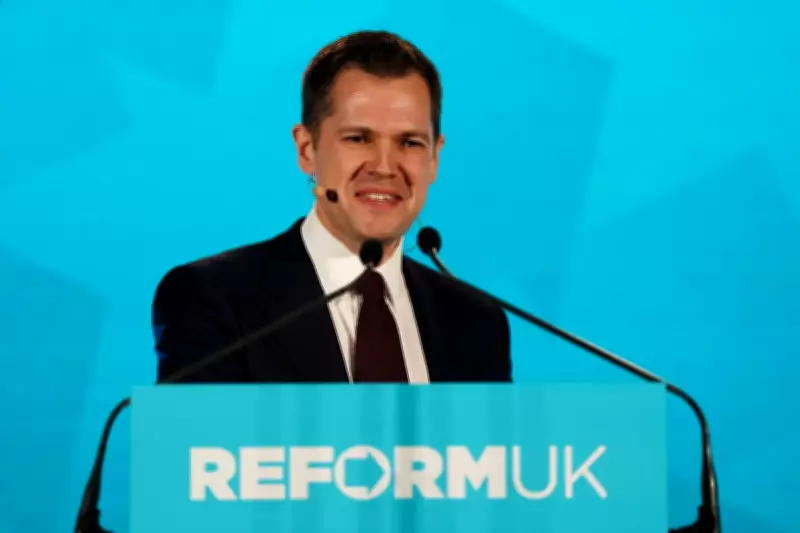
In his inaugural address as Reform UK's Treasury spokesman, former Conservative minister Robert Jenrick has declared that the party will fully restore the two-child benefit cap, marking a significant reversal of its previous stance. This announcement forms part of a broader suite of welfare and economic reforms that Jenrick outlined during a speech in the City of London.
Welfare Reforms and Benefit Restrictions
Jenrick confirmed that Reform UK would implement the two-child cap on universal credit without exceptions, despite the party having previously suggested it might lift the restriction for British families in work. "Today, Reform is changing our policy on the two-child cap for universal credit," Jenrick stated. "We want to help working families have more children. But right now, we just cannot afford to do so with welfare. So it has to go."
The former communities secretary emphasized that a Reform government would "restore the cap in full" as part of efforts to "defuse the benefits bomb set to bankrupt Britain." Additional welfare measures include requiring clinical diagnoses for all mental health benefits to prevent abuse and limiting welfare payments exclusively to British nationals.

Economic Institutions and Fiscal Oversight
Contrary to earlier indications from Reform leader Nigel Farage, Jenrick announced that the party would not abolish the Office for Budget Responsibility (OBR). Instead, Reform UK plans to reform the fiscal watchdog, arguing that while "the OBR is far from perfect," its creation aimed to instill fiscal discipline—a principle the party supports.
"Rather than abolish it, we will reform it," Jenrick explained. "We will break up this cosy consensus and ensure it has diversity of opinion. We'll run competitions for super-forecasters to join the body and pay competitive salaries to those who most accurately model the impact of Treasury decisions."
Jenrick also addressed the Bank of England, pledging to maintain its independence while removing what he described as distractions, including its role in supporting the net zero transition. "We will strip the Bank of distractions which have been loaded on to it," he said, advocating for greater private sector representation on the Monetary Policy Committee.
Political Reactions and Criticisms
The announcement drew immediate criticism from both Labour and Conservative figures. Treasury minister Dan Tomlinson accused Jenrick of attempting to "pull the wool over people's eyes" and highlighted Reform UK's "appalling record in government." Tomlinson added that Farage's party had "already made billions of pounds in unfunded spending commitments" and warned that Jenrick's policies would "smash family finances" again.
Conservative shadow chancellor Sir Mel Stride pointed to inconsistencies in Reform's economic plans, noting that the party had not explained a "£10.5 billion black hole in their pubs plan" and had previously expressed disinterest in numerical details. "Make no mistake, Reform's back-of-a-fag-packet numbers would not withstand contact with OBR scrutiny," Stride asserted. "Their recklessness would leave our economy weaker."
Broader Political Context
Jenrick's speech comes barely a month after he left the Conservative front bench, where he served as shadow justice secretary. His appointment as Reform UK's Treasury spokesman is part of a broader reshuffle by Nigel Farage, which also saw former home secretary Suella Braverman named as the party's education, skills, and equalities spokeswoman.
In his address, Jenrick criticized both Labour and the Conservatives for "taking more of the British people's money and spraying it around, with no regard for how hard they've worked for it or their priorities." He positioned Reform UK as a party committed to fiscal responsibility, asserting that "everything Reform promise will be fully costed" and that the party is "happy to have our homework marked" by the OBR.

The policy shift on the two-child benefit cap underscores Reform UK's evolving stance on welfare and economic issues as it seeks to establish itself as a credible alternative to the major parties. With Jenrick and Braverman now key figures in its leadership, the party aims to challenge the political consensus on fiscal management and social security.