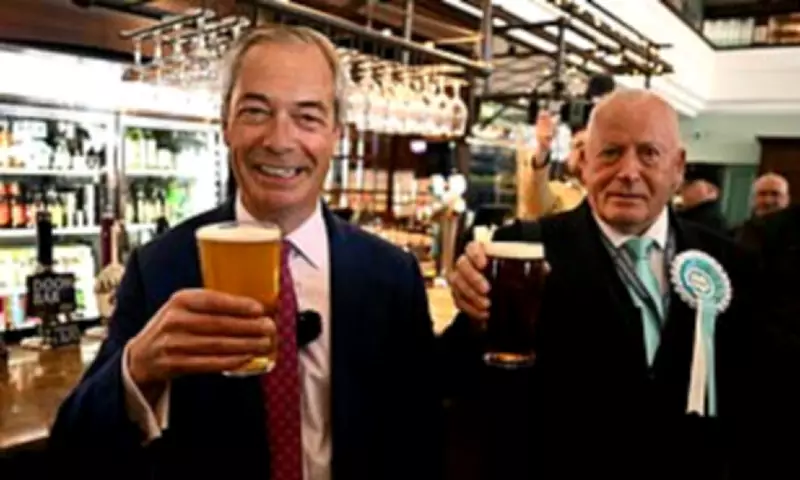
Reform UK is set to unveil a comprehensive five-point plan designed to save the United Kingdom's beleaguered pub industry, following stark warnings that thousands of establishments are facing permanent closure. The party's leader, Nigel Farage, will personally announce the strategy from a pub setting, highlighting the critical situation facing these community hubs.
A Lifeline for Hospitality
The centrepiece of Reform UK's proposal involves a significant reduction in Value Added Tax (VAT) to just 10 per cent for the entire hospitality sector, a measure that would be implemented should the party secure victory at the next general election. This bold fiscal intervention aims to provide immediate financial relief to pubs, restaurants, and hotels struggling under the weight of rising operational costs.
Funding the Rescue Package
To finance this ambitious support package, Reform UK has outlined a controversial funding mechanism. The party plans to reinstate the two-child limit on Universal Credit benefits, applying it universally except for British families where both parents are in stable employment. According to party estimates, this policy shift is projected to generate savings of approximately £3 billion by the 2029/30 financial year, funds which would be directly channelled into propping up the hospitality industry.

Additional Support Measures
Beyond the VAT reduction, Reform's five-point plan includes several other key pledges:
- Scrapping the recent increase in employer National Insurance contributions for hospitality businesses, a measure initially announced by Chancellor Rachel Reeves in her inaugural budget.
- Implementing an immediate 10 per cent cut in beer duty to stimulate trade and reduce consumer prices.
- Working towards the complete abolition of business rates for all pubs over the next four years, with priority given to those establishments most urgently in need of assistance.
- Reviewing and amending existing regulations to provide better support for landlords and publicans navigating complex compliance requirements.
A Crisis of Closures
Reform MP Lee Anderson has placed the blame for the pub closure crisis squarely on the shoulders of the two main political parties, accusing both the Conservatives and Labour of "facilitating" the disappearance of thousands of pubs over the past decade. Anderson emphasised the cultural significance of these closures, stating: "The loss of one pub is not just the loss of livelihood for a landlord, or the loss of a local employment hub. The loss of one pub is a loss to all of us as inheritors of a tradition dating back to Roman rule."
Anderson further criticised what he described as false contrition from the established parties, arguing: "Yet the Conservatives, and now Labour, have facilitated the closure of thousands of pubs over the last decade. Any contrition they show is false. The crisis facing the Great British pub has been allowed to become acute, and our nation is poorer for it."
Industry Statistics Paint a Grim Picture
The scale of the challenge facing Britain's pub industry is underscored by alarming statistics. According to the British Beer and Pub Association (BBPA), the number of pubs in the UK has plummeted from 69,000 in 1980 to just 46,350 by 2021. More recently, the Campaign for Real Ale reported that approximately one thousand pubs ceased trading in 2025 alone—an average of five closures every single day, though some of these establishments are reportedly seeking new ownership.
Mounting Financial Pressures
Trade bodies have identified a perfect storm of financial pressures contributing to the crisis. Business rates, successive duty increases, rising wage bills, tax hikes, and new waste management regulations have collectively driven operational costs to unsustainable levels. UKHospitality, representing pubs, restaurants, and hotels across the nation, estimates that the additional National Insurance costs introduced in the last budget added £1 billion to industry expenses.

Furthermore, the April increase in the national minimum wage contributed an extra £1.9 billion to staff costs, while changes to business rates added another £500 million. This brings the total additional financial burden on the hospitality sector last year to a staggering £3.4 billion. The BBPA also highlights that new regulations, such as the Extended Producer Responsibility for Packaging—effectively a tax on glass—could cost larger pubs around £2,000 annually.
Government Response Deemed Insufficient
Last week, the Chancellor announced a rescue package for landlords valued at approximately £100 million for the coming year, alongside proposals to extend pub opening hours. This initiative will provide pubs in England with a 15 per cent reduction in business rates next year, with the discounted amount frozen for two subsequent years. However, this intervention has been criticised as inadequate, failing to lift a pub ban imposed on Labour MPs following Chancellor Reeves' announcement that COVID-era support measures would be terminated.
Nigel Farage has previously articulated the severity of the situation, remarking: "This is a death knell for country pubs across Britain. Labour has no connection to how real life works." Reform UK's newly unveiled plan represents a direct challenge to the current political consensus, positioning the party as the definitive champion of Britain's traditional pub culture and the communities that depend on it.