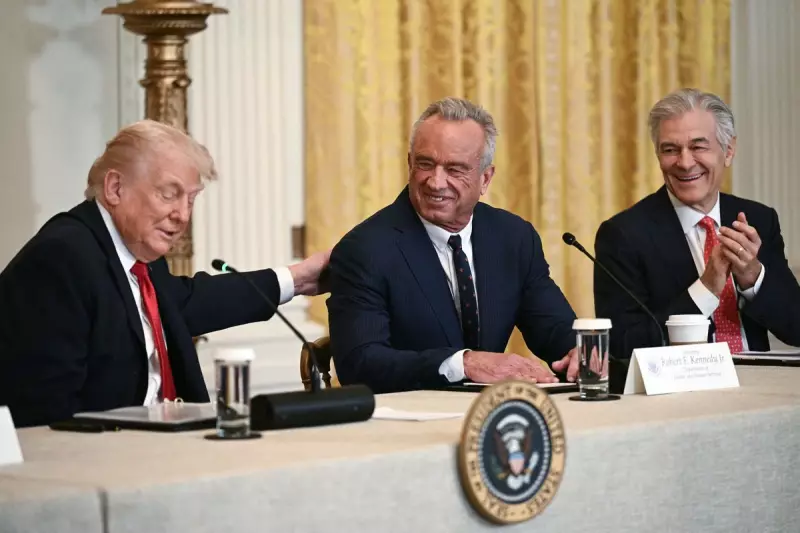
Republicans are banking on Health and Human Services Secretary Robert F. Kennedy Jr's ambitious push to reshape the American diet to provide a crucial electoral boost in the upcoming midterm elections. The White House and GOP figures believe Kennedy's Make America Healthy Again (MAHA) agenda, which aims to reform the nation's food supply and overhaul longstanding dietary guidelines, resonates broadly with voters beyond traditional partisan lines.
Cross-Cutting Appeal of Dietary Reform
According to Politico, administration officials view Kennedy's food safety work as having particular potential because it represents what one White House official described as "not a red meat issue" in the political sense. Instead, they argue it's "a cross-cutting issue that most people across ages, across race, you know, political affiliation, largely agree with and support."
The Trump administration fears President Trump's declining popularity might not be sufficient to prevent Democrats from seizing control of Congress. However, they hope Kennedy's nationwide tour promoting MAHA initiatives could sway voters to support Republican candidates out of concern that Democratic control might hinder these dietary reform efforts.
Nationwide Tour Through Election Season
Kennedy has embarked on a cross-country campaign alongside Agriculture Secretary Brooke Rollins and other administration figures, with the tour scheduled to continue through the midterm election period. His first stop occurred recently in Pennsylvania, where he framed the initiative as a campaign to "take back" Americans' health.
Some political observers interpret this high-profile tour as potentially laying groundwork for a surprise bid for the 2028 Republican presidential nomination. However, White House officials emphasize that the immediate electoral benefits could materialise much sooner, with the food safety agenda potentially bearing fruit for the GOP well before any future primary contests.
Democratic Counterarguments and Vaccine Concerns
Democrats have mounted strong opposition to Kennedy's broader influence, focusing particularly on his controversial history regarding vaccines. Eric Polyak, executive director of 3.14 Action, told Politico that Kennedy's healthy food initiatives cannot overshadow what he described as dangerous anti-vaccine activism.
"People want less food dyes, but at the end of the day, does it really matter when he's doing these terrible things with vaccines and literally putting our children at risk?" Polyak questioned. "School lunches don't matter when your kids die."
Pennsylvania Lawmaker's Mixed Assessment
Pennsylvania State Representative Bridget Kosierowski offered a more nuanced perspective, expressing complete agreement with Kennedy's work on promoting "healthy food choices" while simultaneously criticising his vaccine-related positions.
"We don't want kids to have measles or mumps or Rubella or whooping cough, or certainly hepatitis," Kosierowski stated. "He's complicating, you know, our belief in science, which is really dangerous."
Polling Data Suggests Dietary Focus Resonates
Internal polling from Trump campaign pollsters Tony Fabrizio and Bob Ward appears to support the White House's strategic emphasis on dietary issues. Their survey found overwhelming support for government mandates requiring "labeling of harmful ingredients and chemicals in ultra-processed foods," with 90 percent of voters endorsing such measures.
The research indicated the MAHA agenda proved "widely popular across party lines" except for elements related to vaccine skepticism. A White House official noted this data suggests the food push is "just more salient" to the "average person" than Kennedy's controversial history regarding vaccinations or his broader work at HHS.
As the midterm elections approach, the Republican strategy increasingly hinges on whether Kennedy's dietary reform message can transcend partisan divisions and vaccine-related controversies to deliver tangible electoral benefits for the party.