Right-Wing Alliance Could Reshape British Political Landscape
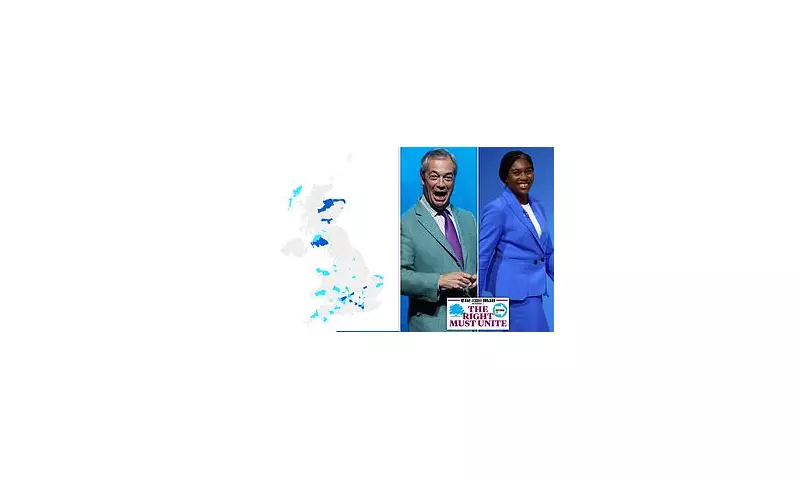
A major new study has revealed that a strategic electoral pact between parties on the Right could fundamentally alter the balance of power in Westminster, delivering a landslide parliamentary majority and dramatically reducing the influence of left-wing rivals. The exclusive analysis, commissioned by The Mail on Sunday and conducted by polling firm Electoral Calculus, paints a compelling picture of potential political realignment.
Ministerial Casualties in Potential Pact Scenario
The research demonstrates how fifteen Labour ministers would face almost certain defeat if Reform UK and the Conservative Party agreed not to stand against each other in carefully selected constituencies. Among the prominent figures projected to lose their seats would be Health Secretary Wes Streeting, alongside Chief Secretary to the Treasury Darren Jones, Northern Ireland Secretary Hilary Benn, and Welsh Secretary Jo Stevens.
Other cabinet members facing potential ousting include Foreign Office Minister Stephen Doughty, Science Minister Ian Murray, Treasury Minister Dan Tomlinson, and Equalities Minister Seema Malhotra. The study suggests these losses would represent a significant blow to Sir Keir Starmer's frontbench team and governing capability.

Seat Projections and Parliamentary Mathematics
According to the Electoral Calculus modelling, based on current polling data across all 650 parliamentary constituencies, a formal Conservative-Reform alliance could secure a combined total of 457 seats. This would represent a commanding majority of 131 seats beyond the 326 required to govern without coalition partners.
The analysis reveals that 81 battleground seats currently projected to be won by left-wing parties would instead fall to either Conservative or Reform candidates under such an agreement. This dramatic shift would fundamentally reshape the parliamentary arithmetic and potentially prevent the formation of any alternative left-leaning coalition government.
Regional Impact and Notable Constituencies
The study identifies several high-profile constituencies that would change hands under the proposed pact. Former Conservative Chancellor Jeremy Hunt would successfully defend his Surrey seat against Liberal Democrat challenges, while Reform would capture Gorton and Denton in Manchester, potentially complicating Andy Burnham's political ambitions.
In Leeds, a Green Party challenge to Hilary Benn would fail with Reform emerging victorious. The Conservatives would regain seven seats from the Liberal Democrats in their former southern heartlands, while sixteen traditional Labour 'Red Wall' constituencies would fall to Reform candidates.
Vote Transfer Assumptions and Political Dynamics
The Electoral Calculus model operates on the assumption that electoral deals would be struck in constituencies where one right-wing party leads in polling while the other trails in third place or worse. The analysis projects that approximately eighty percent of votes would transfer between the allied parties when one candidate stands aside.
Martin Baxter, chief executive of Electoral Calculus, commented: "Our figures show that a hypothetical Conservative-Reform alliance might win a landslide majority, though achieving such a deal has long odds against it. Under our first-past-the-post system, the side which is the most united has the best chance of winning at a general election."
Party Gains and Losses in Detailed Breakdown
The research provides specific projections for each major political party under the pact scenario:

- Reform UK would gain an additional 60 parliamentary seats
- The Conservative Party would secure 21 extra constituencies
- Labour would lose 31 seats compared to current projections
- The Liberal Democrats would forfeit 24 constituencies
- The Green Party would surrender 12 seats
Political Reactions and Leadership Positions
The study has reignited debate about potential cooperation between right-leaning parties, despite leadership resistance from both camps. Former Conservative MP Brendan Clarke-Smith, who lost his Bassetlaw seat to Labour in 2024 after Reform split the right-leaning vote, argued: "This should be an emergency response to saving the country from a potentially dreadful scenario. I know from my own experience what two Right-of-centre candidates standing in the same seat can lead to – a Labour victory."
However, both Reform UK leader Nigel Farage and Conservative leader Kemi Badenoch have publicly dismissed calls for any formal agreement. Mr Farage recently stated he would not negotiate "with dishonest people that don't deserve our trust," while a spokesperson for Mrs Badenoch confirmed she had been clear that "there will never be a pact under her leadership."
Broader Political Context and Electoral Implications
The research emerges against a backdrop of shifting political dynamics, with Reform UK's polling support having dipped from a peak of thirty-two percent to twenty-nine percent in recent weeks. Election analyst Sir John Curtice has suggested that by 2028, both parties will need to evaluate whether they are effectively competing for right-of-centre votes or whether accommodation might serve their mutual interests.
Former Conservative MP Nick Fletcher warned: "Reform is doing extremely well at the moment, but a lot can happen between now and the election. The polls will definitely tighten and that's when the other parties become a threat. The Right needs to come together. If we end up with five parties, it's going to be very difficult to govern."
The study also highlights concerns about potential alternative governing arrangements, with critics warning that a so-called 'Rainbow Coalition' of left-wing parties could damage Britain's international standing. Green Party leader Zack Polanski has called for the scrapping of Britain's Trident nuclear deterrent and the withdrawal of all US military personnel from UK soil.
As political strategists digest these findings, the research underscores the profound impact that electoral cooperation could have on Britain's political future, potentially determining which parties form the next government and which ministerial careers survive the coming electoral contest.