The Unquiet Ghost of Roger Casement
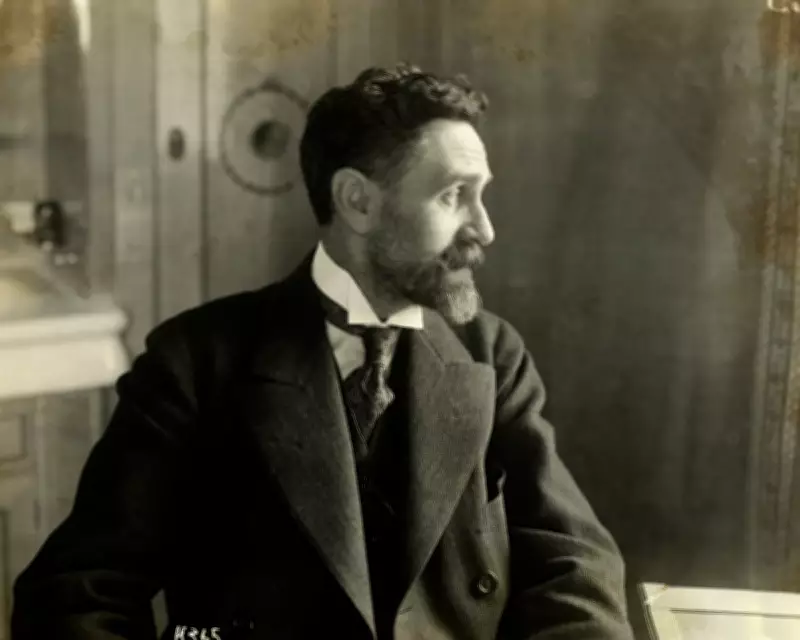
More than a century after he was marched to the gallows at Pentonville prison, the name Roger Casement continues to emit a faint but persistent crackle in the complex tapestry of British-Irish relations. Knighted by King George V in 1911 for distinguished imperial service, he would later embrace radical Irish nationalism, seeking German assistance for the doomed 1916 Easter Rising. His subsequent execution for high treason on August 3, 1916, was not merely a judicial act but a calculated effort to bury his legacy in disgrace.
A Martyr Made into a Pariah
The British government ensured Casement would drop not into martyrdom but into infamy. A cabinet memo from Sir Ernley Blackwell, chief legal adviser to the Home Office, chillingly outlined the strategy: "I see not the slightest objection to hanging Casement and afterwards giving as much publicity to the contents of his diary as decency permits." Those private diaries, which documented Casement's homosexuality, were systematically leaked to diplomats, journalists, and clergy across the Atlantic. The Daily Express branded them "the diaries of a degenerate," while Buckingham Palace annulled his knighthood. This orchestrated campaign of character assassination effectively smothered pleas for clemency from English allies, Irish Americans, and even President Woodrow Wilson's White House.
The Humanitarian and the Traitor
Casement's story is one of profound contradiction. He was the celebrated humanitarian who exposed horrific atrocities against Indigenous tribes in the Congo and Peru, a patriot dedicated to Irish independence. Yet, he was also the man who conspired with Germany during the First World War and attempted to recruit Irish prisoners of war to fight against Britain. In a remarkable twist of fate, evidence suggests he returned to Ireland not to ignite the Rising, but to try to call it off, believing it was doomed. This plea was denied by the ruthless head of admiralty intelligence, Captain Reginald "Blinker" Hall, who seemingly hoped a failed rebellion would justify a crackdown on Irish nationalism.

An Enduring Taboo and a Distant Pardon
While Britain has largely consigned Casement to a footnote of history, Ireland remembers. His image adorns stamps, statues, and murals; his fate is recounted in ballads and poems. Yet, his final wish—to be buried in the glens of County Antrim where he grew up—remains unfulfilled. When Harold Wilson's government repatriated his bones from Pentonville in 1965, they were interred in Dublin's Glasnevin cemetery, deemed too politically volatile for Northern Ireland. Even today, the prospect of moving them north could reignite tensions in a region still grappling with the fallout of partition and the Troubles.
British-Irish relations have weathered the storms of Brexit, regaining a degree of trust and cooperation. Defence agreements have been rebooted, and diplomatic channels remain open. Yet, the case of Roger Casement remains a stubborn taboo, a can containing too many historical and political worms to be easily opened.
A Symbol for a New Era?
There is a growing argument that Casement, like Alan Turing who received a posthumous royal pardon in 2013, deserves official vindication. He was guilty of treason under the law of his time, but many contend he was ultimately killed by state-sanctioned homophobia. For decades, Ireland questioned the authenticity of the diaries, but today there is wider acceptance of their truth, transforming Casement into a dual symbol of nationalist struggle and LGBTQ+ identity.
However, Irish authorities hesitate to formally lobby for a pardon. Complications persist, including the nature of some relationships documented in his diaries. Furthermore, more recent legacy cases, such as the 1989 murder of solicitor Pat Finucane in Belfast, command immediate political attention.

A Legacy Entangled in Modern Politics
The polarization of Northern Ireland's politics, with Sinn Féin and the Democratic Unionist Party locked in perpetual dispute over the region's past and future, ensures Casement's story remains contested. Even the attempt to redevelop the derelict Casement Park GAA stadium in Belfast has become a symbolic battle of wills. The man it was named for is, depending on one's viewpoint, a rebel or a traitor. In truth, he was both. Perhaps only when all sides can acknowledge this complex duality might Roger Casement finally receive a pardon and, at long last, be allowed to go home.