Rubio's Munich Performance Ignites Presidential Speculation
Secretary of State Marco Rubio's commanding foreign policy speech at the Munich Security Conference last week achieved far more than calming anxious European allies. It triggered intense speculation in Washington corridors about his political future, positioning him unexpectedly at the centre of Republican succession conversations.
A Diplomatic Triumph With Political Reverberations
On the international stage, Rubio masterfully blended traditional Republican strength with Trump-era MAGA messaging, earning enthusiastic approval from establishment Republicans and visible relief from European diplomats craving American stability. Yet the true impact resonated across the Atlantic, where his performance landed with seismic political force.
A Washington insider revealed to the Daily Mail that President Donald Trump was particularly delighted by Rubio's Munich showing, especially when contrasted with Representative Alexandria Ocasio-Cortez's international missteps and California Governor Gavin Newsom's widely mocked overseas protest against the president.

The political chatter has intensified since, with Axios reporting on Sunday that Trump has begun consulting allies about whether they would prefer JD Vance or Rubio leading a future presidential ticket. This development has fueled fresh discussions about the post-Trump political landscape.
Trump's Playful Acknowledgement
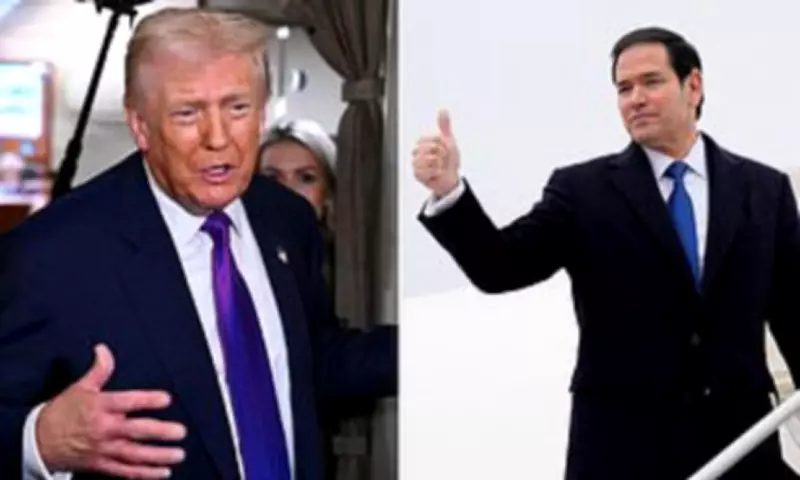
Even the president couldn't resist commenting on Rubio's rising prominence. 'Marco, don't do any better than you did, please, because if you do, you're outta here,' Trump joked to laughter during a Thursday event, before adding more seriously: 'No, I want my guys to do great.'
For Rubio, the Munich address represented more than diplomatic success. It served as a defining career moment, capping his first year as Secretary of State and propelling him into Washington's most consequential political conversations.
Reagan-Inspired Rhetoric and Strategic Storytelling
A longtime student of Ronald Reagan's presidency, Rubio heavily invoked shared nostalgia of America and Europe triumphing over communist threats. Establishment Republicans appreciated his earnest engagement with European counterparts rather than delivering confrontational lectures.
'He doesn't do angry very well, he doesn't lecture people well,' a former Rubio official told the Daily Mail, describing the approach as classic Rubio. The official noted Rubio's reliance on storytelling as his most potent speechwriting tool, with the Munich address leaning heavily on historical and philosophical arguments.
Balancing Trumpian Themes With Diplomatic Nuance
Former Trump administration officials praised Rubio for incorporating Trumpian concerns about mass migration and industrial policy into his speech, while avoiding European scolding. Instead, Rubio acknowledged America's shared struggles with these challenges.
'We made these mistakes together, and now, together, we owe it to our people to face those facts and to move forward, to rebuild,' he declared during the address.
Unprecedented Influence and Policy Successes
As both Secretary of State and National Security Advisor, Rubio wields unprecedented influence not seen since Henry Kissinger served under Richard Nixon. His proximity to Trump coincides with significant foreign policy achievements, including involvement in Venezuela's complex political transition and advising during the controversial 12-day conflict with Iran.
Even as U.S. military assets prepare for potential strikes against Iran, establishment Republicans continue applauding Rubio's global performance. The Secretary of State is scheduled to visit Israel next week for continued discussions about Iran's future.
Contrasting Approaches and Internal Republican Divisions
Rubio's speech was immediately contrasted with Vice President JD Vance's more confrontational Munich address a year earlier, where Vance warned European leaders about democratic backsliding. While Rubio's approach earned praise as 'statesmanlike' from organizations like the Atlantic Council, some MAGA-aligned Republicans considered it insufficiently forceful.

Former White House strategist Steve Bannon told the Daily Mail that while Rubio's speech was inspiring, it represented 'happy talk' unlikely to produce meaningful results, citing British resistance to U.S. military operations against Iran.
The Vance-Rubio Dynamic
Vance has described Rubio as his 'best friend' in the cabinet, with both families recently attending the Milan Olympics together. The Vice President appeared on Fox News to praise Rubio's 'very smart view of American foreign policy,' joking that he served as 'the bad cop' so Rubio could be 'the good cop' in Munich.
Despite Vance's insistence that media speculation about presidential rivalry is unfounded, establishment Republicans are quietly boosting Rubio's prospects. Some envision a 'dream team' ticket with Vance and Rubio, while others question whether Rubio's traditional foreign policy expertise might better suit the presidential rather than vice-presidential role.
As Rubio's Munich speech becomes required viewing in Washington political circles, the Secretary of State finds himself unexpectedly positioned at the forefront of Republican future planning, his diplomatic success translating into tangible political capital.