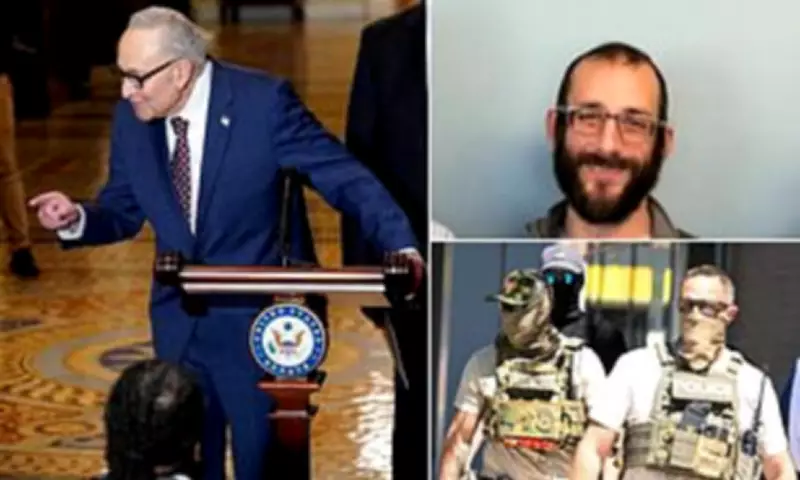
With a critical funding deadline fast approaching this weekend, Senate Minority Leader Chuck Schumer has publicly detailed his party's specific demands as legislators scramble to avert another disruptive government shutdown. The immediate focus centres on Department of Homeland Security (DHS) appropriations, which are set to lapse at the end of January, placing immense pressure on Capitol Hill to reach a consensus.
Democrats Hold Crucial Leverage in Shutdown Negotiations
The political arithmetic in the Senate grants Democrats significant influence in the current standoff. As spending legislation requires a supermajority of sixty votes to advance, the Republican majority, holding only fifty-three seats, is compelled to seek cross-party support. This dynamic empowers Senator Schumer, who is strategically using this leverage to critique the Trump administration's immigration enforcement policies.
Schumer Condemns "Chaos" and Lays Out Conditions
During a press conference on Wednesday, Senator Schumer launched a sharp critique of the current leadership at Immigration and Customs Enforcement (ICE). He accused the agency, under the direction of President Trump, Secretary Noem, and Stephen Miller, of operating without proper oversight. "They violate constitutional rights all the time and deliberately refuse to coordinate with state and local law enforcement," Schumer asserted, framing the situation as one of administrative "chaos."

To secure the necessary Democratic votes for the DHS funding package, Schumer presented a clear list of non-negotiable conditions from his caucus. These demands include an immediate end to so-called "roving patrols," a mandate for ICE officers to operate without masks while wearing body cameras, and a substantial tightening of the rules governing warrant usage. A central pillar of the proposal is a requirement for ICE to establish formal coordination protocols with state and local police forces.
Moderate Democrats Face a Political Bind
The debate over DHS funding places a group of moderate Democratic senators in a particularly difficult position. In November, seven Democratic senators—Catherine Cortez Masto, Dick Durbin, John Fetterman, Maggie Hassan, Tim Kaine, Jacky Rosen, and Jeanne Shaheen—alongside Independent Angus King, sided with Republicans to end the previous shutdown. Now, they must weigh their desire for governmental continuity against growing concerns over immigration enforcement tactics.
Senator Rosen indicated support for reallocating excess ICE funds to local law enforcement agencies, a provision originally included in the GOP tax bill. Meanwhile, Senator Fetterman has adopted a nuanced stance, defending the work of ICE agents in deporting individuals with criminal records while simultaneously calling for new leadership within the agency. On the Senate floor, Senator Kaine declared his intention to reject the current House-passed funding package until a bipartisan agreement is reached that he believes will protect Americans from potential overreach by federal agents.
Broader Context: The Minneapolis Shooting Incident
The negotiations occur in the shadow of the fatal shooting of Alex Pretti by Border Patrol agents in Minneapolis last week. This incident has galvanised calls from both sides of the aisle for greater oversight and reform of DHS operations. While Schumer's comments highlighted a perceived lack of coordination, Minneapolis Mayor Jacob Frey previously emphasised on social media that the primary duty of local police is public safety, not the enforcement of federal immigration laws, underscoring the complex jurisdictional tensions at play.
As the Saturday deadline looms, the path to avoiding a shutdown remains fraught. The outcome hinges on whether Republican leaders can accommodate the Democratic demands for increased transparency and accountability within DHS, or if the deep partisan divisions over immigration policy will trigger another bout of governmental paralysis.