Sky News Australia Unveils New Name with Prime Minister Albanese in Attendance
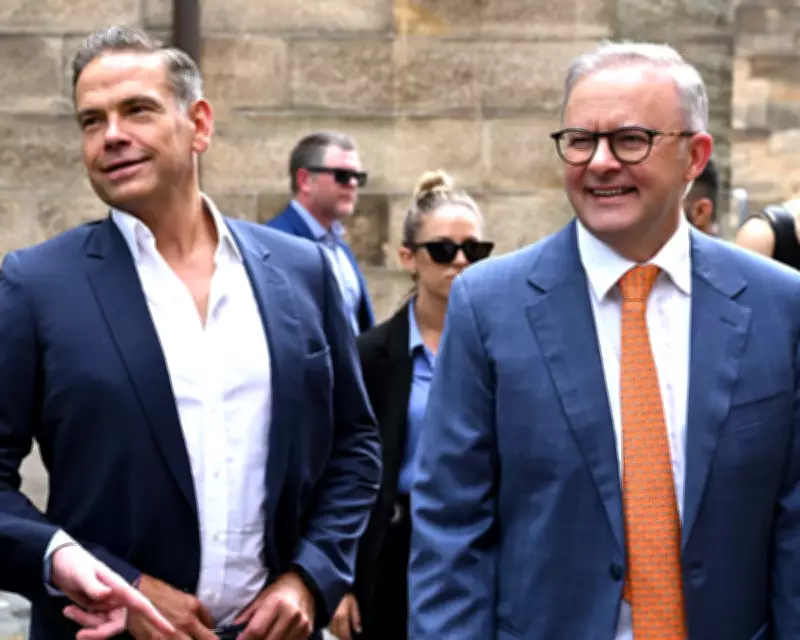
In a notable display of cross-media engagement, Prime Minister Anthony Albanese participated in a busy Friday schedule that included a visit to Guardian Australia for a podcast recording in the morning, followed by an afternoon appearance at News Corp's headquarters in Sydney. There, he joined chair Lachlan Murdoch and New South Wales Premier Chris Minns for a party celebrating the unveiling of Sky News Australia's new name. This event marks a significant rebranding for the network, necessitated by the expiration of a 10-year licensing deal with UK Sky News in December.
Labor's Ongoing Ties with Conservative Media Outlets
Despite Sky News Australia's reputation for featuring a predominantly conservative lineup of on-air guests, Labor leaders continue to accept invitations from News Corp. In 2024 alone, Prime Minister Albanese attended Lachlan Murdoch's Christmas party, The Australian's 60th birthday celebration, and the opening of Qtopia Sydney, which received funding from the Lachlan and Sarah Murdoch Foundation. This trend underscores a complex relationship between the Labor Party and media entities often critical of its policies.
On a recent Thursday evening, Sky News hosted several prominent figures from the opposition, including Liberal leader Angus Taylor, shadow ministers Tim Wilson, Michaelia Cash, Anne Ruston, and Jonathon Duniam, Nationals backbenchers Matt Canavan and Ross Cadell, and One Nation recruit Barnaby Joyce. This highlights the network's role as a platform for conservative voices, even as it engages with the current government.

Secrecy Surrounding the Rebranding Effort
The newly-renovated studios for Sky News Australia are located within the Holt Street headquarters in Surry Hills, alongside News Corp's newspaper operations. However, journalists from the Daily Telegraph and The Australian were deliberately kept at a distance from the new facilities to prevent any premature leaks of the rebranded name and logo. This precaution appears to have been successful, as the new name remained undisclosed prior to the official announcement.
Last month, it was reported that News Corp had submitted six potential brand names to IP Australia for trademark registration, awaiting regulatory approval. This strategic move reflects the company's efforts to secure a distinct identity for its news platform post-rebranding.
False Lead in Beaumont Children Case Sparks Police Criticism
In a separate media development, former News Corp journalist Bryan Littlely claimed to have "most likely" discovered the bones of the Beaumont children, three siblings who vanished from a South Australian beach in 1966. Littlely, now a true crime podcaster, detailed his findings in an exclusive article for the Nightly, citing assistance from citizen investigators who provided new witnesses and evidence.
However, South Australia police later issued a statement refuting Littlely's claims, confirming that forensic analysis determined the bone fragments were not human remains. The police criticised the handling of the evidence, noting that cutting the bone into smaller pieces could have compromised DNA extraction and caused undue distress to families of missing persons. They urged media outlets and the public to exercise caution when reporting on such cases.
Littlely expressed disappointment but stated he would pursue independent testing to verify the findings, highlighting ongoing public interest in cold cases.
Media Scrutiny Over Alarmist War Predictions
It has been nearly three years since the Sydney Morning Herald and the Age published their "Red Alert" series, which featured warnings from national security experts about a potential war with China within three years. The series faced widespread criticism for being hyperbolic and irresponsible, with figures like former Prime Minister Paul Keating and Media Watch host Paul Barry among its detractors.
As the March 7 anniversary approaches, there is anticipation for an update on the series' accuracy, given that the predicted conflict has not materialised. This episode serves as a reminder of the media's role in shaping public perception and the importance of responsible journalism in geopolitical reporting.

Coverage of Bondi Beach Terror Attack Developments
Recent media coverage of the Bondi beach terrorist case saw exaggerated headlines when accused individual Naveed Akram made his first court appearance. Outlets reported that he had "broken his silence" or "uttered his first words," though in reality, he only said "yeah" and "yep" via video link. This highlights a tendency toward sensationalism in crime reporting.
In related news, Ahmed al-Ahmed, a hero from the Bondi attack who helped disarm a gunman, is set to appear in an interview on Nine's 60 Minutes. His involvement with media has been contentious, as he previously withdrew from an interview with Sky News Australia host Sharri Markson, citing health concerns and feeling pressured. Markson is proceeding with a documentary and book on the attack, emphasizing the need to document such events thoroughly.
Transparency in Columnist Disclosures
The Sydney Morning Herald and the Age recently corrected a "production error" by reinstating the disclosure that columnist Parnell Palme McGuinness is a senior fellow at the Centre for Independent Studies, a right-wing thinktank. Her updated bio now includes this information, along with her roles as an advisory board member for Australians For Prosperity, which receives partial funding from the coal industry. This move underscores ongoing debates about transparency and bias in media commentary.