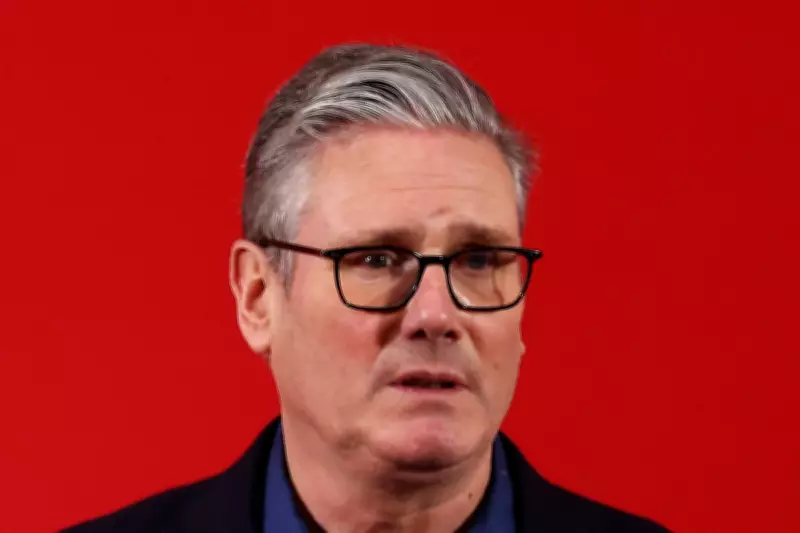
Prime Minister Keir Starmer has been accused of blatant hypocrisy following a significant reduction in the United Kingdom's financial contribution to the United Nations World Food Programme. The Labour leader, who upon entering government vowed to prioritise the global "fight against hunger" and tackle "suffering and starvation," has overseen a cut that critics argue directly contradicts his public commitments.
Substantial Funding Reduction Draws Sharp Criticism
Official figures reveal that Britain's funding to the vital UN agency was slashed from $610 million (£448 million) in 2024 to $435 million (£319 million) last year, representing a reduction of approximately one third. This decision has provoked a fierce backlash from former international development minister, Conservative peer Michael Bates, who labelled the move as deeply hypocritical.
Lord Bates warned that cases of starvation are rising "exponentially" globally and that the UK's cut, part of a wider trend among Western nations, will inevitably have deadly consequences. "If this was just a UK story it would be bad enough, but we are seeing it is a French story, it is a German story and a US story," he stated. "All these countries are cutting. There will be a time lag but this will cost lives. We have a responsibility to protect these lives."
Contrasting Priorities: Defence Spending Versus Aid
The aid reduction forms part of Chancellor Rachel Reeves's broader budgetary strategy, announced last year, which officially lowered the UK's international aid spending to 0.3 per cent of Gross Domestic Product. This marks a stark reversal from the Labour Party's previous promise to restore the aid budget to the longstanding target of 0.7 per cent of GDP.
The government has defended its fiscal reallocation, with a spokesperson emphasising that the UK remains the fifth largest donor to the World Food Programme. The primary driver for the cut is Prime Minister Starmer's pledge to increase defence spending to 2.5 per cent of GDP, a move framed as essential for national security and war-readiness amid growing global tensions.
Humanitarian Crises Exacerbated by Funding Shortfalls
The practical impact of these budgetary decisions is being felt acutely in regions grappling with severe food insecurity. In Afghanistan, where the UK government hosted a high-profile conference on starvation and malnutrition last year, the situation remains dire. Nearly 23 million Afghans currently require humanitarian assistance, with 12 million facing acute food shortages. Compounding the crisis, the World Food Programme has been forced to close 298 relief sites across the country due to funding constraints.
The crisis extends far beyond Afghanistan. The United Nations has issued a grave warning that 55 million people across central and West Africa are on the brink of a catastrophic hunger crisis. A staggering 77 per cent of this food insecurity is concentrated in just four nations: Nigeria, Chad, Cameroon, and Niger. Reports indicate that approximately 15,000 people in Nigeria are currently at risk of famine-level hunger, described as a "catastrophe," for the first time in nearly a decade.
Charities Condemn Misplaced Priorities
Charitable organisations have joined political figures in condemning the government's approach. Flora Alexander, the UK executive director of the International Rescue Committee, criticised the aid cuts made while funds were simultaneously being directed towards initiatives aimed at curbing illegal immigration from Bangladesh.
"With the aid budget at its lowest in decades, every pound must go where it saves lives and tackles the root causes of crisis," Alexander argued. "That means prioritising fragile and conflict-affected states, where needs are greatest and where smart investment can help reduce the pressures that force people to leave their homes."
The controversy underscores a fundamental tension in the Starmer government's early foreign policy: balancing ambitious domestic and defence spending pledges against moral and humanitarian obligations on the world stage. As global hunger escalates, the prime minister faces mounting pressure to reconcile his rhetoric with his government's fiscal reality.