Labour Leadership Blocks Burnham in Escalating Factional Standoff
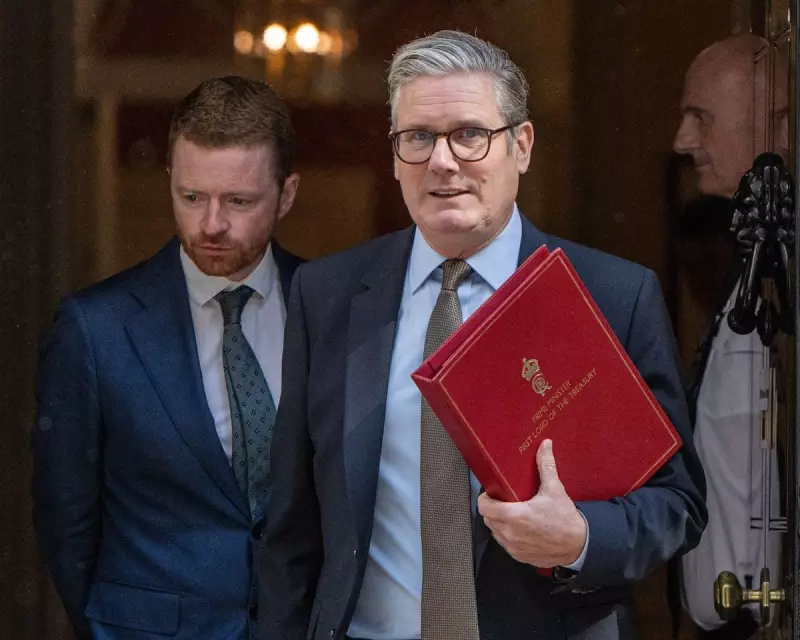
Keir Starmer has moved decisively to block Andy Burnham from standing in the upcoming Gorton and Denton by-election, a move that has laid bare the profound internal divisions threatening the Labour Party's future. The Prime Minister, seen leaving Number 10 with his chief of staff Morgan McSweeney, appears to be prioritising the survival of his own faction over the broader health of the party, according to critics within and outside Labour ranks.
A Rational Move for Factional Control, But at What Cost?
On the surface, Starmer's decision appears strategically sound from a narrow factional perspective. Andy Burnham, the popular Mayor of Greater Manchester, had openly expressed his desire to return to Westminster, leading many to speculate that his ultimate aim was to challenge Starmer's leadership, particularly if Labour suffers significant losses in the May elections. Burnham has publicly pledged to support the government rather than undermine it, but in the volatile political climate, his presence in Parliament could provide a rallying point for discontented MPs.
The official justification for blocking Burnham centres on the perceived risk of Labour losing the Greater Manchester mayoralty to Reform UK. However, this argument appears tenuous when examined closely. In the May 2024 mayoral election, Burnham secured a commanding 63% of the vote, while Reform finished a distant fourth with just 7.5%. If Labour genuinely fears losing such a stronghold, it suggests the party's foundations as a national political force are already dangerously weakened.

The McSweeney Faction's Vision: Power Without Purpose?
At the heart of this controversy lies Morgan McSweeney's influential faction within Labour, which critics accuse of valuing control above all else. Reports suggest that Starmer's inner circle view the Prime Minister as a frontman rather than a genuine leader—a useful figurehead who believes he's steering the party while actually occupying a position akin to a passenger on London's driverless Docklands Light Railway.
This faction, according to internal critics, emerged from student politics backgrounds where they developed a worldview that labels anyone left of Peter Mandelson as extremist. They are accused of imagining themselves as characters in The West Wing, embracing Machiavellian manoeuvring while lacking the idealism that traditionally animated Labour politics. Their political philosophy, detractors argue, consists primarily of defining themselves against the left and pursuing power as an end in itself.
A Pattern of Factional Control Over Electoral Success
The Burnham blockade follows a familiar pattern for Starmer's leadership. A notable precedent occurred just before the general election, when Faiza Shaheen—a local, working-class Muslim woman and accomplished economist—was blocked from standing in Chingford and Woodford Green. The result was predictable: Shaheen stood as an independent, split the Labour vote, and allowed Iain Duncan Smith to secure victory. For Starmer's faction, this outcome was apparently preferable to allowing a talented left-winger to win under Labour's banner.
Despite reshaping the Parliamentary Labour Party through tightly controlled selections that favoured ultra-loyal candidates, many MPs now complain of being treated as "too stupid" by a hostile Number 10 operation. This suggests that even those who benefited from the faction's control are growing disillusioned with its methods and priorities.
Labour's Electoral Dilemma and the Green Threat
The party's internal briefing that it fears the Greens more than Reform in Gorton and Denton reveals Labour's deepening crisis. This constituency ranked in the top 15% for Labour majorities in recent elections, making a Green victory there particularly symbolic. Labour appears to be betting its survival on convincing progressive voters that only it can prevent Nigel Farage from reaching Number 10, but if the Greens triumph in traditional Labour strongholds, this emotional blackmail will lose its potency.

The Greens report that Labour support has collapsed on doorsteps in the constituency, creating a straight fight between themselves and Reform. With Suella Braverman's defection to Reform, the Greens can argue to disillusioned Labour voters that the "alternative" to Starmer is essentially Rishi Sunak's old cabinet under Farage's leadership.
A Party Choosing Control Over Survival
Starmer's leadership has adopted much of the Labour right's political platform, yet managed to secure only about a third of the vote on record low turnout—the poorest showing since universal suffrage was introduced in 1928—despite the Conservatives' self-destruction. The administration has become defined by policy U-turns, while the Prime Minister's net favourability rating stands at a dismal -57.
With Starmer's position increasingly precarious, blocking Burnham leaves ultra-Blairite torchbearer Wes Streeting as the frontrunner for succession. Though popular with commentators but disliked by the public, Streeting would likely continue the same political approach that has brought Labour to its current crisis.
The fundamental question facing Labour is why voters should continue supporting a party that appears to have been overrun by what critics describe as "soulless hacks" who would rather see the party burn than relinquish control. As the factional warfare intensifies, Labour's very existence as a viable political force hangs in the balance, with the Burnham blockade representing merely the latest battle in a war that threatens to consume the party entirely.