Starmer Calls Emergency Press Conference Amid Mounting Middle East Crisis Backlash
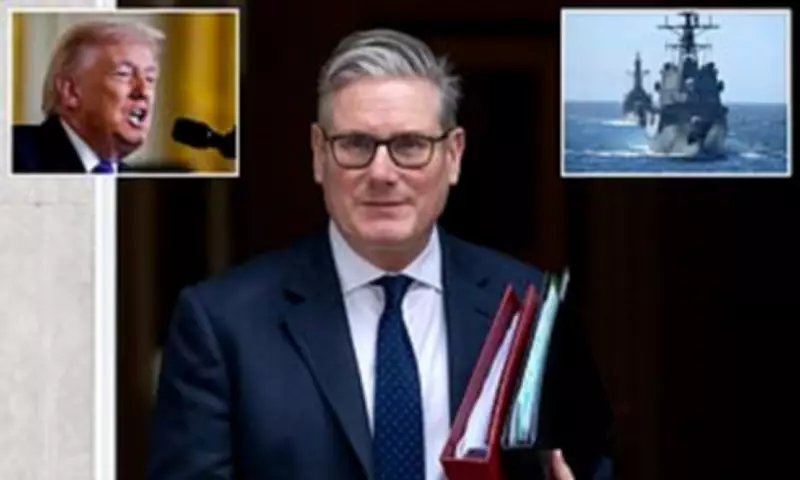
Prime Minister Keir Starmer has announced a surprise press conference scheduled for 2pm today, as he faces intensifying criticism over his government's handling of the escalating Middle East conflict. The premier will field questions at Downing Street against a backdrop of growing concerns about Britain's military preparedness and the deteriorating state of the Special Relationship with the United States.
Trump's Personal Attacks and European Military Deployments
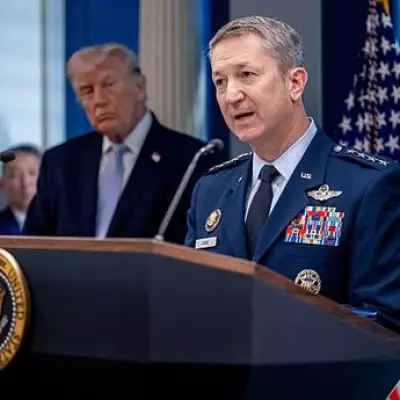
In a significant escalation of tensions, reports indicate that former US President Donald Trump has privately referred to Sir Keir as a 'loser', having previously dismissed him publicly as 'no Churchill'. This criticism stems from the Prime Minister's refusal to permit American forces to launch strikes on Iran from United Kingdom military bases, a decision that has sparked transatlantic friction.
The situation has been further complicated by news that additional European nations are deploying naval forces to protect the strategically vital RAF Akrotiri base in Cyprus. Spain has confirmed it will join France, Italy, and the Netherlands in sending vessels to the Eastern Mediterranean, while the United Kingdom currently has no ships in the area. The Type 45 air defence destroyer HMS Dragon is not scheduled to depart until next week, raising questions about response times.

Cyprus Base Security Concerns and Political Fallout
Security at RAF Akrotiri has become a major concern following an Iranian drone strike launched from Lebanon on Sunday. Although officials described the damage as minor, it was later revealed that the drone struck a hangar utilized by the United States for U2 spy planes conducting high-altitude reconnaissance missions. This incident has prompted urgent reassessments of local air defence capabilities.
Madrid announced that the frigate Cristobal Colon will join French and Greek ships in the region to 'offer protection and aerial defence' and 'support any evacuation of civilians' from Cyprus if necessary. This international response highlights the growing multinational effort to secure the area.
Domestic Political Pressure and Security Council Discussions
Reform UK leader Nigel Farage has condemned the government's approach, stating that Britain has been 'humiliated' by its response to the Middle East conflict. He characterized Sir Keir as 'incapable of making a decision' and described him as 'a follower and not a leader' during the launch of his party's Wales manifesto.
Details have emerged of a contentious National Security Council meeting held last Friday, less than twenty-four hours before American-Israeli strikes commenced. Senior Labour figures including Ed Miliband, Rachel Reeves, and Yvette Cooper reportedly urged the Prime Minister to reject the US assault on Iran, citing domestic political considerations following Labour's by-election defeat to anti-war Greens in Gorton & Denton.
Security sources indicated that Mr Miliband adopted a 'petulant, pacifist, legalistic and very political approach' during the discussions, while Ms Cooper mirrored the 'cautious approach of the Foreign Office'. These internal divisions have placed Sir Keir under considerable pressure, particularly as he recently survived a leadership challenge amid the Mandelson scandal.
Transatlantic Tensions and Political Calculations
The disagreement over US base usage has reportedly been simmering for weeks, with Mr Trump initially incensed by Sir Keir's refusal. The Prime Minister later partially reversed his position under substantial pressure, permitting 'defensive' actions while maintaining restrictions on offensive operations. There were warnings that American forces might have utilized UK bases regardless of authorization, daring Britain to intervene.
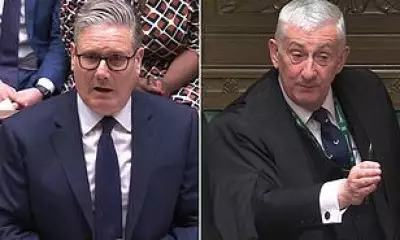
During Prime Minister's Questions, Sir Keir defended his decisions, accusing Mr Trump of lacking a 'viable, thought-through plan'. He asserted that allowing the US to use UK bases for defensive purposes 'is the special relationship in action', while emphasizing that 'hanging on to President Trump's latest words is not'.

Labour MP John McDonnell supported the Prime Minister's stance, telling ITV's Peston that Sir Keir 'didn't have a choice' given the recent by-election defeat and upcoming local elections. He suggested the Prime Minister might not have survived in office had he automatically acquiesced to American requests.
As European allies mobilize naval assets and transatlantic relations strain, Sir Keir's emergency press conference represents a critical moment for his leadership and Britain's role in the Middle East conflict. The delayed deployment of HMS Dragon and reliance on international partners have raised fundamental questions about military readiness and strategic decision-making at the highest levels of government.