Starmer Defends Blocking Burnham's Westminster Bid Amid Labour Backlash
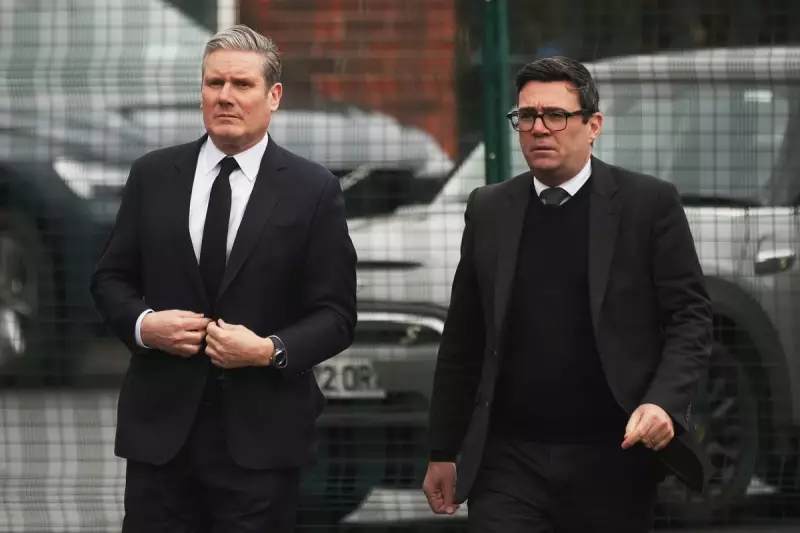
In a move that has sparked significant internal dissent, Prime Minister Sir Keir Starmer has publicly defended his party's controversial decision to block Andy Burnham from standing for a Westminster seat. The Labour leader argued that allowing the Greater Manchester Mayor to run would dangerously divert vital resources away from the party's crucial spring election campaigns.
Resource Allocation Takes Priority
Speaking during a visit to a health centre in Wimbledon, Sir Keir insisted that Mr Burnham continues to perform excellently as Manchester's mayor. However, he maintained that the "battle of our times" lies between Labour and Reform UK, not within his own party's ranks. The Prime Minister emphasised that creating an unnecessary election would pull focus from what he described as essential contests.
"We have really important elections already across England for local councils, very important elections in Wales for the government there, and very important elections in Scotland for the Scottish government that will affect millions of people," Starmer told broadcasters. "Having an election for the mayor of Manchester when it's not necessary would divert our resources away from the elections that we must have, that we must fight and win."

Internal Criticism Mounts
The decision, taken by Labour's National Executive Committee (NEC) in a 10-strong vote including Sir Keir himself, has provoked substantial backlash from within party ranks. Critics have accused the leadership of acting for factional reasons, fearing a potential leadership challenge from the popular mayor as both Labour's poll ratings and Starmer's personal approval face difficulties.
Former cabinet minister Louise Haigh called for the ruling body to reverse its decision, warning that "otherwise I think we'll all come to regret this." Meanwhile, left-wing backbencher Kim Johnson suggested the Prime Minister "needs to consider his own position" after what she described as evidence that Sir Keir is not prioritising the country over party interests.
Union and Backbench Reactions
Trade unions have joined the chorus of disapproval, with the TSSA declaring that Labour had "lost its way" and Unison's general secretary criticising the decision as contrary to democratic principles. Several backbenchers have predicted that the party may now lose the Gorton and Denton by-election as a consequence of the controversial move.
However, some parliamentary colleagues have supported the NEC's position. Phil Brickell, MP for Bolton West, argued that speculation about Mr Burnham's candidacy had seen "the Labour Party quickly turn inward... undermining the PM's efforts at home and abroad." Rugby MP John Slinger described the decision as "quick and clear" and urged the party to move forward united.
Communication Controversy
Adding to the controversy, Mr Burnham claimed that the NEC's decision had been leaked to the press before he received official notification, stating this "tells you everything you need to know about the way the Labour Party is being run these days." Labour sources initially denied these allegations strenuously, but Cabinet minister Douglas Alexander later acknowledged that the confidential decision may indeed have been leaked prematurely.
Despite his disappointment, the Greater Manchester mayor pledged to return with "full focus" to his current role and called for unity against "the divisive politics of Reform." Meanwhile, Sir Keir appealed directly to his divided party, urging members and MPs to "line up together" in what he described as "a fight that matters hugely to the future of our country."
As Labour braces for challenging local elections this spring, the Prime Minister's handling of this internal dispute will likely have significant implications for party unity and electoral prospects in the crucial months ahead.