Labour Leader Rejects Internal Calls to Reverse Burnham By-Election Block
Sir Keir Starmer has firmly dismissed mounting demands from within his own party to reconsider the decision to block Andy Burnham from standing as Labour's candidate in the crucial Gorton & Denton by-election. More than 50 Labour MPs have signed a private letter urging the party's ruling National Executive Committee (NEC) to revisit what they describe as a "remote stitch-up from a small group of people at the very top in London."
Growing Rebellion Over Candidate Selection
The rebellion comes as senior Labour figures acknowledge the party faces a significant risk of losing the Gorton & Denton seat in the contest, which is being rushed through for February 26. Despite former MP Andrew Gwynne having secured a substantial 13,000 majority in the 2024 general election, both Reform UK and the Green Party are expressing confidence about their prospects in the upcoming by-election.
With Mr Burnham barred from standing, Labour appears to be struggling to identify a high-profile candidate for the crucial contest. Manchester Council leader Bev Craig ruled herself out of contention last night, further complicating the party's selection process.

Starmer's Justification for the Decision
Sir Keir has maintained a defiant stance, emphasising that Mr Burnham was refused permission primarily because his candidacy would have triggered an election for the Manchester mayoralty, rather than due to any perceived threat of a leadership challenge. Speaking on comedian Matt Forde's podcast, the Labour leader explained: 'What the NEC decided was we didn't want to open up another front for a fight we didn't have to have, which was the mayoralty in Greater Manchester … it wasn't actually about the individual at all.'
Senior Figures Back the NEC Ruling
Housing Secretary Steve Reed reinforced this position during media appearances this morning, insisting the matter was 'done and dusted.' He elaborated: 'Labour's ruling National Executive Committee took a decision overwhelmingly, eight to one, that Andy should stay as mayor of Manchester because he was elected only two years ago to serve a four-year term. He made a commitment to serve that four-year term, and it's reasonable that the people of Manchester should have him continuing doing, frankly, the outstanding job that he's doing until his term comes to an end.'
Mr Reed added: 'Now, the Labour Party members in Gorton & Denton will go ahead and they will select the person they want to be the Labour Party candidate in that by-election, and we will then fight to win that by-election.'
MPs' Letter Highlights Electoral Concerns
The letter from backbench MPs argues strongly for Mr Burnham's inclusion, stating: 'As a former Cabinet member and the current Labour mayor of Greater Manchester, there is no legitimate reason why Andy Burnham should not have the democratic right to put his candidacy to the local people of Gorton and Denton.' The correspondence further warns: 'This is particularly important as polling clearly shows he may be our very best chance at winning this by-election.'
Strained Relations and Political Fallout
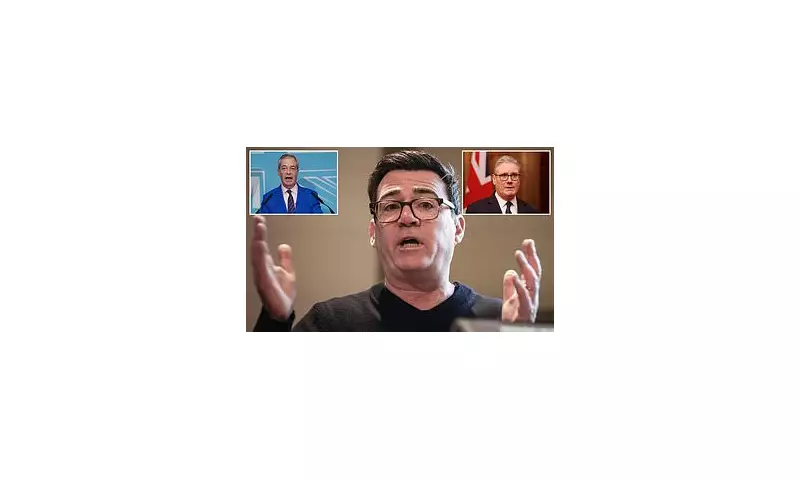
Relations between Sir Keir and Mr Burnham are reported to be at a 'low ebb,' with the Greater Manchester mayor having publicly criticised the decision to prevent his return to the Commons. When Sir Keir's biographer Tom Baldwin commented that Labour's 'inward-looking psychodrama ... does no one any good,' Mr Burnham responded pointedly: 'I'm not sure losing a by-election does us any good either.'
At a recent event, Mr Burnham appeared to take a swipe at the Labour leadership in Westminster, contributing to perceptions of a growing North-South divide within the party. He remarked: 'The Greater Manchester way is built on togetherness. We don't ever here have a politics that's about pitting people [against one] another.'

Opposition Parties Seize Advantage
Nigel Farage, leader of Reform UK, has openly welcomed Labour's decision, suggesting that Mr Burnham would have been 'very difficult to beat' in the by-election. Mr Farage claimed his own candidate's chances had 'improved massively' as a direct result of Mr Burnham being kept off the ballot paper, highlighting the potential electoral consequences of Labour's internal dispute.
The situation presents a significant test for Sir Keir's leadership as he attempts to maintain party unity while facing internal dissent over candidate selection ahead of a critical electoral contest that could have broader implications for Labour's political standing.