Labour's Strategic Pivot: Making Brexit the Defining Election Issue
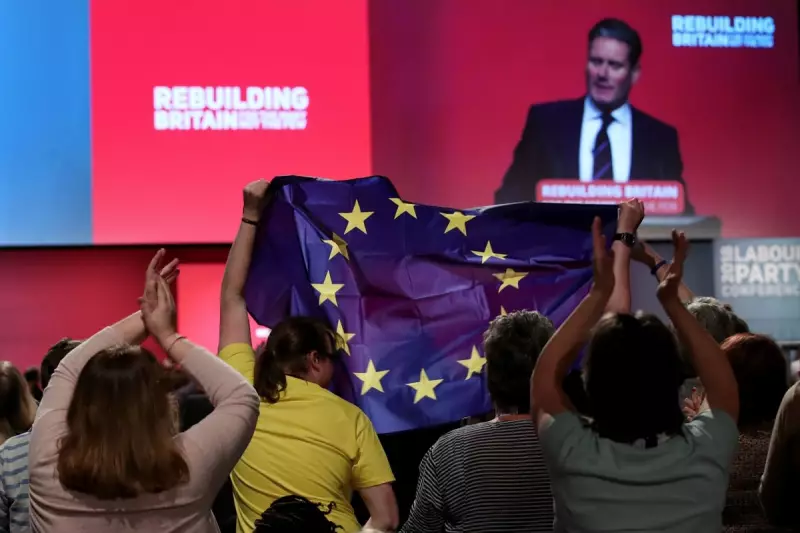
In a bold political manoeuvre, Sir Keir Starmer's government is preparing to place Brexit at the very heart of the next general election campaign. Following a period of tacking to the right on migration policy, ministers now believe that European Union relations present the clearest opportunity to establish a decisive dividing line with opposition parties, particularly Reform UK and the Conservatives.
Closer Alignment as a Public Mandate
With the Prime Minister having pledged to "reset" the UK's relationship with Brussels and pursue closer alignment with the EU single market, Labour is positioning itself as the sole political party whose stance on Brexit genuinely reflects prevailing public sentiment. A decade after the historic referendum, polling consistently indicates that a majority of voters view Brexit as a failure in its current form and desire stronger ties with the European bloc. However, this same majority appears reluctant to prioritise an immediate campaign for formal rejoining.
Government insiders have revealed to The Independent that attack units intend to frame Nigel Farage as an "ideological zealot" more committed to anti-EU dogma than to securing trade agreements that would bolster the British economy. "Farage doesn't actually want to talk about Brexit anymore because he knows his project has failed," one source stated, highlighting the widely acknowledged negative economic repercussions of the UK's departure.

The SPS Deal: A Pre-Election Buffer
Central to this strategy is the government's ambition to finalise a Sanitary and Phytosanitary (SPS) agreement with the EU by the coming summer. This proposed deal would eliminate the majority of health certificates and routine border inspections on food and agricultural products. Ministers hope its implementation would provide businesses with a substantial "buffer period" to adapt before the next general election, anticipated in 2029.
"We want to have a real political fight over this," a government source emphasised, asserting that the administration can convincingly argue that both Reform and the Conservative Party are allowing ideological opposition to Europe to supersede the electorate's actual desires and the nation's economic best interests.
A second source elaborated that securing an operational SPS agreement prior to the election would enable ministers to claim that a government led by Nigel Farage would dismantle this progress and re-erect trade barriers, harming UK businesses.
Learning from Past Campaigns
This marks a significant departure from Labour's 2024 election strategy, which deliberately avoided the Brexit debate to prevent reopening old societal wounds. Despite resulting in a landslide victory, this approach faced widespread criticism for sidestepping a crucial issue. Now, the government is preparing a more confrontational stance.
Polling expert Sir John Curtice has cautioned that advocating for closer EU ties carries inherent risks, as some voters may worry about trade-offs, such as accepting certain EU regulations. Nevertheless, he contends that Labour "should be able to convince the majority of their supporters that it's a good idea" if the party demonstrates a willingness to argue for it more forcefully than before.
"The attempt of Labour and the Liberal Democrats to make it go away in the last Parliament did not, for the most part, largely succeed," Sir John observed. He added that while "everybody wants to get rid of customs checks… we aren't going to get the absence of custom checks for free."
Public Opinion and Shifting Attitudes
Recent YouGov data from July 2025 underscores the shifting landscape: 61% of Britons believe Brexit has been more of a failure than a success, and nearly two-thirds (65%) now favour a closer relationship with the EU. While a majority (56%) may support ultimately rejoining, there is less conviction that it should be an immediate governmental priority. When balanced against other pressing national issues, 44% currently deem rejoining the wrong priority, compared to 37% who believe it is the right focus.

Naomi Smith, Chief Executive of the pro-EU campaign group Best for Britain, noted: "Our extensive polling shows that, for now, the broadest voter support lies in a closer relationship with the EU that stops short of Customs Union or Single Market membership. But public attitudes are shifting quickly." She pointed to geopolitical factors—including the war in Ukraine, an increasingly unreliable US under a potential Trump administration, and a deepening domestic affordability crisis—as reasons why more Britons are looking to Europe as essential partners for economic stability and collective security.
Tangible Campaigns and Broader Cooperation
As part of its effort to win over voters, the government is reportedly planning a series of high-profile stunts in the coming months designed to illustrate the concrete negative impacts of Boris Johnson's Brexit deal on British businesses. One such initiative is a proposed "save our garden centres" campaign, aimed at highlighting how trade barriers on plants have devastated that sector—a problem an SPS deal could potentially remedy.
Beyond the SPS agreement, ministers are reportedly exploring other avenues for enhanced cooperation with Brussels, including in financial services and the steel industry. This follows Sir Keir's recent insistence that Britain should "go further" in strengthening post-Brexit ties. Furthermore, as officials negotiate the terms of a possible youth mobility scheme with the EU—which could grant tens of thousands of young people the right to live and work across borders—one government source indicated an openness to "anything under the sun" regarding future trade agreements.
This renewed drive to promote Labour's EU strategy comes at a critical juncture for the government, which faces growing concerns over its direction, severely depressed approval ratings, and a faltering economy. The party has been steadily losing ground to Reform UK, which now polls approximately ten points ahead of Labour, adding urgency to Starmer's plan to redefine the political battle lines around Brexit.