Starmer Confronts Trump's Greenland Pressure Tactics in Heated PMQs Exchange
Prime Minister Keir Starmer has delivered his most explicit criticism yet of former US President Donald Trump, accusing him of intentionally deploying rhetoric about the Chagos Islands to pressure Britain into weakening its stance on the future of Greenland. The confrontation emerged during a tense Prime Minister's Questions session where Starmer also took aim at Conservative leader Kemi Badenoch for what he described as supporting Trump's efforts to undermine the government.
Trump's Strategic Shift on Chagos Sovereignty
In a significant reversal of previous US policy, Donald Trump used his Truth Social platform overnight on Tuesday to condemn the UK's planned sovereignty transfer of the Chagos Islands to Mauritius. This archipelago in the Indian Ocean includes Diego Garcia, which hosts a crucial UK-US military base that has served as a strategic asset for decades.
"Shockingly, our 'brilliant' Nato Ally, the United Kingdom, is currently planning to give away the Island of Diego Garcia to Mauritius, and to do so FOR NO REASON WHATSOEVER," Trump wrote in a post that formed part of what Starmer described as "a flurry of posts about Greenland."

The former president explicitly connected the Chagos issue to his longstanding ambition regarding Greenland, stating: "The UK giving away extremely important land is an act of GREAT STUPIDITY, and is another in a very long line of National Security reasons why Greenland has to be acquired."
Starmer's Firm Response to Transatlantic Pressure
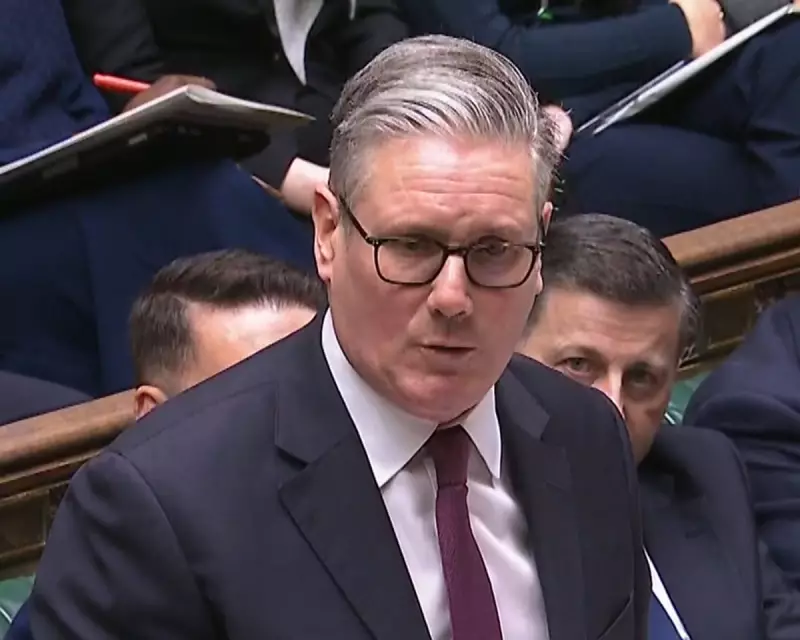
During the parliamentary exchange, Starmer made clear that he interpreted Trump's comments as a deliberate attempt to influence British policy. "President Trump deployed words on Chagos yesterday that were different to his previous words of welcome and support," the Prime Minister stated, adding that the US leader had "deployed those words yesterday for the express purpose of putting pressure on me and Britain in relation to my values and principles, on the future of Greenland."
Starmer emphasised that he would not yield to this pressure, telling the Commons: "He wants me to yield on my position, and I'm not going to do so. Given that that was his express purpose, I'm surprised the leader of the opposition has jumped on the bandwagon."
The Prime Minister reiterated his consistent position on Greenland's status, declaring: "I've been clear and consistent in my position on the future of Greenland. Its future is for Greenland and the Kingdom of Denmark alone." This statement referenced his earlier comments from a Monday press conference where he condemned Trump's threat to impose tariffs on eight European nations that had deployed troops to Greenland.
Conservative Opposition Faces Accusations of Opportunism
In a particularly sharp rebuke directed at Kemi Badenoch, Starmer accused the Conservative leader of abandoning national unity in favour of political opportunism. After Badenoch questioned him about Trump's stance during PMQs, the Prime Minister responded: "I had understood her position to be that she supported the government's position on the future of Greenland. Now she appears to support words by President Trump to undermine the government's position on the future of Greenland. She's chosen naked opportunism over the national interest."
Starmer framed the Greenland issue as having global significance, noting: "The future of Greenland is a binary issue that is splitting the world at the moment with material consequences." He pointed out that Trump's comments about Chagos and Greenland appeared in the same sentence, suggesting a deliberate strategic connection between the two issues.
Broader Implications for UK-US Relations
This exchange represents one of the most direct confrontations between a sitting British Prime Minister and a former US president in recent memory. Starmer's comments highlight the ongoing tensions in the special relationship, particularly regarding territorial sovereignty and strategic military assets.

The Prime Minister concluded his remarks with a broader criticism of the opposition's approach to international diplomacy, stating: "This is an important national moment, and yet again, the leader of the opposition has shown she is incapable of rising to it." This framing positions the Greenland question not merely as a foreign policy matter but as a test of political leadership during a period of significant geopolitical realignment.
The controversy underscores how territorial disputes in remote regions have become flashpoints in international diplomacy, with former leaders like Trump continuing to exert influence through social media platforms and public statements that challenge established government positions.