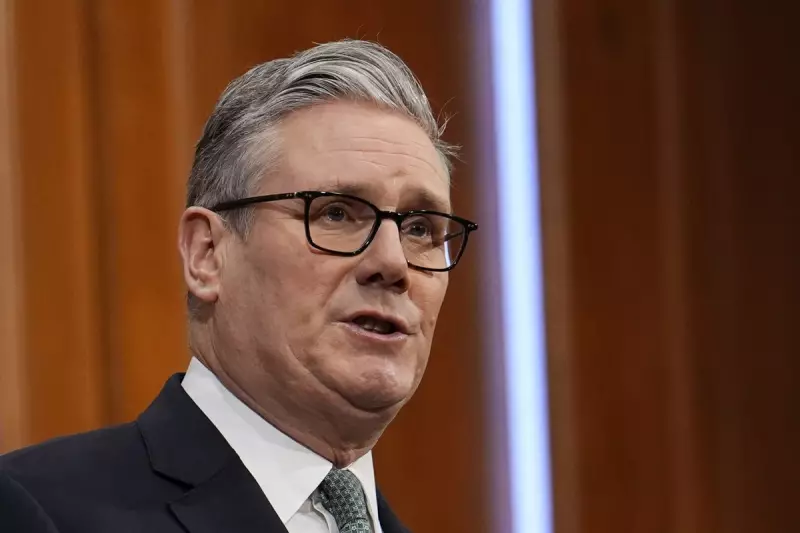
Prime Minister Sir Keir Starmer has issued a resolute declaration that Britain will stand firm against former US President Donald Trump's threats to annex Greenland and impose punitive tariffs on European allies. The defiant stance comes as Sir Keir prepares to host Danish Prime Minister Mette Frederiksen in London on Thursday for crucial diplomatic talks.
Unwavering Support for Danish Sovereignty
During Prime Minister's Questions on Wednesday, Sir Keir articulated his government's fundamental principles regarding the Arctic territory. "I have made my position clear on our principles and values," he stated emphatically. "The first of those is that the future of Greenland is for the people of Greenland and the Kingdom of Denmark alone."
The Labour leader further condemned what he described as coercive economic tactics, adding: "The second is that threats of tariffs to pressurise allies are completely wrong." His remarks directly address Trump's recent ultimatum to hit Britain and other European nations with 10% tariffs from February 1 unless they acquiesce to his proposed purchase of Greenland.

A Firm Commitment Ahead of Diplomatic Meetings
With Prime Minister Frederiksen's imminent arrival, Sir Keir reinforced his government's position: "I will not yield, Britain will not yield on our principles and values about the future of Greenland under threats of tariffs, and that is my clear position." This unwavering commitment underscores the seriousness with which the UK government views the escalating situation.
The controversy has been further inflamed by Trump's refusal to rule out military action to seize the strategically significant island, raising alarm across diplomatic circles and defence establishments.
Chancellor Reeves Addresses Economic Implications
Meanwhile, Chancellor Rachel Reeves has asserted that the UK will not be "buffeted around" by tariff threats while attending the World Economic Forum in Davos, Switzerland. She emphasised the government's economic resilience, stating: "Britain is not here to be buffeted around. We've got an economic plan, and it is the right one for our country."
Reeves highlighted ongoing efforts to strengthen international trade relationships, revealing: "This week I'm meeting with European, Gulf partners, Canadians to talk about how we can free up trade and make it easier for businesses to trade around the world." Regarding the existing US-UK trade deal, she referenced discussions with US Commerce Secretary Howard Lutnick, noting his view that "he doesn't see any reason why that trade deal should be undone."
Shadow Minister Warns of Historic NATO Crisis
The political tension has prompted grave warnings from opposition figures. Shadow Chancellor of the Duchy of Lancaster Alex Burghart described the Greenland dispute as "the most dangerous moment for Europe since 1945." He expressed profound concern about potential NATO fragmentation, telling the Press Association: "There's a risk that NATO is going to fall apart. I really hope that doesn't happen. We must be doing everything we can to prevent it from happening."
Burghart outlined catastrophic potential consequences, including: "If it does, it will probably mean that Putin will win in Ukraine, and then we will have a very large Russian army on the outskirts of Europe, and Europe's defence simply not ready." He has called for "an urgent emergency meeting of NATO" to address Arctic security concerns and prevent further escalation.
The convergence of these statements from government and opposition figures highlights the multifaceted nature of the Greenland crisis, encompassing diplomatic sovereignty, economic stability, and European security architecture. As Thursday's meeting between Starmer and Frederiksen approaches, all eyes remain on how this principled stand will translate into concrete diplomatic action.