Can Keir Starmer Forcibly Remove Mandelson's Peerage Over the Epstein Scandal?
Kicking the disgraced former ambassador out of the Lords is politically advantageous for Keir Starmer, but as analysis reveals, the process is neither quick nor straightforward.
Lord Mandelson Resigns Labour Membership Over Epstein Links
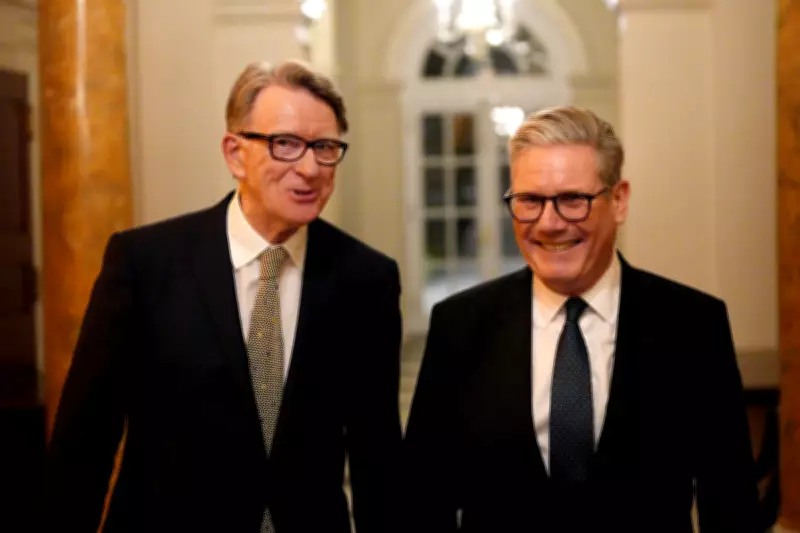
Peter Mandelson has experienced numerous highs and lows throughout his public career, yet his recent fall from grace stands as one of the most dramatic episodes. Transitioning from cabinet roles to private lobbying, then to the prestigious position of UK ambassador to the US, and now to a state of political ostracism, his journey is unparalleled. Each release of documents from the Epstein files has compounded his embarrassment, with photographs in revealing attire stripping him of dignity. Now, even a Labour prime minister is pushing for the removal of his peerage.
What Lies Ahead for Mandelson?
Sir Keir Starmer has publicly stated that Lord Mandelson should not retain his membership in the House of Lords or continue using his title. The prime minister is urging peers to collaborate with the government to overhaul disciplinary procedures, facilitating easier expulsion of members.

His official spokesman clarified: "The prime minister believes that Peter Mandelson should not be a member of the House of Lords or use the title. However, the prime minister does not have the power to remove it."
How Could Mandelson Lose His Peerage?
Mandelson had previously taken a "leave of absence" from the House of Lords due to his full-time diplomatic duties as UK ambassador to the US, a role he resigned from last September. If he chooses to resign voluntarily, the 2014 House of Lords Reform Act permits this, allowing him to relinquish his constitutional peerage while retaining the title, similar to many hereditary or life peers.
However, if the government or fellow peers seek to forcibly deprive him of his peerage, the task becomes significantly more arduous.
Why Can't Mandelson Simply Revert to "Mister"?
He could, but it would necessitate a special act of parliament. Historically, title deprivation has only occurred under the 1917 Titles Deprivation Act, applied to four German aristocrats during the First World War. Since Mandelson has not "borne arms against His Majesty or His Allies, or... adhered to His Majesty's enemies," he remains exempt from this provision.
Even if he lost his title, he could still use "the Right Honourable Peter Mandelson" unless the King, advised by ministers, dismissed him from the privy council—a move not seen since 2011.
Can't the House of Lords Simply Expel Him?
Yes, expulsion is possible if he violated laws or the House of Lords code of conduct, and peers voted to remove him. Yet, he would retain the right to call himself Lord Mandelson. Such exclusions are exceedingly rare; for instance, Nazir Ahmed and John Sewel resigned preemptively to avoid expulsion, keeping their titles despite Ahmed's imprisonment for serious sexual offences. Other peers have been automatically removed for non-attendance.
Will Forced Removal Occur?
The SNP has previously tabled an early day motion in the House of Commons, symbolically urging the government to "take legislative steps to remove his peerage." Downing Street now appears aligned, though with a focus on enacting permanent systemic changes rather than a one-off action.
Ultimately, while Mandelson's formal titles may be contested, his informal moniker as the Prince of Darkness endures indefinitely.