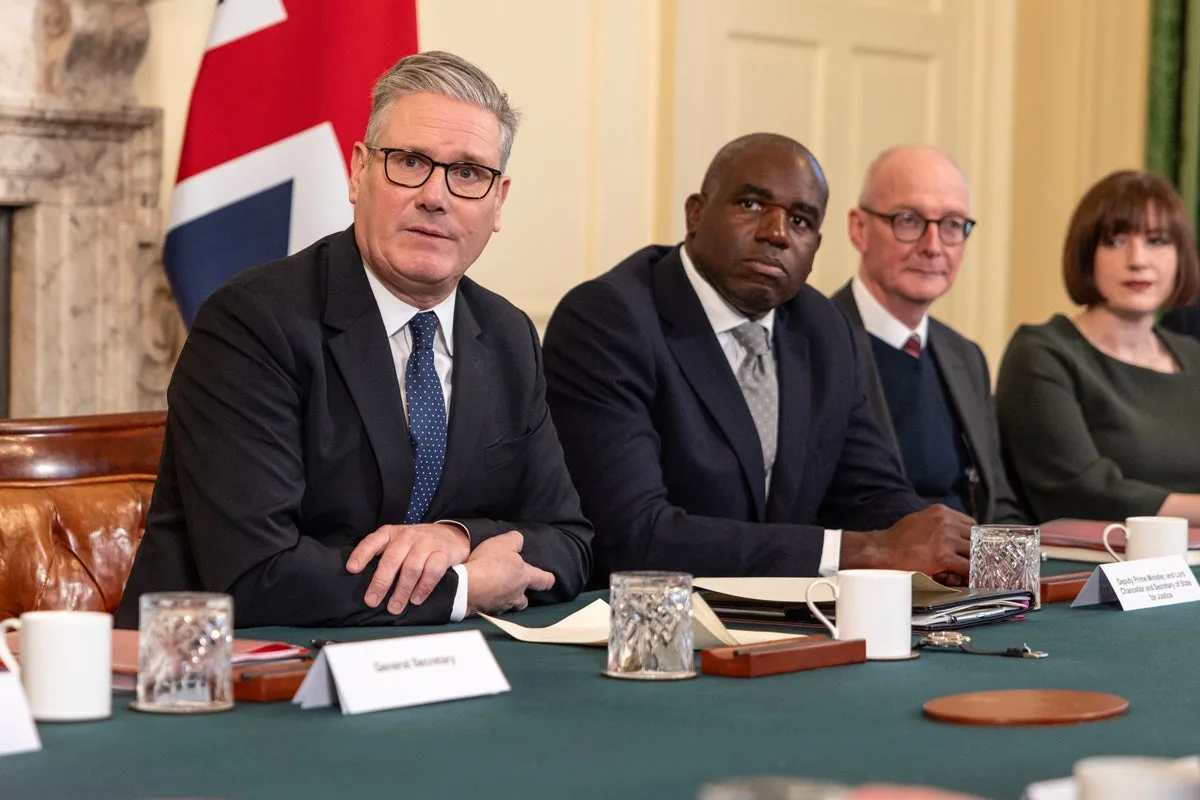
Prime Minister Keir Starmer has convened his first Cabinet meeting of 2026, delivering a rallying cry to ministers as the government braces for a make-or-break year of crucial elections.
A Message of Hope Amid Polling Dip
Opening the meeting, Starmer pointed to early government achievements, including energy bills relief, the first rail fare freeze in 30 years, and an increase to the National Living Wage. He urged his top team to go further, declaring the cost of living the “single most important and biggest issue” for British families.
Ahead of a pivotal year featuring local elections and votes in Scotland and Wales, the Prime Minister's chief of staff, Morgan McSweeney, addressed the Cabinet. He acknowledged Labour might be experiencing a dip in the polls but insisted a political comeback was firmly within reach, citing numerous international examples.
International Blueprints for a British Recovery
McSweeney directed ministers to look at the success of centre-left parties abroad for a potential blueprint. “History — and the experience of our sister parties — is clear on the route back,” he stated. “Governments almost always dip before they recover. Not because the country rejects them, but because repair comes before renewal.”
He highlighted the Australian Labor Party's recovery from mid-term difficulties. “They stopped chasing noise, focused relentlessly on the cost of living, delivered, and held their nerve. They recovered — and they won again,” McSweeney told the Cabinet.
This foreign strategy is already influencing UK policy. A Labour source described the Australian approach as “kitchen table economics”—concentrating on issues families discuss daily, such as childcare support and travel costs. The UK's rail fare freeze mirrors this tactic.
Another lesson from Australia is an expected increase in political “robustness”, with the government taking a stronger stance against opponents. This is likely to include ramped-up digital attacks, with more expected to accuse figures like Nigel Farage of being weak on Ukraine.
Starmer's Cost of Living Tour and Electoral Threats
The focus on household finances is being actioned immediately. This week, Starmer embarked on a “cost of living tour”, meeting commuters in Reading on Monday and discussing poverty in Bedfordshire on Thursday.
Other international parallels were drawn. Sources pointed to Norway's government, which recovered from low polling by cutting energy bills—a policy mirrored by Labour's £150 average relief scheme. The collapse of Canada's left-wing New Democrats, prompting tactical voting, was also noted as a lesson, with the surging UK Greens seen as a similar force Labour may need to squeeze.
Backbench Labour MPs reinforced the message. One said: “We have to get bills down, across energy, shopping and insurance. We can win voters back by funding public services properly, and taxing the people that need to be taxed more.”
A Labour source summarised the strategy, stating: “Our focus remains on tackling the cost of living for families in Britain. The politics of easy answers offered by Nigel Farage, the Tories and the Greens won’t put food on the table for families.” The stage is now set for a year where economic delivery will define the government's electoral fate.