Starmer's Defiant Stance Against Trump Reshapes Political Landscape
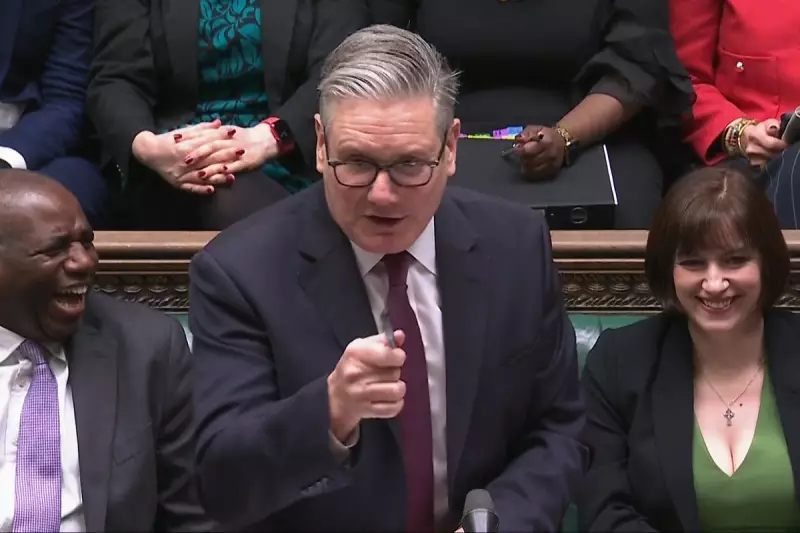
In a dramatic Prime Minister's Questions session that revealed shifting political dynamics, Keir Starmer delivered what many observers are calling his most prepared and strategically astute performance in recent memory. The Labour leader came armed with a clear understanding of both his opponent's likely line of attack and, more importantly, the prevailing mood of the British public regarding the increasingly contentious relationship with the United States under President Donald Trump.
The Greenland Gambit and Strategic Preparation
Starmer anticipated Conservative leader Kemi Badenoch's intended focus on the collapsed Chagos deal, recognising that Trump had deliberately withdrawn from the agreement as punitive retaliation for British resistance to his demands regarding Greenland. Rather than waiting to be put on the defensive, the prime minister seized the initiative with deliberate, measured language that framed the confrontation in terms of fundamental principles.
"Our principles and values," Starmer declared slowly and deliberately, establishing two clear positions from the outset. First, he affirmed that "the future of Greenland was a matter for Greenlanders and the Danes," directly challenging Trump's territorial ambitions. Second, he condemned "threats of tariffs to pressurise allies" as fundamentally unacceptable behaviour between democratic nations.

The Rhetorical Turning Point
The announcement that Danish Prime Minister Mette Frederiksen would be visiting Downing Street the following day created an immediate atmosphere of NATO solidarity in the chamber, allowing Starmer to move beyond his typically technocratic language into more resonant rhetoric. "I do want to be clear with the House," he stated, before delivering the phrase that would define the exchange: "I will not yield – Britain will not yield – on our principles and values about the future of Greenland under threats of tariffs."
This declaration, repeated multiple times throughout the session, effectively disarmed Badenoch's planned attack on the Chagos deal before it could gain traction. Forced to acknowledge agreement with the prime minister's position, the Conservative leader could only weakly point out what she perceived as inconsistency in Starmer's application of self-determination principles.
Political Calculations and Public Sentiment
Starmer's approach revealed a sophisticated understanding of British public opinion regarding the US president. While the technical details of the Chagos agreement might interest only policy specialists, Trump's behaviour toward allies and his territorial ambitions toward Greenland resonate strongly with voters who increasingly view the American leader as dangerously unpredictable.
The prime minister explicitly framed Trump's withdrawal from the Chagos deal as transparent political punishment for British resistance on Greenland, telling Badenoch he was "surprised" she had "jumped on the bandwagon" of this pressure tactic. This positioning placed the Conservative leader in the uncomfortable position of appearing to align herself with a US president whose popularity in Britain has plummeted to radioactive levels.
Broader Implications and Future Consequences
Starmer's defiant stance carries significant political implications beyond the immediate parliamentary exchange. Having already suffered retaliation from Trump for his resistance, the prime minister recognises he has little left to lose in maintaining this position. Conversely, he stands to gain considerable support among Labour MPs and, crucially, with the broader British public by positioning himself as willing to stand up to what many perceive as bullying behaviour from the American administration.
The contrast with Nigel Farage's simultaneous efforts to cosy up to Trump at Davos for photo opportunities could not be more striking, highlighting what appears to be a growing political divide regarding appropriate relations with the current US administration. As Badenoch shifted awkwardly to defence spending criticisms – which Starmer countered by noting Conservative "hollowing out" of armed forces during their previous government – the political landscape had visibly shifted.

While "I will not yield" remains essentially a rhetorical phrase rather than a commitment to specific retaliatory actions, its power lies in its symbolic defiance. For a prime minister often criticised for excessive caution, this represented a calculated gamble that appears to have paid immediate dividends, putting Starmer firmly on what polling suggests is the right side of British public opinion regarding relations with Trump's America.