Starmer's Mandelson Mistake Proves Terminal as Labour Despair Deepens
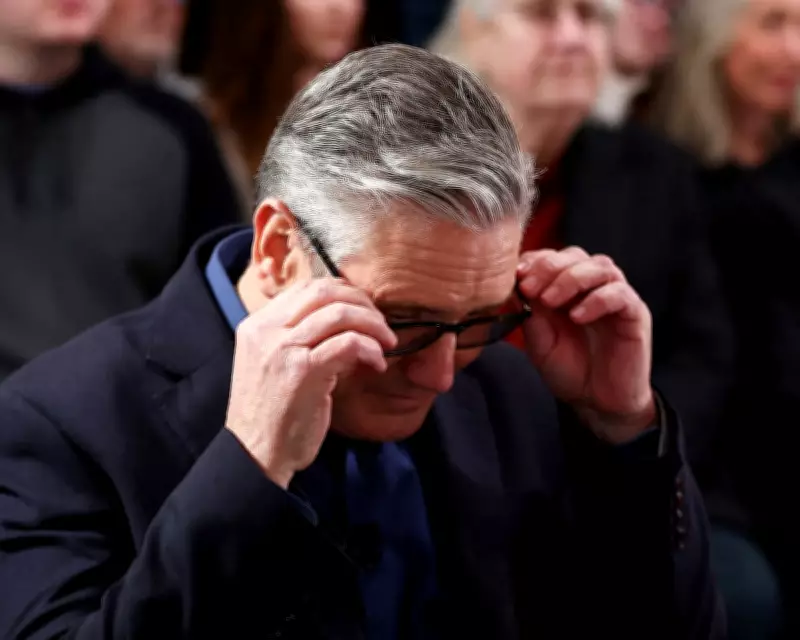
There is a palpable sense of despair in Keir Starmer's eyes, and a growing feeling among Labour MPs that the endgame for his leadership has truly begun. The situation is beginning to feel terminal, not because there haven't been previous whispers about removing him, but because this time, a tipping point has been unmistakably reached. No more second chances are on offer, and prayers for a miraculous turnaround in the May elections have faded into collective resignation.
The Irony of Mr Rules Undone
You cannot escape the profound irony at play here. Starmer has always prided himself on being Mr Rules, a reputation that helped secure his election as Labour leader. While he may be perceived as dull and lacking in charisma, his reliability and adherence to protocol were seen as assets. Now, he finds himself undone by his own decision to appoint Peter Mandelson, the epitome of Mr No Rules, as the US ambassador. Many in his cabinet and even some Tories initially congratulated him on this uncharacteristic move, viewing it as a sleazy diplomat for a sleazy president—a match made in heaven.
However, what was done cannot be undone. This is one mistake that cannot be put right. The sacking of Mandelson last September was necessary but far too little, far too late. Mandelson presented a binary choice with no redemption on offer. No apologies or promises to address the cost of living in the coming year could salvage the situation. Starmer has been weighed in the balance by his own party and found wanting, echoing the biblical phrase mene, mene, tekel, upharsin.

A Desperate Relaunch in Hastings
A look of despair was evident in Starmer's eyes as he made his way to the podium at the Horntye Park sports club in Hastings. He was there to relaunch himself in 2026, focusing on community values through the Pride in Place initiative, but he knew this effort, like all others, would be dead in the water. No one would remember a word about community values; all attention was fixated on Mandelson. The group of Labour supporters in the room offered a sympathetic clap, reminiscent of a football crowd giving a minute's applause for a deceased former player.
Starmer attempted to address the Mandelson situation directly, explaining that he entered politics late, driven by a belief in public service and a desire to make the country better for all. While this sentiment is unarguable, his argument collapsed under its own contradictions when he contrasted himself with politicians like Mandelson, who he claimed were in it for themselves. The lingering question remained: why did he give Mandelson the job in the first place?
Revisionist History and Failed Vetting
Starmer offered a slightly revisionist history of Mandelson's appointment, confiding that he had wanted to discuss it at PMQs but held back to avoid compromising any future police investigation. He claimed that during vetting and security clearance, Mandelson lied about his relationship with Jeffrey Epstein, and when the truth emerged, he was fired. However, this narrative strains credibility. Long before the appointment, it was common knowledge that Mandelson was in contact with Epstein and stayed in his flat after Epstein's conviction for soliciting an underage girl for prostitution. This should have been an immediate red flag, yet the security services allegedly nodded along, ticking boxes based on Mandelson's denials.
If true, Starmer would have been better off vetting Mandelson with random individuals off the street, who could have warned that Mandelson was always a wrong 'un. The apology to Epstein's victims, while better than none, fell into a category error, as Starmer shifted blame onto being misled rather than acknowledging his own moral failure to simply say no to Mandelson.
A Hollow Plea for Forgiveness
The main body of Starmer's speech resembled a prayer—a desire to be heard, a plea for forgiveness, and possibly even for existence. Yet, talk of "our values that bind us together" and "rules that protect those in need" rang hollow, especially when considering how those values failed Epstein's victims. It felt as though the government had prioritized its own interests until the scandal erupted.

Questions from the media focused relentlessly on Mandelson. The BBC highlighted Mandelson's two prior resignations from the cabinet as clues to his unsuitability, to which Starmer had no adequate answer. Sky noted the anger in Starmer's voice, suggesting some of it should be directed inward. The Guardian read quotes from Labour backbenchers about the prime minister's future, with Starmer's eyes nearly welling up, as if he too suspects the game is up.
This is Starmer's tragedy: at heart, he is a good man, but he has screwed up by dealing with Mandelson, who ensures others are taken down with him. The mistake is irreversible, and the despair within Labour is deepening, signaling a potential end to his leadership.