

Comedian and Journalist Condemn Trump's Stance on Gun Rights After Protester's Death
Prominent media figures Jon Stewart and Anderson Cooper have launched scathing critiques of President Donald Trump and his administration, accusing them of blatant hypocrisy regarding Second Amendment rights. This follows the fatal shooting of Alex Pretti, a 37-year-old ICU nurse, by federal agents during a protest in Minneapolis.
Contradictory Responses to Armed Protesters
The controversy centres on the administration's response to Pretti's death. Despite Pretti legally possessing a concealed carry licence, Trump immediately posted an image of the victim's firearm on social media, questioning why he was armed with additional magazines. Homeland Security Secretary Kristi Noem and other officials suggested without evidence that Pretti was a potential "assassin," while FBI Director Kash Patel argued that bringing any firearm to a protest indicates non-peaceful intentions.
This stance starkly contrasts with previous Republican defences of armed protesters. Cooper highlighted this inconsistency through a video compilation showing Trump's repeated promises to protect the Second Amendment. "Now, he supports the Second Amendment – just not all the time, depending on who’s carrying the gun and who gets killed," Cooper remarked, adding that "Alex Pretti was apparently not his kind of gun owner."

Historical Context of Armed Protests
The administration's position appears particularly contradictory given recent history. Many conservative voices vigorously defended Kyle Rittenhouse, who carried an assault rifle to a 2020 Kenosha protest and fatally shot two individuals. Similarly, Trump supporters who stormed the Capitol on January 6, 2021, openly carried weapons while confronting police. Dozens also brought firearms to 2020 protests at Michigan's state capitol against COVID-19 restrictions.
Border Patrol Commander-at-Large Gregory Bovino articulated the administration's conditional interpretation, stating that Second Amendment rights "don’t count when you riot and assault, delay, obstruct and impede law enforcement officers." This qualification represents a significant departure from absolutist gun rights rhetoric typically associated with Trump's base.
Stewart's Scathing Critique of Constitutional Abandonment
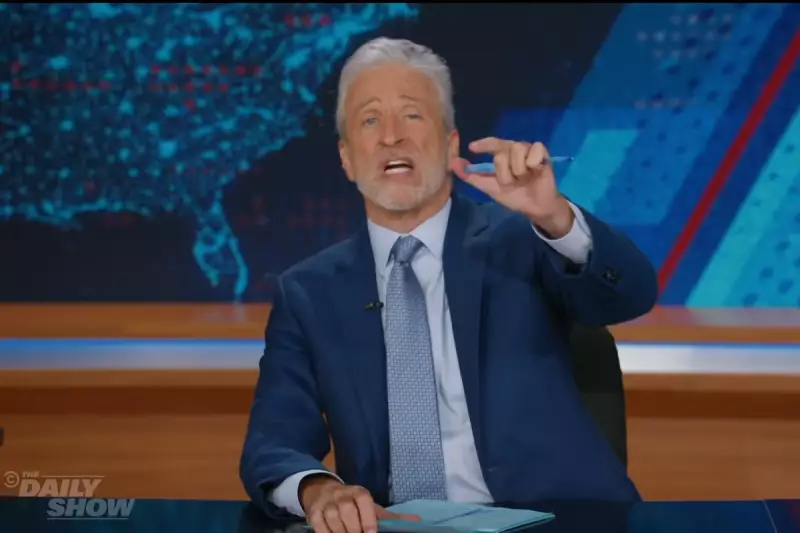
Jon Stewart expressed mock astonishment at this apparent ideological shift. "I wasn’t shocked when you guys gave up the First Amendment, and I wasn’t shocked when you gave up the Fourth Amendment, and the 10th Amendment, and the 14th Amendment at Trump’s behest, but the Second?" he questioned. "Isn’t that kind of the load-bearing law of the ‘Don’t Tread on Me’ flag? Your snake’s down to a newt … C’mon, guns are your whole personality."
Beyond the hypocrisy, Stewart delivered a more serious condemnation of the administration's relationship with truth. "To add insult to injury is the denial of the reality that we all witnessed. They’re lying. We saw it. And that’s how brazen they lie when they know we’ve seen the truth," he stated. Stewart suggested that Pretti's real "weapon" was his camera, calling it a "handheld, aluminum 1080p 60fps weapon of mass illumination" that threatened a "regime predicated on lies."
Broader Implications for Constitutional Rights
This incident raises profound questions about the consistency of constitutional protections in contemporary America. The administration's selective application of Second Amendment principles, depending on the political alignment of the armed individual, suggests that fundamental rights may be increasingly contingent on political loyalty rather than universal principle.
The contrasting responses to Pretti, Rittenhouse, and January 6 participants reveal a troubling pattern where constitutional interpretations flex to accommodate political narratives. As media scrutiny intensifies, this episode may become a defining case study in how core American liberties are being reinterpreted during a period of deep political polarisation.






