Suella Braverman's Political Odyssey: From Tory Torchbearer to Reform Defector
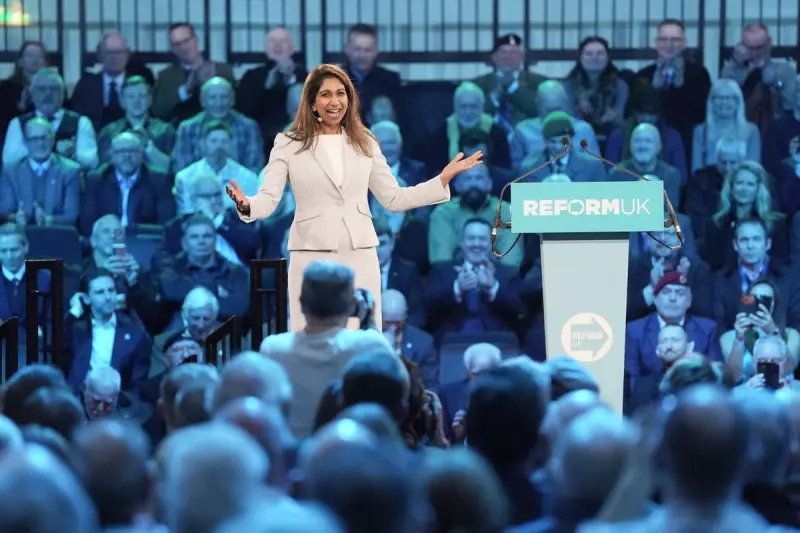
The political landscape of the United Kingdom has witnessed a seismic shift as Suella Braverman, the former Home Secretary, has officially defected from the Conservative Party to join Reform UK. This move concludes an association with the Tories that spanned more than two decades, marking a dramatic turn in her career from a prominent right-wing figure within the party to a defector aligning with a rival faction.
A Political Heritage and Early Career
Ms Braverman's political roots run deep, with her mother, Uma Fernandes, serving as a Conservative councillor and candidate in Tottenham during the 2001 general election. As a young activist, Braverman campaigned for her mother in the 2003 Brent East by-election, showcasing early involvement in Tory politics. Her academic pursuits at Queens' College, Cambridge, where she read law, saw her rise to chairwoman of the Cambridge University Conservative Association, further cementing her Conservative credentials.
Her initial forays into elected office were met with setbacks. In the 2005 general election, she placed second to Labour's Keith Vaz in Leicester East, and an attempt to join the London Assembly in 2012 proved unsuccessful. However, persistence paid off when she was elected as MP for Fareham in 2015, focusing on education, home affairs, and justice. During this period, she also served on the British delegation to the parliamentary arm of the Council of Europe, an experience that would later inform her critical stance on European institutions.

Rise to Prominence and Controversial Stances
As a fervent supporter of Brexit, Braverman gained influence by chairing the Eurosceptic European Research Group of Tory MPs. Her re-election in 2017 with an increased majority led to roles as parliamentary private secretary to Treasury ministers and later as parliamentary under-secretary at the Department for Exiting the European Union. However, she resigned in November 2018 in protest against Theresa May's draft Brexit deal, positioning herself as a vocal critic from the right.
Her rhetoric often courted controversy. In a notable speech, she referenced a "battle against cultural Marxism," sparking outrage among MPs and anti-racism campaigners due to associations with antisemitism. Although she denied such intent, and the Board of Deputies of British Jews later clarified they did not believe she intentionally used antisemitic language, the incident highlighted her divisive style.
Appointed attorney general in February 2020, Braverman took leave in March 2021 during pregnancy. Upon her return, she called for Boris Johnson's resignation amid government crises in July 2022. In the subsequent leadership race, she campaigned on promises to stop small boat crossings, leave the European Convention on Human Rights, and eliminate "woke rubbish," but was eliminated in the second round, endorsing Liz Truss.
Tenure as Home Secretary and Ongoing Scandals
As Home Secretary under Truss, Braverman championed the Rwanda asylum plan, describing it as a "dream." However, her tenure was marred by a breach of the ministerial code when she shared an official document from a personal email address, leading to her departure. Reappointed by Rishi Sunak, her conduct faced widespread scrutiny, with Keir Starmer referencing the breach in Prime Minister's Questions, though Sunak defended her as having made an "error of judgment."
Further controversies ensued. In January 2023, she dropped key recommendations from the Windrush Lessons Learned Review, a decision later ruled unlawful by the High Court. Her language regarding asylum seekers, including terms like "invasion" and references to "grooming gangs," drew broad criticism, with a Home Office spokesperson stating she would "not shy away from telling hard truths."
Additional policies, such as housing asylum seekers on the Bibby Stockholm barge and proposing laws to limit tent use by homeless people—whom she suggested viewed homelessness as a "lifestyle choice"—fueled public debate. Her comments on pro-Palestine protests, implying police favoured certain demonstrators, led to her sacking in a reshuffle, returning her to the backbenches.

Defection to Reform and Future Implications
From the backbenches, Braverman warned that the Conservative Party faced "electoral oblivion" without hardline immigration measures and suggested Nigel Farage should be welcomed to unite the right. She opted not to stand in the Tory leadership after Sunak's resignation but continued to stir controversy, attending Donald Trump's inauguration in 2025 and questioning in a speech whether the UK could become "the first Islamic nation with nuclear weapons."
Speculation about a defection to Reform had persisted for some time, despite recent denials. Her alignment with right-wing talking points on immigration and culture wars likely resonates with Reform's base. However, potential obstacles included her husband Rael Braverman's brief membership in Reform, which ended after criticism from the party's then chairman Zia Yusuf.
This defection marks a significant realignment in UK politics, as a once-influential Tory figure crosses the aisle, potentially reshaping the dynamics of the right-wing spectrum and influencing future electoral strategies.