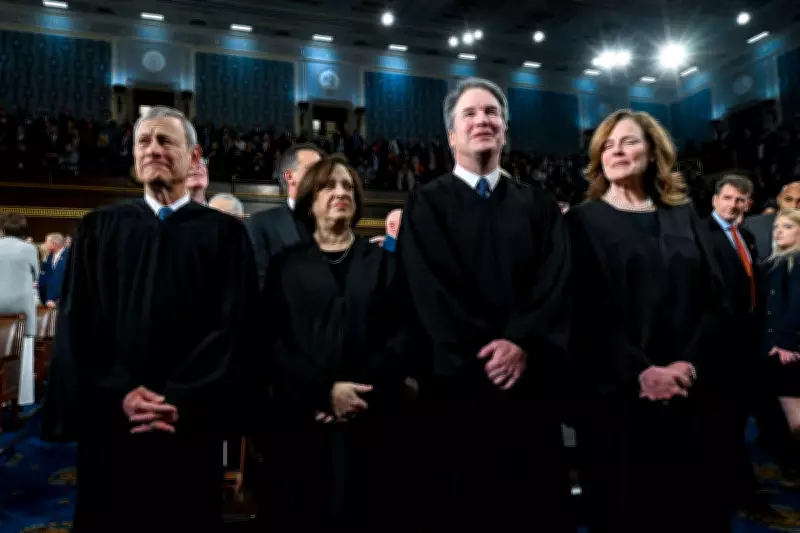
Four Supreme Court Justices Attend Trump's State of the Union Amid Controversy
Four of the nine Supreme Court justices were in attendance at President Donald Trump's State of the Union address on Wednesday 25 February 2026, a move that has drawn significant attention following a recent landmark ruling against the president's policies.
Justices Present at the Event
Chief Justice John Roberts and Justices Elena Kagan, Brett Kavanaugh, and Amy Coney Barrett were all present for the speech. The president briefly greeted the four justices, shaking their hands before quickly moving on to other attendees. This interaction occurred despite the court's recent decision that struck down Trump's global tariffs, a ruling that has fueled political tensions.
Background of the Controversy
Questions swirled over the justices' attendance after their landmark ruling last week, which invalidated Trump's tariff policies. In a press conference on Friday, Trump expressed strong disapproval, stating he was "ashamed" of Justices Barrett and Neil Gorsuch for ruling against him. Gorsuch was notably absent from the State of the Union, adding to the speculation surrounding the event.

Historical Context and Absences
Historically, Justice Samuel Alito has skipped these events ever since President Barack Obama criticized the court's Citizens United decision in a past State of the Union address. This precedent highlights the delicate balance between judicial independence and political appearances, with some justices opting to avoid potential conflicts of interest or public scrutiny.
Broader Implications
The attendance of these justices at Trump's speech raises important questions about the perception of the Supreme Court's impartiality in an increasingly polarized political climate. As pressure tightens on Trump with low approval ratings and backlash from the tariff decision, the presence of key judicial figures at such a high-profile event underscores the intertwined nature of law and politics in contemporary governance.
Observers note that while the justices' attendance is a traditional show of respect for the presidency, it occurs against a backdrop of significant legal and political disputes, making their presence a focal point for ongoing debates about the separation of powers and judicial ethics.