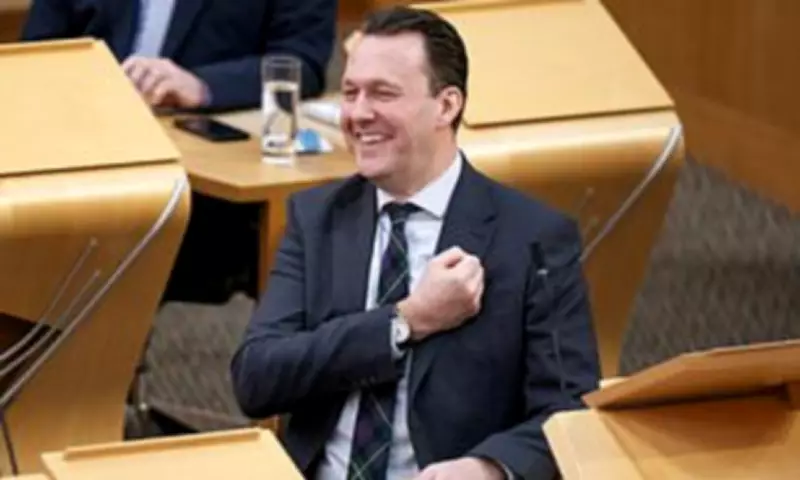
In a spirited and often combative session of First Minister's Questions at Holyrood, political leaders clashed over economic support for pubs and a deepening healthcare scandal, with personal barbs and policy disputes taking centre stage.
A Pint Politely Declined
Scottish Conservative leader Russell Findlay extended a notably informal invitation to First Minister John Swinney, suggesting they meet over a pint at a local pub to discuss urgent rates relief for licensed premises. This offer was swiftly and unequivocally rebuffed by the First Minister in what marked one of his first direct responses at the dispatch box.
'I can think of nothing less appealing than having a pint with Russell Findlay,' Swinney quipped, delivering a blunt refusal that left the Tory leader publicly snubbed. Findlay, undeterred, had framed the invitation as a chance to talk business in the presence of entrepreneur Sir Tom Hunter, but Swinney countered that he would prefer a trip to the dentist, a remark met with scepticism given well-documented access issues in Scottish dentistry.

The Pub Trade's Precarious Position
Russell Findlay is positioning support for the humble pub as a key electoral issue, arguing that these establishments are vital small businesses and recognisable economic indicators within communities. The pub trade is currently facing significant challenges and is in desperate need of assistance, not least from a Scottish Government willing to pass on promised rates relief.
Findlay's advocacy, however, was peppered with a succession of pub-related puns that some may find tiresome. He claimed one in seven publicans is 'thinking of calling time', described Swinney's response as 'all froth and no beer', suggested the SNP's position would mean 'last orders' for pubs, and stated that 'many punters would raise a glass' if SNP ministers were barred from the nation's alehouses.
Hospital Scandal Ignites Labour Fury
The session took a far more serious turn when Scottish Labour leader Anas Sarwar returned to the Glasgow hospital deaths scandal, brandishing official documents to embarrass the government. These papers outlined repeated warnings issued to SNP ministers about infection outbreaks at the Queen Elizabeth University Hospital.
Sarwar, visibly angry and appalled by the scandal and the treatment of bereaved families, lost his composure at one point, raising his voice at Swinney and Health Secretary Shona Robison. While his anger was sincere and rooted in a profound sense of injustice, critics suggested his message might be more effective delivered with greater control.
Swinney hit back forcefully, accusing Sarwar of 'direct political interference in the conduct of an independent inquiry', a reference to the Labour leader having written to Lord Brodie, who is leading the investigation. This accusation of impropriety from the SNP was met with derision from opposition benches. Sarwar retorted from his seat, 'You should be ashamed!'—a sentiment that underscores the deep moral and political divisions over the handling of the tragedy.
Greens' Geopolitical Intervention
In a separate and contentious intervention, Scottish Green MSP Gillian Mackay used her questioning slot to press the First Minister to rule out any oil drilling at the Rosebank field, located west of Shetland. Her reasoning took a surprising geopolitical turn, arguing that such extraction would benefit Israeli businesses and therefore violate Scotland's stance on boycotting Israel.
This connection between a North Sea oil field and the Middle East conflict left many observers perplexed, with critics suggesting it represented the kind of ideological fixation that often characterises the Greens' foreign policy pronouncements. The implication that Scotland's boycott has crippled Israel's economy was treated with widespread scepticism across the political spectrum.
The FMQs session ultimately highlighted the starkly different priorities and campaigning styles of Scotland's main political parties as they gear up for the coming election, from the grassroots concern over pubs to the profound gravity of hospital safety failures and contentious international stances.